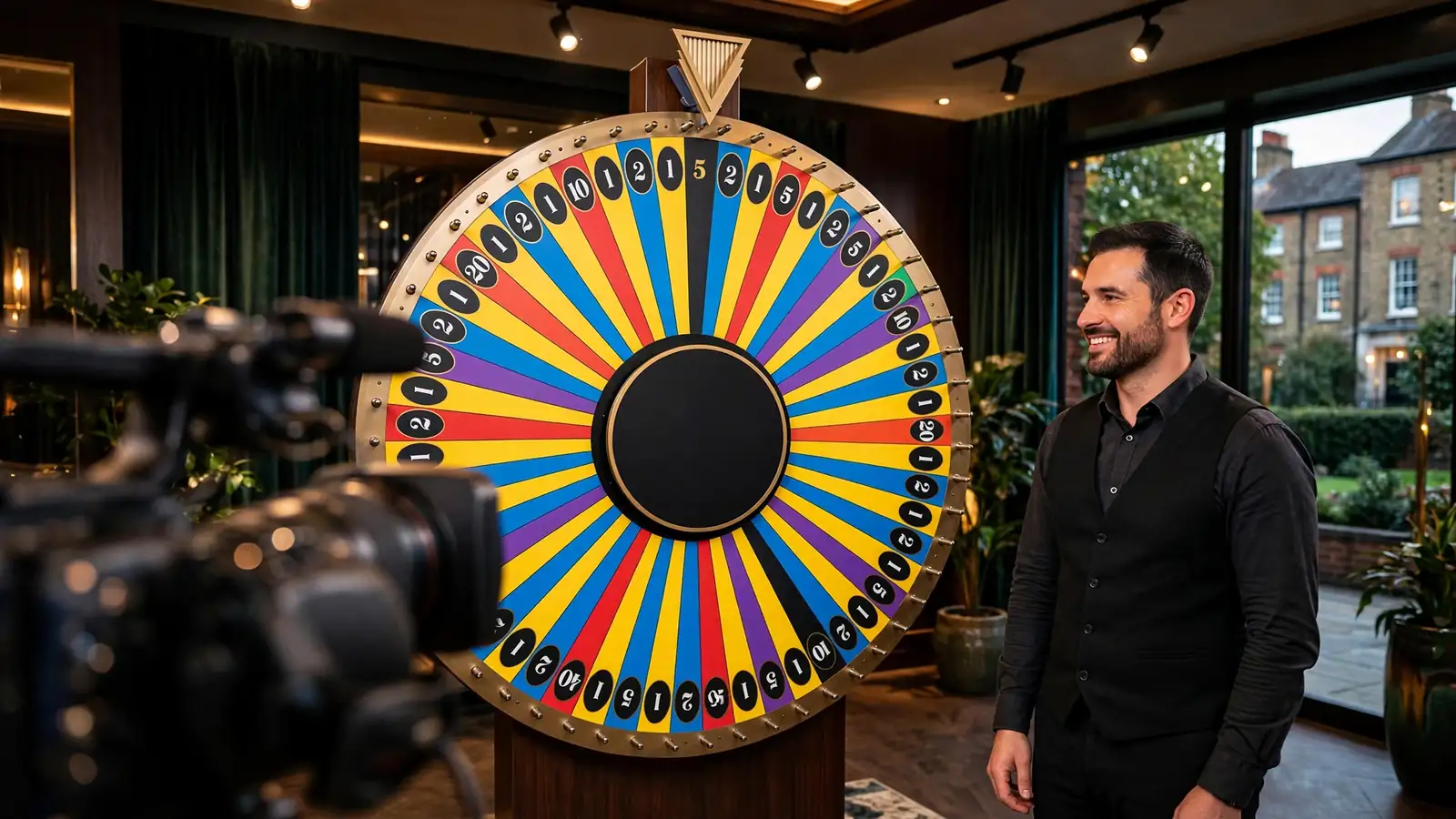
Hi-Lo Casino UK: Rules, Strategy and Site Checks
 Available in GB
Hi-Lo turns each exposed card into a higher-or-lower decision, with format, betting details and return figures shaping how play works.

Table of Contents
- How Hi-Lo Works: One Guess, One Next Card
- How to Play Hi-Lo Without Guessing Blind
- Live Hi-Lo: The Exposed Card and the Continuous Shuffler
- Live Hi-Lo Sites: The Betting Details That Change Your Decision
- Online Hi-Lo: A Single Deck, No Card Repeats
- Hi-Lo as a Game of Runs: When to Collect or Press On
- Hi-Lo Strategy: What the Return Figures Actually Say
- Choosing a Hi-Lo Casino: Check the Game, Not the Hype
- Hi-Lo Casino Sites in the UK: Licence and Account Checks
How Hi-Lo Works: One Guess, One Next Card
Hi-Lo is built around a small decision: look at the card in front of you, then predict whether the next card revealed will be higher or lower. You are not trying to name the card or its suit. You are comparing its value with the current card.
That sounds almost too simple. I used to treat that simplicity as a reason to rush, as if a quick choice somehow made the result more predictable. It doesn’t. You make a call, the next card appears, and the outcome follows the comparison.
In the online version described here, card values run from ace at one point to king at thirteen. The numbered cards keep their face values, while the picture cards sit above them in sequence: jack, queen, then king. So, if the current card is a five, a six or anything higher counts as higher; a four or anything lower counts as lower. The card’s value is what matters for that comparison.
The display gives you the reference point. Your job is to decide which side of it the next card will land on. That is the whole idea behind the name Hi-Lo: higher or lower than the card you can already see. A low card leaves more ranks above it than below; a high card leaves more below than above. In between, the picture is less one-sided. That can help you understand the choice, but it does not tell you what the next card will be.
If you’re choosing a hi-lo casino in the UK for 2026, payout speed is one practical detail to check. Use the listed withdrawal timeframe as a point of reference when considering your options.
Payout speed: 1-3 business days Britsino lists a payout speed of 1–3 business days, giving you a timeframe to consider when reviewing it.
Payout speed: 1-3 business days x3bet lists a payout speed of 1–3 business days, which gives you a clear withdrawal timeframe to factor in.
Payout speed: 1-3 business days Revery Play lists a payout speed of 1–3 business days, a useful detail for you to consider.
Payout speed: 1-3 business days NightWin lists a payout speed of 1–3 business days, so you can take that stated timeframe into account.
Payout speed: 1-3 business days SpinFormula lists a payout speed of 1–3 business days, providing you with a stated withdrawal timeframe.
Payout speed: 1-3 business days EvoSpin lists a payout speed of 1–3 business days, which may help you assess its payout timing.
Payout speed: 1-3 business days Zombillion lists a payout speed of 1–3 business days, giving you one practical detail to consider.
Payout speed: 1-3 business days Dieselwin lists a payout speed of 1–3 business days, so you have a stated timeframe to refer to.
Payout speed: 1-3 business days SlotoSport lists a payout speed of 1–3 business days, a timeframe you can keep in mind when reviewing it.
Payout speed: 1-3 business days BeOnBet lists a payout speed of 1–3 business days, providing you with a reference point for payout timing.
A correct guess adds winnings to your pot. A wrong guess costs the money you placed on that decision, and the game’s accumulated winnings are voided if you guess incorrectly. That second part is easy to underestimate when you are watching the pot grow. I’ve made the mistake of thinking a run of good calls had turned the next one into a safer bet. It hadn’t. The game still asks for a fresh prediction, not a reward for being right earlier.
The word “simple” can be misleading here. It describes the rule, not the certainty. You can understand the card order perfectly and still have no reliable way to know which card will appear next. If you keep that distinction clear, Hi-Lo is easier to read: compare values, make one directional call, then let the revealed card settle it.
For a first look at a Hi-Lo casino game, that is enough to understand what the choice means. The current card is your marker, and the next one is judged against it. You are not predicting a long sequence or solving a puzzle. Just one comparison. One guess. One next card.
How to Play Hi-Lo Without Guessing Blind
Once a card is showing, your choice is about the next one: higher or lower. Some versions also let you bet that it will match. Check which options are on the screen before you commit; a same-value bet is not automatically part of every Hi-Lo game.
Then place your bet and make the call. If you choose higher, the next card needs to rank above the current one; if you choose lower, it needs to rank below it. A matching card is a tie, not a win for either direction. In the version where ties push, your bet is returned. The rules on screen matter, so don’t assume every game handles a tie the same way.
If your guess is wrong, the money you put down is lost. More importantly, a wrong guess can wipe out winnings you have built up during that game. I used to focus on the next call and forget what was already riding on it. That’s the expensive bit.
A simple sequence helps: read the current card, choose a direction, check the displayed bet and payout, then decide whether the risk is worth taking. Don’t treat a run of correct calls as proof that the next card is predictable. Each choice is still a choice about the card ahead, not a promise based on the cards you have already seen.
Keep it clear. Higher, lower, or—where offered—the same value. If you’re unsure what a tie does, pause and read the rules before betting.
Live Hi-Lo: The Exposed Card and the Continuous Shuffler
In live Hi-Lo, the card left face up from the previous hand is not just a record of what happened. It becomes the reference for the next round. The next decision is made against that exposed card, so the sequence carries forward from hand to hand rather than resetting to an unseen starting card each time.
Live Sequence
In live Hi-Lo, the previous winning card serves as the reference for the next round, creating a continuous flow rather than resetting each time.
That detail can make the game feel more continuous than a straightforward deal. You see the previous winning card, and it tells you what the next card must be compared with. The table is not beginning from scratch. It is moving on from the result already visible.
Before the next winning card is revealed, three cards are burned. Those cards are removed from the sequence without becoming the result you are waiting for. Then the winning card is revealed, and it becomes the exposed reference for the round after that. The pattern is therefore: previous winning card stays visible, three cards are burned, a new winning card appears, and that new card carries forward as the next reference.
It is easy to overlook the burned cards when you are following the action. I used to focus on the face-up card and the eventual reveal, as if those were the only meaningful parts. But the burn is part of the live sequence: there are cards between the reference and the card that decides the hand. A quick reveal does not mean the next card came directly after the exposed one.
That distinction matters when you watch a live table. You are not tracking a simple row of consecutive cards in which every card shown becomes a possible reference. The previous winning card is the reference; the burned cards are not shown as the winning result; then the next winning card takes over. Keep those roles separate and the flow is easier to follow.
The other part of the mechanism is the continuous shuffler. Cards from the previous round are returned to it immediately. So the visible history is not a running count of every card that has been permanently removed from play. A card you saw in an earlier hand can go back into the machine’s circulating supply. The table still uses the previous winning card as its immediate reference, but that does not mean the wider card supply is being reduced hand after hand.

This is where live play differs from the simple mental picture many people bring to a card game: deal from a fixed stack, discard used cards, and watch the remaining stack shrink. With a continuous shuffler, cards from earlier rounds return to the machine, while the exposed winning card provides the local comparison point for the next decision. Those are two separate things. One is the game’s visible reference; the other is how used cards are handled.
I would not treat a string of visible results as proof that the same cards are unavailable for the rest of the session. The cards from a previous round go back into the continuous shuffler. Nor would I assume that the face-up card itself has been removed from all future possibilities simply because it is displayed as the reference. The useful thing to track is the stated sequence, not a story about a shrinking shoe.
There is also a deck-description disagreement worth keeping in view. A specialist review describes six decks of 48 cards, with tens left out, but says the exact deck count could not be confirmed in writing. Elsewhere, the described online draw version uses one 52-card deck with no returns. Those are not interchangeable descriptions of one format. The single-deck rule belongs to that draw-style game; it should not be carried over to live Hi-Lo as though the live table had the same card supply. The six-deck account, in turn, remains an attributed description rather than a confirmed standard for every live table.
Attention: Different versions of Hi-Lo have different deck rules; do not assume the single-deck rules of draw-style games apply to live tables.
That uncertainty does not change the sequence you can observe: a previous winning card is exposed as the next reference, three cards are burned before the next winning card is shown, and cards from the previous round return to the continuous shuffler. But it does mean you should read the specific table’s rules rather than filling in details from another version of Hi-Lo.
Once I separated the exposed card from the cards circulating behind it, the live format made more sense. The face-up card gives the next round its reference; the burns sit between that reference and the reveal; the shuffler keeps used cards moving back into circulation. No mystery. Just a sequence with a few moving parts.
Live Hi-Lo Sites: The Betting Details That Change Your Decision
In a live Hi-Lo game, the choice is not only whether to go Higher or Lower. You also need to look at what each option pays. I used to click the direction that felt more likely and barely glance at the payout. That is an easy way to make a decision without taking in the whole bet.
For a standard Higher or Lower choice, compare the displayed returns before you place the wager. The recommended approach is to select the side that pays more. That does not turn a guess into a sure thing, and it is not a promise that the next card will favour you. It is simply a way to avoid choosing the less rewarding side when the game’s own payout table offers a different return.

Read the table carefully. The relevant comparison is the payout attached to Higher against the payout attached to Lower, not which label looks more attractive or which direction you picked last time. In a live Hi-Lo online casino, the controls may make the choice quick; take a moment to check the figures on screen first. I have rushed that part before. The tap is quick. The regret lasts longer.
A higher return should not be mistaken for a prediction. It tells you how the game pays for that selection, not what the next card will be. Treat the payout and the card information as separate parts of the decision: check the available return, then consider whether the bet makes sense with the exposed reference card. There is no need to dress this up as a clever system. It is a basic check that is easy to skip when the game is moving.
The exposed card matters on proposition bets
Some live games also offer proposition bets, which let you choose a particular outcome rather than simply Higher or Lower. Here, the exposed card is especially important. It has already been dealt and is no longer in the shoe, so do not bet on an outcome that would be won by that card. The card may remain visible as the reference for the next decision, but it is not waiting to be drawn again from the shoe.
Proposition Bets
Do not bet on an outcome that would be won by the exposed reference card, as it is already out of the shoe and cannot be drawn again.
That distinction can be easy to miss when the displayed card is prominent. I would check the proposition against the cards that are actually still available, rather than treating the reference card as though it were another possible result. If the exposed card itself would satisfy the bet, leave that proposition alone. The screen can show it; that does not put it back in play.
This is a different check from comparing the Higher and Lower payouts. For those two choices, compare what each pays. For a proposition bet, first check whether the outcome relies on the exposed card. A tempting-looking return does not change which cards remain in the shoe.
Do not treat a tie as a free pass
There is another detail worth keeping in view: a Higher or Lower bet loses if the next card matches the previous card’s value. A tie is not a winning result for either direction. When you are weighing the two displayed payouts, remember that the bet is not just a contest between a higher card and a lower card; the same-value outcome is a losing one.
That is why I would not read the payout table in isolation or assume the better-paying direction is automatically the safer one. The practical instruction is narrower: choose the Higher or Lower option that pays more, while recognising that a tie still costs the bet. Keep the two points together and you are less likely to mistake a larger displayed return for protection against every outcome.
When comparing live Hi-Lo casino sites, those details are more useful than a confident-sounding sales line. Look at the actual choices and returns shown in the game, and check whether a proposition bet depends on a card already exposed. Then make the decision with the tie risk in mind. No hunch required.

Online Hi-Lo: A Single Deck, No Card Repeats
The detail that changes the feel of draw-style Hi-Lo is not the button for higher or lower. It is the deck. In this version, play draws from a single 52-card pack, and a card that has appeared is not put back. Aces count low. That gives each game a finite pool: once a card has been dealt, it cannot turn up again before that game ends.
That matters because the deck does not reset after every choice. The cards already seen are part of the game’s history, even if you are not counting them. I used to treat every next card as though it came from a fresh pack. It doesn’t. The same card cannot repeat in one run, so the unseen deck gets smaller as play continues.
There is an important wrinkle, though: descriptions of Hi-Lo do not all agree on the format. The draw-style rules describe one 52-card deck with no cards returned, while one specialist review describes six 48-card decks and continuous shuffling. Those are materially different arrangements, not two ways of saying the same thing. If you are choosing an online Hi-Lo game, read the rules for the specific version on screen rather than assuming every game called Hi-Lo uses the same deck.
With the single-deck format, the game can feel like it has a memory. That does not mean you can see the future, or that a run of one result makes the opposite result “due”. It means the cards already dealt are gone from that game’s remaining pool. I find it useful to keep that distinction straight: known cards affect what remains, but they do not turn a guess into certainty.
- Account for cards already dealt as they are gone from the pool
- Use the option to collect winnings and stop the run
- Treat every next card as if it comes from a fresh pack
- Assume a run of results makes the opposite outcome “due”
The other practical difference is control over when to stop. After the first decision, you can leave the game and collect the winnings accumulated so far. You do not have to keep making guesses until the deck is exhausted. That makes each decision a point to pause: continue with the current pot at risk, or end the run and keep what has built up. I have pressed on simply because the next choice was there. Bad reason.
Stopping is not a special prediction or a way to change the cards. It is just a choice about whether to expose the current winnings to another result. If you continue, the game carries on with the cards already removed; if you collect, that run is over. That option is part of what separates this draw-style online game from formats built around a different sequence or mechanic.
Before playing, I would check two things in the game rules: how the deck is handled, and whether the game lets you collect after a decision. Those details tell you what kind of Hi-Lo you are actually opening. The label alone does not.
Hi-Lo as a Game of Runs: When to Collect or Press On
This version of Hi-Lo is not a sequence of cards. A specialist review describes a single reel: you choose higher or lower, then the bet is settled by where the reel stops. A number in your chosen direction wins; a number in the opposite direction loses, and a tie loses too. That last part matters. A tie is not a quiet reset.

The choice after a win is what gives the game its run-based feel. The same specialist review says you can collect and begin again, or parlay: keep the original stake in play and add the winnings to it for the next attempt. Each successful step can build the amount at risk, but it does not make the following result safer. A run is just a sequence of outcomes, not evidence that the reel is due to land your way.
I have learned to be wary of buttons that make “one more go” feel automatic. When winnings are already on the screen, pressing on can feel like playing with money you have not earned yet. It is still money at risk. Collecting ends that run; parlaying puts the original bet and its winnings back into the next decision.
There is no card to compare here and no need to reason from an exposed rank. You are choosing a direction for the reel, then accepting the result it produces. That makes the decision simpler to describe, not necessarily easier to live with. If a tie counts as a loss, choosing a side does not remove that possibility.
Before playing, check the specific game’s rules and pay table rather than assuming every Hi-Lo title uses this exact setup. The reel format described by a specialist review is one particular version, not a promise about every casino game carrying the name. I would also decide in advance whether a win means collecting or continuing. That way, the choice is made before a growing balance starts doing the persuading.
If you do continue and lose, the loss can wipe out winnings accumulated during that game. Keep that in mind before treating a run as “free” money. It isn’t.
Reel-based Hi-Lo
In reel-based versions, a tie is not a reset but a losing outcome.
Hi-Lo Strategy: What the Return Figures Actually Say
Return figures can look like a verdict on a Hi-Lo game. They are not. They describe an estimated result under a particular set of rules and a particular way of playing; they do not predict what will happen in your session.
A specialist review reports a return of 96.07% for the basic strategy. It gives 100.36% for a card-counting strategy. Those are figures for two different approaches, not competing promises attached to every version of the game. The second figure depends on counting, and you should not assume it applies to a game with different rules or mechanics.
A return above 100% can sound like a neat way to make money. It isn’t a guarantee. It is a reported theoretical figure, not a promise that your balance will rise, or that the same result applies to a particular Hi-Lo game you open. Even a strategy that looks favourable on paper can produce losses in an individual run.
I used to read a percentage like a forecast. That was my mistake. The useful question is what the figure actually describes: which strategy, and which version of the game. If that link is unclear, the number tells you less than its precision suggests.
The gap between these reported returns is also not a reason to treat card counting as a shortcut. The higher figure belongs to that approach specifically. It does not turn the basic strategy into the same thing, and it does not make a session predictable. Think of the figures as a comparison of reported strategy models—not a ranking of what you personally will win.

So when a Hi-Lo casino game displays a return figure, read it as a claim tied to rules and strategy, not as an outcome you can bank on. A decimal point isn’t certainty.
Choosing a Hi-Lo Casino: Check the Game, Not the Hype
I’d start with the game rules, not a banner calling a site “the best”. Hi-Lo can mean different things: a draw game using a deck of cards, a live format with a continuous shuffler, or a reel-based version. Those are not interchangeable experiences. Before judging a casino’s offer, find out which one it actually provides.
Then read the rules shown for that specific game. Check what counts as a win, what happens on a tie, and whether you can collect winnings and stop rather than keep playing. The wording matters: a familiar name does not guarantee familiar rules. I’ve learned not to assume two games work alike just because both ask you to choose higher or lower.
Identify the format first
A draw-style game presents cards from a finite deck, while a live game can use a continuous shuffler and return used cards to it. A reel-based version is different again: the chosen direction is judged by where the reel stops. If the casino’s description is vague, look for the game’s rules page or pay table before you play.
There is a genuine discrepancy in descriptions of the card setup. One account describes a single 52-card deck with no repeats during a game; another describes six 48-card decks and continuous shuffling. Those details should not be blended into a made-up standard. Check the rules for the particular game on offer, and treat an unclear description as a reason to pause.
Choosing a Game
- Identify the specific Hi-Lo format (draw, live, or reel)
- Check the rules for win, loss, and tie conditions
- Inspect the payout table for available choices
- Verify that screen information matches written rules
I also check whether the game screen and the written rules appear to describe the same format. If one refers to a finite deck while another talks about cards returning to a shuffler, that changes how the game is presented. It is not a tiny wording quirk. Don’t fill in the gaps from memory of another Hi-Lo game.
Read the payout table, not the headline
The pay table is where the offer becomes concrete. Look at the stated return for the choices available and whether the figures apply to the version you are considering. A payout figure without its conditions tells you very little; a number on a promotional tile is not a substitute for the rules attached to the game.
A specialist review reports a 96.23% return for a particular approach: betting higher than 4 or lower than 10. That is a reported figure tied to that stated approach, not a promise about every Hi-Lo game or what you will get back. I would not use it to judge a casino unless the game’s own rules and pay table support the same comparison.
“High return” is an advertising phrase until you can see what it refers to. Check whether a figure is for the exact game, what choices it assumes, and whether the casino publishes a pay table you can inspect. If you cannot connect the claim to the game’s own information, set the claim aside.

Compare what the casino actually discloses
When looking across casino offers, I’d note the format, the rules, and the available payout information side by side. That makes a useful comparison without pretending there is one universal Hi-Lo product. A site may offer a version that suits you better because its rules are clear and its format is the one you want—not because a page has labelled it “best”.
Pay attention to how easy it is to find the game rules from the game itself. Can you see what the available bets mean? Is the tie outcome explained? Does the payout table identify which choices it covers? If those basics are buried or unclear, I would not treat a bold headline as reassurance.
I would also avoid comparing a live game with a draw game on a single headline figure if their rules and card handling differ. First establish that you are comparing like with like. Then read the disclosed terms for each game, rather than assuming a return or rule carries over from one format to another.
A tidy comparison beats a shiny promise.
A practical shortlist
Before settling on a game, I’d make sure I can answer these points from its own information:
- Which Hi-Lo format is it?
- What rules determine a win, loss, or tie?
- What payout table applies to the available choices?
- Are any return claims clearly tied to that exact version and approach?
- Do the screen and written rules agree?
If an answer is missing, don’t invent one on the casino’s behalf. Look for clearer game information or choose another offer to assess. That is a better basis for deciding where to play than a ranking label, a dramatic banner, or an unsupported claim that one casino is the best.
Hi-Lo Casino Sites in the UK: Licence and Account Checks
When I check a Hi-Lo casino site, I start with the regulator, not the welcome banner. A polished page can tell you plenty about the game and very little about who is responsible for running it. In Great Britain, the UK Gambling Commission regulates commercial gambling, including remote gambling offered to consumers there. That requirement applies whether the operator’s key equipment is in Britain or somewhere else.
Check the operator on the public register
Before depositing, look up the operator on the UK Gambling Commission’s public register and verify its licence number. Don’t rely on a logo or a sentence in the footer: compare the legal business name and licence details shown on the site with the register entry. If the details do not line up, stop and resolve that mismatch before sharing payment information.
Licensing
In Great Britain, all commercial remote gambling operators must hold a licence from the UK Gambling Commission.
The Commission issues operating licences to businesses and personal licences to certain individuals working in the industry. For a player, the relevant first check is whether the business offering the casino holds the appropriate operating licence. A site’s claim that it is licensed elsewhere is not a substitute for the licence required to offer remote gambling to consumers in Great Britain.
That distinction matters even when a site looks familiar. The location of its servers or studio does not remove the licensing requirement. I used to treat a badge as reassurance; now I check the underlying register. A logo is not proof.
Age checks and deposits
A UK-licensed operator must verify your age before allowing you to deposit funds into a gambling account. Online gambling is legal for people aged eighteen and over when it is offered by a UK Gambling Commission-licensed operator. If a site lets you fund an account before completing its required age checks, that is a reason to pause rather than assume the process will sort itself out later.
Account controls matter before the first bet, too. Remote operators must prompt new customers to set a financial limit before their first deposit, and they must make account-level limit controls accessible. I would look for these controls in the account area and make sure they are understandable before putting money in. A limit is only useful if you can find it and manage it without digging through a maze of menus.
Do not confuse the rules for online slots with Hi-Lo. The statutory per-game-cycle stake caps apply to online slots, not automatically to every casino game. Check the rules and controls relevant to the game you are actually playing rather than assuming one product’s restrictions describe another.
Payment and safer-gambling tools
UK-licensed casinos cannot accept credit cards for gambling. The restriction also covers credit-card funding routed through a money service business, and operators cannot accept wallet payments where the wallet permits credit-card funds to be used for gambling. If a payment route appears to evade that restriction, I would not treat it as a clever workaround.
Look for responsible-gambling tools in the account settings, including self-exclusion. These are not decorative links: they should be accessible as part of the operator’s player-protection arrangements. UKGC-licensed casinos must provide such tools, and operators are also required to contribute to the Research, Education and Treatment levy. You do not need to understand the levy mechanics to check whether the account gives you meaningful ways to manage or stop your gambling.
If you decide to use self-exclusion, read the on-screen information carefully and follow the operator’s process. Don’t assume that closing a tab or uninstalling an app has the same effect as using the formal tool.

Complaints: know the route before you need it
A licensed operator must provide an internal complaints process and access to an approved Alternative Dispute Resolution service. Find the complaints information before there is a problem, and keep records of relevant messages and account details if you later need to raise one. First use the operator’s stated process; if the matter is not resolved, check the information it provides about taking the dispute to its approved ADR service.
I’m not impressed by a page that just says “fair” or “trusted”. What counts is whether you can verify the licence, set account limits, find self-exclusion, and see a clear complaints route. Those checks will not tell you how a Hi-Lo game plays, but they do tell you whether the site is operating within the framework meant to protect players in Great Britain.
Written by the editors at Candyland Casino 1.