
Crash casino games in the UK: risks and rules
 Available in GB
Crash-style games combine fast-moving visuals with wagers on uncertain outcomes, alongside practical questions about UK play, demos and fairness.

Table of Contents
- What a Crash-Style Casino Game Actually Puts at Risk
- Playing Online in the UK Means Knowing Which Rules Apply
- Choosing a Crash Casino Without Falling for the Sales Pitch
- Crash Games in the Wider Casino Mix
- Crypto Deposits Don’t Change the Gambling Risk
- Providers, Random Numbers and What “Provably Fair” Can’t Prove Here
- Free Play, No-Deposit Bonuses and the Difference Between Them
- A Demo Can’t Tell You What Real-Money Play Feels Like
- How to Approach a Crash Game Without Guessing at the Outcome
- Real-Money Play: The Long-Term Edge Still Matters
What a Crash-Style Casino Game Actually Puts at Risk
The first thing I try to keep in view with any crash-style casino game is the part that can get lost behind the graphics: you are gambling something of value on an outcome you cannot know in advance. That might be cash, or chips representing cash. Either way, a win can put you ahead for a while, and a loss can take away what you staked. The animation is the wrapper. The risk is real.
That sounds obvious, but it is easy to think differently when a game is quick, bright and built around a rising sense of anticipation. I have caught myself treating a short run of play as if it were a little contest I could read. A few outcomes go one way, and suddenly it feels as though the next one must follow a pattern. That feeling is not a reason to stake more. It is just a feeling.
With a crash casino game, the name can make it sound like the whole point is watching a visual event unfold. But the important question is more basic: what are you putting at risk, and what outcome are you backing? Casino games involve wagering cash or chips on possible outcomes, or combinations of outcomes. A crash-style format does not change that underlying arrangement. You are not simply watching a screen; you are putting a stake behind an uncertain result.
Choosing where to play crash casino games in the UK means considering practical details as well as the game itself. This list gives you a concise reference point, including the stated payout speed for each operator.
Payout speed: 1-3 business days Britsino has a stated payout speed of 1–3 business days. You can use this as one practical detail when considering the operator.
Payout speed: 1-3 business days x3bet has a stated payout speed of 1–3 business days. This gives you a clear withdrawal timeframe to consider.
Payout speed: 1-3 business days Revery Play lists a payout speed of 1–3 business days. You can factor that stated timeframe into your choice.
Payout speed: 1-3 business days NightWin has a stated payout speed of 1–3 business days. This is the available practical detail to consider when reviewing the operator.
Payout speed: 1-3 business days SpinFormula lists payouts as taking 1–3 business days. You can take this stated speed into account when weighing your options.
Payout speed: 1-3 business days EvoSpin has a stated payout speed of 1–3 business days. This gives you a timeframe to consider for payouts.
Payout speed: 1-3 business days Zombillion lists a payout speed of 1–3 business days. You can use this stated timeframe as one point of reference.
Payout speed: 1-3 business days Dieselwin has a stated payout speed of 1–3 business days. This is the available detail to help you assess its payout timing.
Payout speed: 1-3 business days SlotoSport lists payouts as taking 1–3 business days. You can consider this stated timeframe when choosing an operator.
Payout speed: 1-3 business days BeOnBet has a stated payout speed of 1–3 business days. You can factor this information into your decision.
The potential reward matters, of course. If there were no possibility of a gain, there would be little reason for anyone to play. A short session can go well, and a player can come away ahead. That possibility is part of the appeal, and it is also why the risk can be easy to minimise in your head. A recent win feels vivid. The money you have already lost can feel like something you can win back with one more try.
I have made that mental jump myself. I used to give a good result more weight than it deserved, as though it revealed something dependable about what would happen next. It did not. A win is a win, not proof that the game has turned in your favour. A loss is not a promise that a win is due. Treating either one as a signal can turn a small stake into a larger one without making the outcome any less uncertain.
There is another part of the picture that is less exciting but more useful. Casino games are generally structured to give the casino a predictable advantage over the long term, even though players can make short-term gains. Those two things can both be true. Someone may win on a particular play or leave a session ahead; that does not erase the broader advantage built into casino gambling. Nor does a spell of losses mean a payout is owed.
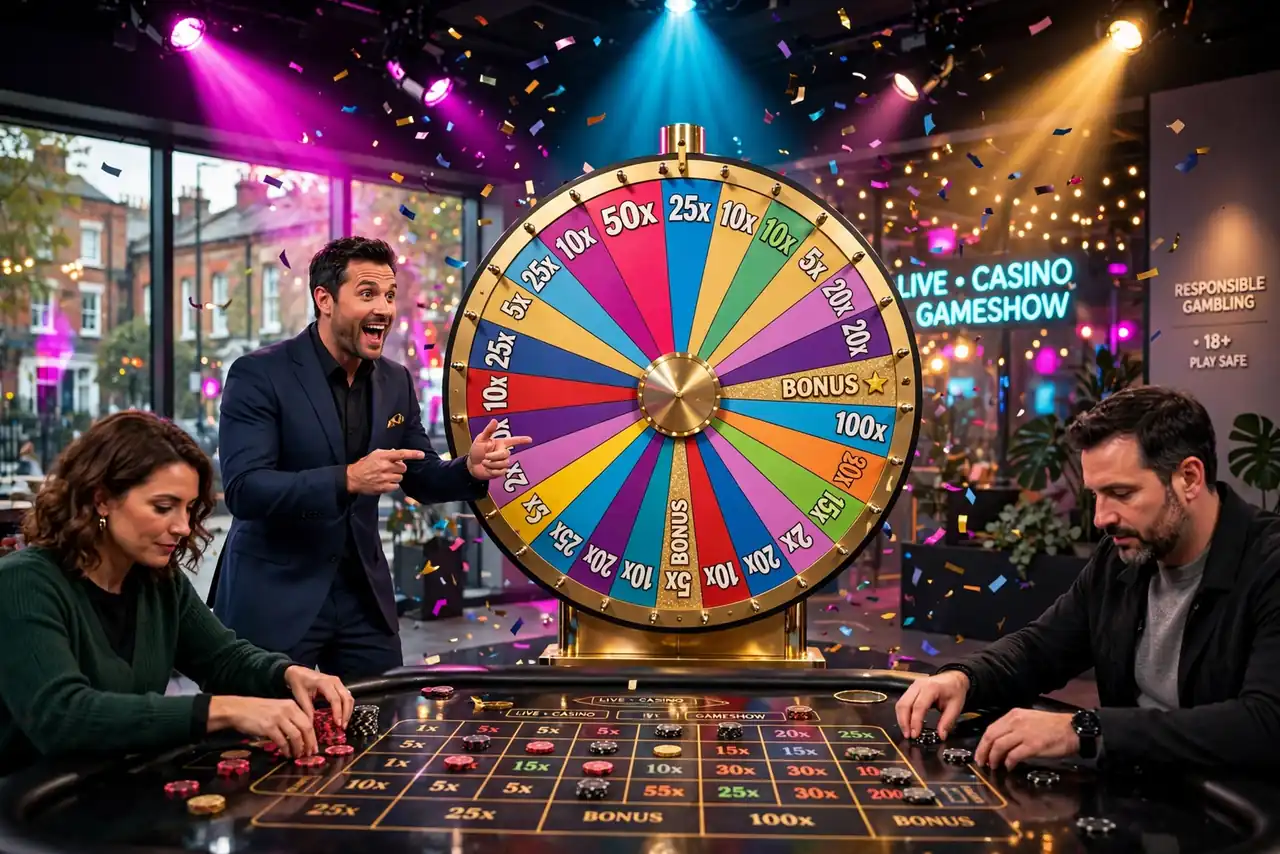
I find it helps to separate “I could win” from “I am likely to keep winning”. The first is a genuine possibility in casino play. The second does not follow from it. A game can produce an exciting result without making the next result easier to call, and a screen can make a stake feel less like money without changing what happens if it is lost.
So when you see crash casino games described with words like “thrilling” or “instant”, I would translate the sales language into plain terms: you are risking a stake on an uncertain outcome, with a chance of a short-term gain and a longer-term structure that favours the casino. Nothing mysterious there. Just gambling.
That is the frame I would keep before getting drawn into the pace or presentation of a crash game. Decide what you are comfortable risking, and don’t let a win, a loss or a persuasive label rewrite that amount in your head. The name may be new. The basic risk is not.
Playing Online in the UK Means Knowing Which Rules Apply
When I first looked at an online crash casino, I treated the page loading in my browser as a kind of approval. That was a bad shortcut. A site being reachable from the UK tells you nothing, by itself, about whether it is allowed to offer real-money gambling to people here.
The useful distinction is between a casino operating under a UKGC licence and an offshore platform operating outside the UKGC system. Both may be visible to someone in Britain, and some offshore casinos do accept UK players. But visibility and acceptance are not the same as permission to serve the British market.
Legal Requirement
Operators offering real-money gambling to residents of England, Scotland, or Wales must hold a UKGC licence, regardless of where the business is located.
Accessible does not mean authorised
The legal position is not that an operator can avoid UK rules simply by being based abroad. Since the Gambling (Licensing and Advertising) Act 2014, operators that want to take bets from British residents must hold a licence. An operator offering real-money gambling to customers in England, Scotland or Wales needs a UKGC licence, wherever the business itself is located.
That matters if you come across a crash game on a non GamStop site or another offshore platform. It may accept a registration or payment from a UK player, yet still sit outside the UKGC’s regulatory system. Its willingness to take your custom does not turn it into a UK-licensed casino. I used to read a smooth sign-up process as evidence that everything had been checked. It wasn’t.
A specialist review has described the 2026 market as having two parallel sides: UKGC-regulated casinos and offshore platforms outside that system. The description is a useful way to think about the choices a player may encounter, but the legal distinction is more important than the market label. If an operator is taking bets from British residents, its location does not remove the licensing requirement.
The Gambling Act 2005 governs gambling in England, Wales and Scotland; Northern Ireland has a separate legal position. For a player in Great Britain, the practical point is straightforward: legal online casino gambling is offered through operators licensed by the UKGC. An offshore site may be practically accessible, but that does not make it a lawful UK casino.

What the regulatory difference means to you
A UKGC licence places an operator inside the British regulatory framework. Offshore casinos operate outside that framework and do not hold a UKGC licence. That is not just a difference in wording on a website. It affects which regulator oversees the operator and which UK requirements apply to its offer to British customers.
Offshore platforms may provide their own player-protection tools, such as deposit limits, session timers and self-exclusion. Those features can be useful, but their presence does not make an offshore operator equivalent to a UKGC licensee. A button marked “self-exclusion” is not proof of UKGC oversight. The context matters.
Nor should the distinction be reduced to whether a site has a licence from somewhere. Some non-traditional platforms operate under licences from other jurisdictions, but a foreign licence is not a UKGC licence. If an operator is offering real-money gambling to British residents, the requirement to hold the relevant UK licence still applies. A badge or a legal page can sound reassuring; it does not alter that rule.
This is where the phrase “available to UK players” can mislead. It describes access, not regulatory status. An offshore casino may accept a UK player without being part of the UKGC system. Conversely, a site’s claim that it welcomes British customers is not evidence that it is authorised to do so. I would separate those two questions rather than letting a working website answer both.
The rule is about the operator, not the game name
Whether the page advertises a crash game, a crash-style casino game or another casino format does not change the licensing question. The relevant issue is who is taking the real-money bet and whether that operator holds the required UKGC licence. A familiar game title, an attractive interface or a quick account setup cannot stand in for that.
A site’s visibility or its willingness to accept UK registrations does not mean it is authorised or licensed to operate within the British market.
I also wouldn’t assume that a platform’s own controls offer the same framework as UK regulation. Deposit limits, timers and self-exclusion are worth noticing, but they are individual features, not a substitute for the operator being licensed for the British market. Keep the categories separate: access is one thing; protection tools are another; lawful authorisation is another.
So if a crash casino online accepts UK customers while operating offshore, the fact that you can reach it should not be read as a signal that it is approved for the UK. The obligation to hold a UKGC licence rests with the operator taking bets from British residents. That is the line to keep in view before treating an offshore platform as part of the regulated UK casino market.
A site can look local. The licence is what counts.
Choosing a Crash Casino Without Falling for the Sales Pitch
When I see a page promising the “best crash casino”, I treat that as a claim to inspect, not a verdict. A polished comparison can make a site look reassuring before it has answered the question that matters: is the operator allowed to offer real-money gambling to people in Great Britain? A game’s name, design or popularity does not answer that.
For customers in England, Scotland and Wales, an operator offering real-money gambling must hold a licence from the UK Gambling Commission (UKGC). I would check the operator against the UKGC’s own register rather than rely on a badge copied onto a casino’s homepage. The name on the licence should match the company actually running the site; a similar trading name or a licence belonging to a different business is not enough to settle the matter.

That check is a starting point, not a stamp of personal approval. But it separates a UKGC-regulated operator from an offshore platform outside the UKGC system. Offshore sites may accept British players, yet that does not make them licensed to serve the British market. I would not read “available in the UK” as “authorised in the UK”. Those are different statements.
Look beyond the licence badge
Once the operator’s status is clear, I look for the practical controls attached to the account. UK-licensed casinos must provide responsible-gambling tools, including self-exclusion, and remote operators must prompt new customers to set a financial limit before their first deposit. The account should also make its limit controls accessible afterwards. If those options are buried, difficult to locate or presented as an afterthought, that is worth noticing.
A casino may advertise “player protection” in large type, but the useful question is what you can actually do from your account. Can you set a financial limit? Can you find the self-exclusion route without hunting through promotional pages? Is there a clear way to raise a complaint, and does the operator explain how to reach an approved Alternative Dispute Resolution service if its own process does not resolve it? UKGC licensees must provide an internal complaints process and access to an approved ADR service.
I used to let attractive wording do too much work. “Safe” is not a feature by itself. A visible control you understand is more useful than a reassuring adjective.
Operator Safety Check
- Verify the operator against the official UKGC register
- Match the licence name to the company running the site
- Locate accessible financial limit controls in the account
- Find the self-exclusion route without promotional distractions
- Identify the internal complaints process and approved ADR service
Read the terms before the bright buttons
Terms are part of the operator check, even when you are not choosing a site for a bonus. Look for clear information about account rules, withdrawals, and what happens when you use a protection tool. The point is not to assume every operator handles these details badly; it is to see whether the rules are understandable before you commit money or personal information.
Promotions deserve particular care because the headline can distract from the conditions. In Britain, gambling incentives cannot require more than 10x wagering of bonus funds, and one incentive cannot combine different gambling product types such as casino and betting. The terms should be displayed clearly, not scattered across a chain of pages. If the offer’s wording is vague about what counts, what is excluded or how a restriction works, I would rather leave it alone than guess.
A bonus is not evidence that a casino is suitable, and a large offer does not compensate for missing account controls. That is where “generous” can become a sales word with a bill attached.
Compare the operator, not a made-up ranking
There is no useful way to call one site the best crash-game casino for everyone from a headline alone. People may mean different things by “best”: a clear licence record, usable limits, transparent terms, or a complaint route they can find. Those are things you can verify. A ranking that does not explain its criteria is just a list with confident formatting.
I would also separate the casino from the game. A title appearing on a site does not establish that the operator is properly licensed, and a familiar-looking game does not tell you what account protections are available. The same caution applies to labels such as “crash slot” or “crash games”: wording on a page is not a substitute for checking who is taking the bet.
For me, the order is simple: identify the legal operator, confirm its UKGC licence, then inspect the account tools, complaints information and terms. If any step leaves me unable to tell who is responsible or what protections I can use, I stop there. No ranking is worth guessing over.

Crash Games in the Wider Casino Mix
The word “casino” covers more than one kind of game. A crash-style title may appear alongside familiar machine-style games and dealer-led tables, but that doesn’t make those formats interchangeable. I’ve found that broad labels can make a lobby look simpler than it is. The useful question is what kind of play you’re looking at, not just which heading it sits under.
Machine-style gambling is generally a solo activity: one player uses the game, without a casino employee needing to run it. Table games work differently. Players compete against the casino, not against one another, and a croupier or dealer usually conducts the game. That visible person is part of the format; they are not simply a decorative feature on a screen.
Online casinos can offer casino games where the law permits them. The setting may be a phone or computer rather than a physical room, but the game categories still help describe how a title is presented and played. A dealer-led table has a human running proceedings. A machine-style game does not depend on an employee being present for each player’s turn. Those are meaningful differences, even when both appear in the same online lobby.
Crash titles are often discussed beside slots, which can make “crash slots” sound like a precise category. I wouldn’t read too much into that wording. A crash game appearing among casino games does not, by itself, tell you that it is a slot or that it follows the same format as a conventional machine-style game. The title’s label is not the whole story. Check how the casino describes it and what the game screen actually presents.
There is another broad distinction: some casino games use random numbers generated by a computer or other gaming equipment. That describes a way outcomes can be produced; it does not turn every game using equipment into the same kind of game. Nor does the presence of a screen make a game dealer-led. Format and outcome generation are separate ideas, and mixing them up can leave you with a blurry picture of what you are choosing.
That matters when comparing casinos with crash games. A lobby can place crash-style titles near slots, tables or other games because that is how its categories are organised. Placement is useful for finding a title, but it is not proof that two neighbouring games work alike. I’d treat the menu as a filing system, not a technical explanation. Simple distinction.

This broader view also helps with phrases such as “best casinos with crash games” or “crypto casinos with crash games”. Those labels describe what a searcher wants to find, not a shared game format. The presence of a crash title says little about whether the rest of a casino is machine-led or dealer-led. A casino may contain different categories side by side, each with its own presentation.
So when a crash-style game catches your eye, start by placing it in that wider mix. Is it presented as a machine-style game, a table with a dealer, or another kind of casino title? What the lobby calls it can be a starting point, but the format is what gives the label meaning. Don’t let “slot” do all the thinking.
Crypto Deposits Don’t Change the Gambling Risk
Payment options can make a crypto casino look different from one that takes only familiar methods, but they do not change what a crash game asks you to risk. I’ve made the mistake of treating a smooth deposit as a sign that the rest of the experience must be just as straightforward. It isn’t.
A specialist review reports that some alternative platforms accept Bitcoin, Ethereum and Litecoin alongside conventional cards and e-wallets. That is a description of options reported for some platforms, not a promise that every site takes every coin or that a particular crash game is available there. Payment methods can vary, so read the cashier’s terms before sending funds. Check what currency your account uses, how a withdrawal is requested and whether the platform sets conditions on moving money out.
The same specialist review describes some platforms as offering instant deposits and withdrawals completed within hours rather than days. Treat that as a reported service feature, not a guarantee about your own transaction. A deposit may arrive quickly while a withdrawal follows a different process. “Fast cash-outs” sounds reassuring; it tells you nothing by itself about whether the site is suitable or what happens if you need help.
That distinction matters when you are looking at a crash crypto casino. The convenience of paying with a digital currency does not make a bet less of a bet, and a quick transfer does not make an outcome easier to predict. I now separate the payment question from the gambling question. Two different decisions.
Attention: The convenience of digital currency payments or the speed of a transfer does not reduce the gambling risk or make an outcome easier to predict.
Some alternative platforms also provide their own player-protection tools, including deposit limits, session timers and self-exclusion options, according to the same kind of specialist review. Look for the controls in the account itself and understand how they work before depositing. Their presence is useful to know, but it should not be mistaken for a guarantee about the platform or a reason to stake more.
If you are comparing crypto and conventional payments, keep the comparison narrow: which methods are accepted, what the operator says about deposits and withdrawals, and what controls you can use. Don’t let payment language such as “instant” or “seamless” do the work of a safety check. A crypto casino crash game still involves putting money at risk. The payment rail changes; that basic point doesn’t.
Providers, Random Numbers and What “Provably Fair” Can’t Prove Here
When you look into crash games, it is easy to let a provider name or a fairness label do more work than it should. I’ve made that mistake with casino games before: a polished description can sound like evidence, when it is really just a claim to examine.
The basic point about random-number games is straightforward. They use selected numbers generated by a computer or other gaming equipment. That tells you something about how outcomes can be produced; it does not, by itself, tell you whether a particular crash game has been independently checked, how its results are verified, or whether a claim of “provably fair” is supported by a process you can inspect.

Those are separate questions. A game may be described as using random numbers, while a casino or game provider makes a further claim about fairness. The first statement is not proof of the second. Nor does a provider’s reputation, a familiar title, or a neat graphic establish how a specific game handles results. I would want to see what the claim actually means and what evidence is offered, rather than treating the phrase as a guarantee.
That is the useful distinction when comparing crash game providers. The provider is the company behind a game; the casino is where you encounter it. Seeing a provider’s name in a lobby does not automatically answer questions about the game’s mechanics or prove that a fairness claim has been tested. And a label on a page is not the same as a transparent explanation of how a result can be checked.
A specialist review has described JetX as a particularly popular title at offshore casinos that take UK players. That is the review’s account, not a settled measure of what players everywhere choose, and popularity would not establish fairness in any case. The same caution applies if you see an Aviator-branded crash game: the title alone does not tell you what verification sits behind it.
I’m not saying every fairness claim is empty. I’m saying the words need something behind them. “Provably fair” should prompt you to look for a clear account of what is being proved and how a player could verify it—not to assume that the label settles the matter. Random numbers are a starting point, not a certificate. Just that.
Free Play, No-Deposit Bonuses and the Difference Between Them
“Free” is one of those casino words I now read twice. It can describe a bonus that arrives without you spending money, but that does not automatically mean a particular crash game can be played for free.
No-deposit bonus vs Free play
A no-deposit bonus is a promotion received without a payment, whereas free play is a game feature. A bonus does not guarantee that a specific crash game is included or that it can be played without conditions.
A no-deposit bonus is simply a casino bonus you can receive without making a payment first. The label describes how the bonus is obtained. It does not, by itself, tell you which games you can use it on, whether it can be withdrawn, or what conditions apply. Those details belong to the offer’s terms, not the name.
That distinction matters when you are looking for a way to try a crash-style game without putting cash in. A casino advertising a no-deposit bonus is not necessarily offering that bonus for its crash games. Nor does the bonus label prove that the game has a separate free-play option. One is a type of promotion; the other would be a feature of a game. They are not interchangeable.
I used to see “no deposit” and mentally fill in the rest: no cost, no strings, game available. That was doing the sales copy’s work for it. The phrase only tells you that receiving the bonus does not require spending money. It does not make broader promises.
There is another small trap in the word “free”. A bonus may still come with rules about eligible games or what you must do before any winnings can be withdrawn. Read the actual conditions before treating bonus funds as cash you can use however you like. If the terms do not clearly say that the crash game is included, do not assume it is.
And a bonus says nothing on its own about whether a game is fair. It tells you about the promotion’s entry point, not how the game works or what outcome to expect. Keep those questions separate.
So, if you are trying to find a free way to play a crash game, check what the casino actually offers rather than leaning on the words “no deposit”. A bonus may cost nothing to receive; that is all the label establishes. Don’t fill in the blanks.

A Demo Can’t Tell You What Real-Money Play Feels Like
If a casino offers a demo of a crash game, it can let you try the interface without staking cash. That is useful for seeing what appears on screen and getting used to the buttons. But it is a narrow test. It cannot recreate the feeling of having your own money involved.
I used to treat a practice run as a kind of rehearsal: if I felt calm there, I assumed I would stay calm when it counted. That was wishful thinking. With no cash at stake, a decision can feel like a harmless experiment. Once you are gambling, the same choice can land differently because you know a real balance is on the line. The demo does not prepare you for that shift.
Nor does a smooth run in a crash casino game demo tell you what will happen in a later session. A demo’s results are not a promise about real-money play. Getting comfortable with the screen is not the same as being able to control an outcome, and practice cannot make a random result predictable.
There is another limit: “demo” can mean different things on different sites. Unless a particular game and its mode are clearly available to you, do not assume that every crash casino offers one, or that a practice version behaves in a particular way. The label alone tells you little about what the mode includes.
So, if you find a crash slot demo, treat it as a chance to inspect the presentation, not a rehearsal that removes the uncertainty from gambling. It may help you decide whether you understand what you are seeing. It cannot show how you will react when a balance matters, or make real-money play feel consequence-free.

A useful distinction, then: practice can familiarise you with a screen. It cannot stand in for the experience of staking money. That gap is real.
How to Approach a Crash Game Without Guessing at the Outcome
If you want to play a crash casino game, start with the plainest question: what are you staking, and what possible outcome determines whether you win or lose? Casino games involve putting cash or chips at risk on outcomes, or combinations of outcomes. That is the useful starting point; the name of a game tells you very little about its precise rules.
I’ve caught myself treating a quick-looking game as if speed meant simplicity. It doesn’t. Before staking anything, read the game’s own instructions and make sure you understand what your choice does, what counts as an outcome, and how any result is settled. If a rule is unclear, don’t fill the gap with a guess. Pause.
Some casino games use random numbers generated by a computer or other gaming equipment. That gives you a basic description of how outcomes may be produced; it does not tell you what the next result will be. A pattern you think you see is not a dependable forecast. Nor does confidence turn a hunch into information.
Keep the first decision small and deliberate: decide what you are willing to stake before starting, rather than letting the pace of play make that decision for you. Then pay attention to the rules, not promotional language or a feeling that a result is “due”. I’ve learned that the hard way. A guess is still a guess.
There is no need to pretend that a crash game has one universal set of instructions. Read the version in front of you, understand the possible outcomes, and only proceed if the stakes and rules make sense to you. If they don’t, leave it there. That is a better starting point than trying to predict what happens next.
Real-Money Play: The Long-Term Edge Still Matters
A crash game can feel different once your own money is on the line. The screen may look much the same, but each outcome now affects your balance. I’ve found it easy to focus on the next result and forget that the money at risk is real. That shift matters more than any dramatic animation.
Casino games involve staking cash or chips on possible outcomes. You might come away ahead in the short term; that possibility is part of what makes a win feel compelling. But a run of good results doesn’t change the underlying picture: casino games typically give the house a predictable advantage over the long term.
That doesn’t mean every session ends badly, or that a short-term win is imaginary. It means a win today cannot tell you what will happen next, and a losing session does not make a future win due. I’ve made the mistake of treating a decent result as proof I had worked something out. I hadn’t. I was looking at a small stretch of play as if it settled the bigger question.
When you consider crash casino play for real money, keep the cost in view rather than letting a possible payout become the whole story. Money staked is exposed to an uncertain outcome; it is not a payment you can count on getting back. If losing that stake would affect bills, plans, or your peace of mind, that is a good reason to step away.
There’s no clever wording that removes the edge. “Big potential” describes a possibility, not a dependable return. Real-money crash games may bring a short spell of gains, but the long-run advantage remains with the casino. That’s the part I try to remember before I confuse excitement with a sound financial decision.
Prepared by the Candyland Casino 1 editorial staff.