
International Casinos for UK Players: Licences and Risks
 Available in GB
A practical look at licensing, bonus terms, payment checks and the limits of protection when an operator serves UK customers from abroad.

Table of Contents
- What “International” Means for UK Casino Players
- The Site’s Licence—and the Protection It Doesn’t Bring
- Follow the Money: Casino Partnerships and Conflicts of Interest
- No-Deposit Bonuses: Read the Wagering, Not the Headline
- UK Access and Free Spins: Check the Terms Before You Try
- Crypto Deposits and Withdrawals: Fast Is Not the Same as Safe
- Non-GamStop Casinos: A Way Around Exclusion Is a Warning Sign
- Live Roulette: Check the Cashier Before You Sit Down
- Playing from the UK: Your Position and the Limits of Recourse
- Real-Money Play: Withdrawal Times and What Can Hold Them Up
What “International” Means for UK Casino Players
“International casino” sounds like a tidy category, but it can blur two different things: where an operator is based and whether it is authorised to serve people in Britain. For UK players, the useful distinction is not the label on a site. It is whether the operator holds a licence from the UK Gambling Commission.
In this context, a foreign casino is an online gambling operator that accepts British customers without a UK Gambling Commission licence. It may be based overseas, and it may hold permission from a regulator in another country. “International” describes the cross-border aspect; it does not, by itself, tell you whether the operator is legally allowed to offer gambling to customers here.
That distinction matters because a site can be available to visit without being authorised to provide its service in Britain. A foreign address, an international-sounding brand or a page that loads on your phone does not change the operator’s legal position. I used to treat availability as a kind of approval. It isn’t.
Choosing an international casino as a UK player calls for a clear look at the details available before you decide. Use this list as a starting point and check whether each option suits your needs.
Payout speed: 1-3 business days Britsino lists a payout speed of 1–3 business days, giving you a stated timeframe to consider when reviewing it.
Payout speed: 1-3 business days x3bet lists a payout speed of 1–3 business days, a useful detail for you to weigh when considering this option.
Payout speed: 1-3 business days Revery Play lists a payout speed of 1–3 business days, so you have a stated payout timeframe to factor into your decision.
Payout speed: 1-3 business days NightWin lists a payout speed of 1–3 business days, offering you a clear timeframe to keep in mind.
Payout speed: 1-3 business days SpinFormula lists a payout speed of 1–3 business days, which gives you one concrete detail to consider.
Payout speed: 1-3 business days EvoSpin lists a payout speed of 1–3 business days, a stated timeframe you can take into account.
Payout speed: 1-3 business days Zombillion lists a payout speed of 1–3 business days, giving you a specific payout detail to review.
Payout speed: 1-3 business days Dieselwin lists a payout speed of 1–3 business days, which provides you with a stated timeframe for payouts.
Payout speed: 1-3 business days SlotoSport lists a payout speed of 1–3 business days, a concrete detail for you to consider when assessing it.
Payout speed: 1-3 business days BeOnBet lists a payout speed of 1–3 business days, giving you a stated timeframe to factor into your choice.
The operator’s position is different from the player’s
The law draws a line between an operator offering gambling to British customers and an individual choosing to place a bet with an overseas operator. In England, Scotland and Wales, an online gambling site must hold a Gambling Commission licence to offer its services. Providing gambling facilities to UK customers or advertising those services in the UK without that licence is illegal for the operator.
That does not mean a British player commits an offence simply by choosing to play at a casino licensed outside the UK. There is no UK law that prohibits an individual from placing bets with an overseas operator. Those two statements can sit side by side: the operator may be acting unlawfully by serving British customers, while the player is not criminally liable just for placing a bet.
It is easy to collapse that into “foreign casino equals illegal for me”. That is not the distinction the law makes. The legal restriction described here concerns the operator’s act of offering or advertising gambling in the UK without the required licence. The player’s act of betting is a separate matter.
“International” is not a licence category
A site may call itself international, global or foreign, but those words are not a substitute for checking what the operator is authorised to do. An overseas licence and a UK Gambling Commission licence are not interchangeable descriptions.

I have learned not to let a polished homepage do the thinking for me. A site can look local enough, accept British customers and still fall outside the UK licensing system. Conversely, “international” is not a special legal status that explains the whole arrangement. It is a broad label; the important question is whether the operator holds the licence required to serve the UK market.
There is also a difference between a company being based abroad and its customers being abroad. A business can operate from another country while deliberately offering services to people in Britain. The location of its office does not remove the UK licensing requirement when it offers gambling to British customers.
So when you see “international casino online”, read it as a description of reach, not as evidence that the site has permission to serve you. The same goes for phrases such as “online casinos for UK players” on an operator’s own pages. Marketing language can say who a site hopes to attract; it cannot confer a UK licence.
A practical way to read the label
When I see an international casino described as available to UK players, I separate three questions in my head: where is the operator based, does it accept British customers, and does it hold a UK Gambling Commission licence? The first tells you something about geography. The second tells you something about access. The third tells you whether it is authorised to offer gambling here.
That basic definition helps avoid a misleading shortcut. A foreign casino is not defined only by its country of registration or by the word “international” in its branding. In the UK context, the term refers to an online operator that accepts British customers without a UKGC licence.
A foreign casino is defined in the UK context as an online operator that accepts British customers without holding a licence from the UK Gambling Commission.
The distinction is narrow, but important. The operator’s legal obligation to hold a licence is not the same as a criminal prohibition on the player. And a site’s willingness to take a British customer does not, by itself, mean it is authorised to do so. That is the starting point for understanding what “international” means here.
The Site’s Licence—and the Protection It Doesn’t Bring
When I first saw an overseas licence displayed on a casino website, I treated it as a reassuring stamp: somebody official had checked the place, so I could relax. That was too generous an interpretation. A licence issued offshore is not a UK Gambling Commission licence, and it does not put the operator under the Commission’s oversight.
That distinction matters more than the badge’s design or the language around it. The UKGC regulates licensed gambling operators serving the British market. An international casino site licensed offshore sits outside that system. Its licence may tell you that it is authorised under another jurisdiction’s rules, but it does not mean the UK regulator supervises its operation or can apply its requirements to it.
Different authority. Different rulebook.
If a site describes itself as licensed, I now look at the actual claim rather than letting the word do all the work. Which regulator issued the licence? Is the operator saying it holds an offshore licence, or a UK Gambling Commission licence? Those are not interchangeable labels. A site’s location, branding or polished presentation cannot turn one into the other.

This isn’t a technicality. In Britain, remote gambling operators serving customers must hold the relevant UKGC licence. A casino with an offshore licence is not thereby covered by the UKGC’s rules for licensed operators. So if a page presents an overseas licence as though it were evidence of UK oversight, read that carefully. It may be evidence of a different regulator’s involvement, but it is not proof of UKGC supervision.
I also had to stop assuming that a licence automatically meant the same safeguards everywhere. Regulation is not a universal package that follows a company across borders. Each regulator has its own rules and enforcement powers. The fact that a casino says it is licensed offshore does not establish that it follows the UKGC’s requirements, or that British protections apply to its customers.
Affordability checks are an important example. UKGC-mandated affordability checks are not something you should assume an offshore casino must carry out. The operator is outside the Commission’s regulatory system, so the Commission’s requirements do not govern it in the way they govern UK-licensed sites. That may sound appealing if you dislike being asked about your finances. I understand the instinct. I have also learned that fewer checks are not automatically a benefit; sometimes they mean fewer safeguards around the way you play.
No safety net by assumption.
An offshore licence does not provide UKGC protection, and you should not assume that UKGC-mandated affordability checks apply at such casinos.
The same caution applies to phrases such as “regulated”, “secure” or “trusted”. They can sound reassuring, but they do not answer the specific question that matters here: is this operator regulated by the UK Gambling Commission? If the answer is no, don’t mentally add UKGC oversight just because the site displays another licence or makes broad claims about compliance.
I would separate three things when reading a casino’s licensing page. First, what authority does the operator name? Second, does it say it holds a UKGC licence? Third, are its claims about protections clearly tied to that regulator, or are they general marketing language? Keeping those questions apart makes it harder for a foreign licence to pass as a British one.
The point is not that every offshore licence is meaningless, or that every licensed operator behaves identically. The point is narrower: an overseas licence does not give you UKGC protection. It does not make the operator part of the UK regulatory system, and it does not make UKGC-mandated affordability checks apply. If a site has a licence from elsewhere, understand it on those terms rather than treating it as a substitute for the British regulator.
That difference can be easy to miss when you are comparing international online casino sites. A logo and a line of text can make a regulatory status look settled at a glance. I try not to stop at the first reassuring symbol now. I check which regulator it refers to, then keep the limits of that oversight in mind. Not glamorous. Useful.

The phrase “licensed casino” is incomplete unless you know who issued the licence and which rules actually reach the operator. For a British player, the key distinction is whether the casino holds a UK Gambling Commission licence. Offshore licensing does not change the operator’s status under UKGC rules, and it does not bring the Commission’s protections along for the ride.
That is the practical reading of the badge: it may describe the operator’s position elsewhere, but it is not a UKGC approval. Treat those as separate facts, not two ways of saying the same thing.
Follow the Money: Casino Partnerships and Conflicts of Interest
A casino partnership can look like ordinary business plumbing: one company supplies a service, another runs the gambling brand, and both earn money. The detail worth slowing down for is how that money is calculated. If a partner’s revenue rises when customers lose, its interests may not line up neatly with theirs.
The Santeda and SIS arrangement is a useful example. Under their contract, SIS received a percentage of revenue from losing bets placed through Santeda’s brands. That is more than a flat fee for work delivered. It links SIS’s income, at least in part, to losses generated by gambling activity.
That link matters. It does not, by itself, establish that anyone fixed a game, interfered with results or treated a particular customer unfairly. Those are separate claims and should not be casually inferred from a contract. But it does raise a straightforward question about incentives: when a commercial partner earns more from losing bets, whose interests does the arrangement serve?
Conflict of Interest
When a commercial partner’s revenue is linked to a percentage of losing bets, their financial incentives may not align with the interests of the player.
Follow the incentive, not the slogan
Casino sites often talk about partnerships as proof of quality or credibility. A familiar business name can sound reassuring, but a partnership label tells you very little on its own. The contract matters more than the marketing gloss: what is being supplied, how is the supplier paid, and does its income depend on players losing?
I have learned not to treat a polished logo or a confident “trusted partner” line as an answer. It is a label, not an explanation. In the Santeda case, the important point is the revenue mechanism, not the mere existence of a business relationship.
A percentage of losing-bet revenue creates a potential conflict of interest because the partner’s commercial reward is connected to customer losses. That is different from being paid a fixed amount for a service, where the payment does not automatically rise as players lose more. The distinction does not tell you what the partner did in practice; it tells you what the contract financially rewards.
Worth noticing.
What the contract does—and does not—tell you
Santeda’s Curaçao licence does not permit it to operate in the UK or the United States. That is relevant context for the relationship, but it is not the same issue as the contract’s payment structure. One concerns where the licence allows Santeda to operate; the other concerns how SIS’s revenue was tied to losing bets placed through Santeda’s brands.

Keeping those questions separate helps avoid two easy mistakes. The first is to treat a named commercial partner as a guarantee that a casino’s arrangements are automatically in players’ interests. The second is to turn a revenue clause into proof of misconduct. Neither conclusion follows just from the existence of the contract.
What the clause does show is that the partnership was not financially neutral in the ordinary sense of a supplier simply receiving the same fee regardless of how customers fared. SIS’s share was calculated by reference to revenues from losing bets. That is enough to make the arrangement worth scrutinising, without pretending it tells us more than it does.
For anyone comparing international casino brands, this is a useful habit: look past the partner badge and ask how the relationship works. If a company’s earnings track player losses, that is a real commercial incentive to understand. It does not establish that a particular game is unfair or that a specific player was harmed, but it is not a detail I would wave away as routine either.
There is also a practical limit to what a player can learn from a public-facing site. A short description of a partnership may not explain its payment terms. If the arrangement is not described, do not fill the gap with assumptions—positive or negative. A partnership can involve a range of services, and the name alone does not reveal the contract.
That is why the Santeda–SIS example is more useful as a prompt than as a verdict on every international casino. It gives you a concrete question to carry into the next brand’s claims: is a partner paid for a service, or does its income move with customers’ losses? The answer changes how I read the word “partner”. Not a seal of approval.
- Look past the partner badge
- Ask how the partnership works
- Check if partner income moves with customer losses
- Treat a polished logo as a guarantee
- Assume a partnership equals quality
- Wave away revenue clauses as routine
No-Deposit Bonuses: Read the Wagering, Not the Headline
A no-deposit offer sounds like money you can take without putting any of your own in. That is the headline, not necessarily the deal. A bonus may be credited as promotional funds, with a wagering requirement attached before any resulting balance can be withdrawn. Until you understand that requirement, the advertised amount tells you very little about what you can actually cash out.
I used to read “free” and stop there. Bad habit. With a no-deposit bonus, check whether the terms require you to wager the bonus, winnings from it, or both. Those are different conditions, and the distinction changes how much play may stand between you and a withdrawal. If the wording is unclear, I would treat that as a reason to pause, not as a small print detail to sort out later.
The arithmetic can make a headline feel less generous. A specialist casino review gives this example: a £20 bonus with a 35x wagering requirement calls for £700 in qualifying bets before you can cash out. That figure is the total stake required under the example, not a promise that you will win enough to meet it or keep a balance afterwards. Wagering is play, not profit.
Other bonus formats
A specialist review of foreign casino promotions describes deposit matches, free-spins packages, no-deposit offers and cashback as common formats. A deposit match ties the promotion to a deposit; a no-deposit offer does not require one to claim the bonus. Free spins and cashback work differently again, so do not assume one set of terms applies to all of them. The label only tells you the format. The terms tell you what must happen before funds can leave the account.
Specialist reviews also describe welcome packages at foreign casinos as potentially larger because those operators are not bound by UKGC restrictions on bonus terms, wagering requirements and promotional language. “Bigger” is not the same as better value. A larger headline can come with conditions that take more qualifying play to clear, and offshore casinos are not regulated by the UK Gambling Commission. They do not provide UKGC-mandated affordability checks either.
Before accepting anything, find the wagering clause and read it alongside the withdrawal conditions. Check what counts as a qualifying bet and whether the requirement applies to the bonus, its winnings, or both. Look for any stated limit on withdrawing bonus-derived funds. If you cannot tell what amount must be wagered or what becomes withdrawable afterwards, do not rely on a banner to fill in the gaps.
I would also separate a bonus balance from money you deposited yourself. Promotional funds can have different rules from cash in your account; seeing a balance on screen does not prove the whole amount is ready to withdraw. Keep a copy of the terms shown when you claim the offer, so you can compare the operator’s conditions with what was advertised.
Checking Bonus Terms
Find the wagering clause and read it alongside the withdrawal conditions.
Check if you must wager the bonus, the winnings from it, or both.
Determine the total qualifying bet amount required (e.g., £20 bonus × 35x = £700).
Look for any stated limits on withdrawing funds derived from the bonus.
There is no need to chase a bonus just because it says “no deposit”. If the wagering hurdle is hard to understand, or you would not play without the offer, the practical value may be close to zero. Read the conditions first. Then decide whether the headline is worth your time.
UK Access and Free Spins: Check the Terms Before You Try
A site loading on your phone can feel like a green light. It isn’t. There’s a difference between an international casino that happens to let a visitor from Britain open its pages and an operator authorised to serve customers in Great Britain. Remote gambling operators serving the British market need a UK Gambling Commission licence; offshore casinos do not have that UKGC oversight.
I’ve learned not to treat a working website—or an app that installs—as proof that the operator is allowed to serve me. Technical access and authorisation are separate things. Offshore sites are also outside UKGC rules, including its mandated affordability checks. That matters even when the lobby looks polished. Looks can be cheap.
Access arrangements can vary. Gambling.com has reported that some casinos licensed outside the UK are meant to block British visitors, while some do not enforce those blocks; its report also says a basic VPN can bypass a block. That is a report, not a dependable promise that a particular site will accept you today. A site can change its access settings, and bypassing a block doesn’t make the operator authorised in Britain. I wouldn’t build a decision around a page loading once.
The same caution applies to free spins. A banner may make the offer sound simple, but the terms decide what the spins actually mean. Before opting in, read the promotion’s eligibility rules and any conditions attached to the spins, winnings, and withdrawal. If the terms are unclear, or you can’t find them before registering, that’s enough reason to pause. “Free” is the headline; the conditions are the part you’re agreeing to.
For a no-deposit spin offer, check that the offer is genuinely available to you and whether taking it changes what you can do with any winnings. Don’t assume that a promotion shown on a general page applies to British visitors, or that an app displays the same terms as the website. Open the full terms, not just the pop-up.
I’d check the operator’s own access and promotion wording before handing over personal details. If it says British customers aren’t eligible, don’t treat a technical workaround as permission. If the site does accept your registration, that still doesn’t turn it into a UKGC-licensed casino or bring UKGC protections with it. A few spins aren’t worth mistaking access for approval.
Crypto Deposits and Withdrawals: Fast Is Not the Same as Safe
Crypto can look like a neat way to fund an international casino account: choose it at the cashier, make the deposit and keep the transaction separate from a bank card. But “instant” is a sales word, not a guarantee. Check which assets the casino accepts and whether the deposit and withdrawal rules match before sending anything.
Crypto payment options do not bring an offshore casino under UK oversight or provide UKGC-mandated affordability checks.
The timing claims deserve the same scepticism. A specialist review reports that crypto withdrawals at foreign casinos can clear in under an hour, faster than fiat withdrawals. That is a reported possibility, not a promise about every operator or every transaction. A fast transfer also says nothing about whether the site will approve your withdrawal promptly.
Then there is the value problem. Your balance may be displayed in crypto, but the amount it represents in pounds can change while you hold it. A withdrawal that looks unchanged in units of a coin could be worth less in sterling by the time you convert it. The reverse can happen too, but I would not treat that as a plan. “Fast” does not mean stable.
Before depositing, read the cashier’s terms for the accepted currency, conversion rules and any conditions attached to withdrawals. Make sure you understand what happens if the casino pays in a different asset from the one you deposited. If the terms are vague, pause rather than hoping the cashier will explain it later. That is an expensive way to learn.
There is another distinction worth keeping clear: a crypto payment option does not make an offshore casino safer or bring it under UK oversight. These casinos are not regulated by the UK Gambling Commission, and they do not provide UKGC-mandated affordability checks. A slick payment screen is not a substitute for those protections.
I would treat crypto as a payment route with its own risk, not as a shortcut around the ordinary checks you should make before sending money. If you cannot comfortably absorb a change in value, or you are unsure how the casino handles a withdrawal, do not deposit crypto there. The transfer may be quick. Getting a problem sorted is another matter.
Non-GamStop Casinos: A Way Around Exclusion Is a Warning Sign
GamStop blocks access to every UK Gambling Commission-licensed operator when you register for self-exclusion. Casinos outside the UKGC system are not part of GamStop, so that block does not extend to them. That gap is real, but it is not a second chance to gamble safely.
A specialist review describes how someone who has self-excluded may be able to register with a foreign casino and deposit without the safeguards that come with their exclusion. I would treat that as a warning, not a tip. If you signed up to GamStop because gambling was getting out of hand, finding a route around it cuts against the reason you enrolled. A site being reachable does not mean it is right for you.
There is another important difference: offshore casinos are not regulated by the UKGC. They do not provide UKGC-mandated affordability checks, and GamStop cannot enforce your self-exclusion there. Don’t mistake a registration screen or a responsible-gambling statement for the protection you deliberately put in place.
You may see claims about “robust security” or “reputable licensing” in material about non-GamStop casinos. Specialist reviews may describe encryption and an overseas regulator, but those claims do not put a site under UKGC oversight or connect it to GamStop. Check what licence the operator actually holds, while keeping in mind that an overseas licence is not a substitute for UK protections. Security claims are not a safety net.
Exclusion Risk
Using a foreign casino to bypass a GamStop self-exclusion removes the safeguards you deliberately put in place to gamble safely.
If you are trying to stay away from gambling, pause before creating an account or making a deposit. Keep the block in place; don’t test whether a foreign site will let you through. I’ve learned the hard way that “just checking” can become a way back in. If you need support, GamCare offers help to people affected by gambling.
No loophole is worth it.
Live Roulette: Check the Cashier Before You Sit Down
A live roulette table can hold your attention for ages; the cashier deserves a look before the first bet, not after the session. I’ve learned that the exciting part of a casino page is rarely where the awkward details sit. Open the withdrawal terms and find out what the operator says about limits, pending requests and identity checks.
Those details are not consistent across international casinos. A specialist review of operators reports substantial variation in withdrawal limits, waiting periods and verification procedures. Treat that as a reason to inspect the individual terms, not as a promise that any particular cashier will work a certain way. “Quick cashout” is marketing until you know whether the casino has a pending stage, what documents it may ask for, and whether its rules could affect the amount you can request.
For a live roulette session, this matters because a winning balance is not the same as money already in your account. The operator may still need to review a withdrawal or verify your identity. Read the cashier and account-verification pages before depositing, and save a copy of the terms you relied on. If the rules are vague, or you cannot find them, that uncertainty is part of the decision. Not a small detail.
There is another distinction I keep in view: an international live roulette casino may be accessible to a British visitor without being authorised to serve customers in Great Britain. Offshore casinos are not regulated by the UK Gambling Commission, and they do not provide UKGC-mandated affordability checks. An overseas licence is not a substitute for UKGC oversight.
So when you read international casino reviews, look past table descriptions and promotional language. Check whether the cashier explains withdrawal handling clearly, whether verification requirements are stated, and whether the operator describes any pending process. Do not assume that a polished live dealer lobby tells you how a payout will be handled. It doesn’t.
I would rather understand the route from balance to withdrawal before sitting down than discover the conditions after a long session. Roulette is unpredictable enough. The cashier should not be a surprise too.
Playing from the UK: Your Position and the Limits of Recourse
The legal distinction that matters is between the person placing a bet and the company taking it. A UK resident does not commit a crime simply by gambling with an overseas casino. There is no UK law that makes an individual’s decision to place a bet with a foreign operator a criminal offence, and the player does not face a criminal penalty just for doing so.
Legal Distinction
While betting with an overseas operator is not a criminal offence for the player, it leaves you without the protections and recourse provided by the UKGC.
That does not make the operator’s position equivalent. A remote gambling business offering services to customers in Great Britain must hold a UK Gambling Commission licence. Providing gambling facilities to British customers without one is unlawful for the operator; it is not a rule that turns the customer’s bet into a crime.
I used to blur those two things together. “Not illegal for me” sounded close enough to “nothing can go wrong”. It isn’t. An offshore casino is outside UKGC regulation, so you do not get UKGC oversight or its routes for complaints and enforcement. Nor should you expect UKGC-mandated affordability checks there. Different position, different protections.
The practical worry is what happens if a dispute arises. Gambling.com has reported cases in which unlicensed sites refused to pay winnings and customers were left without legal recourse. That is a report about cases, not a claim that every overseas operator behaves that way. But if a casino is not accountable to the UK regulator, recovering money or challenging a decision can be harder. A pleasant support chat does not change that.
So, if you are weighing up international casinos for UK players, separate the question “Can I be prosecuted for playing?” from “What protection do I have if the operator does not pay?” The answer to the first is no, simply for placing a bet. The second depends on the operator and the legal routes available to you; UKGC safeguards are not among them when the site has no UK licence.
That distinction is easy to miss when the cashier is working and the account looks ordinary. It is the part I would keep in mind before depositing, not after a payout dispute begins. No easy remedy.
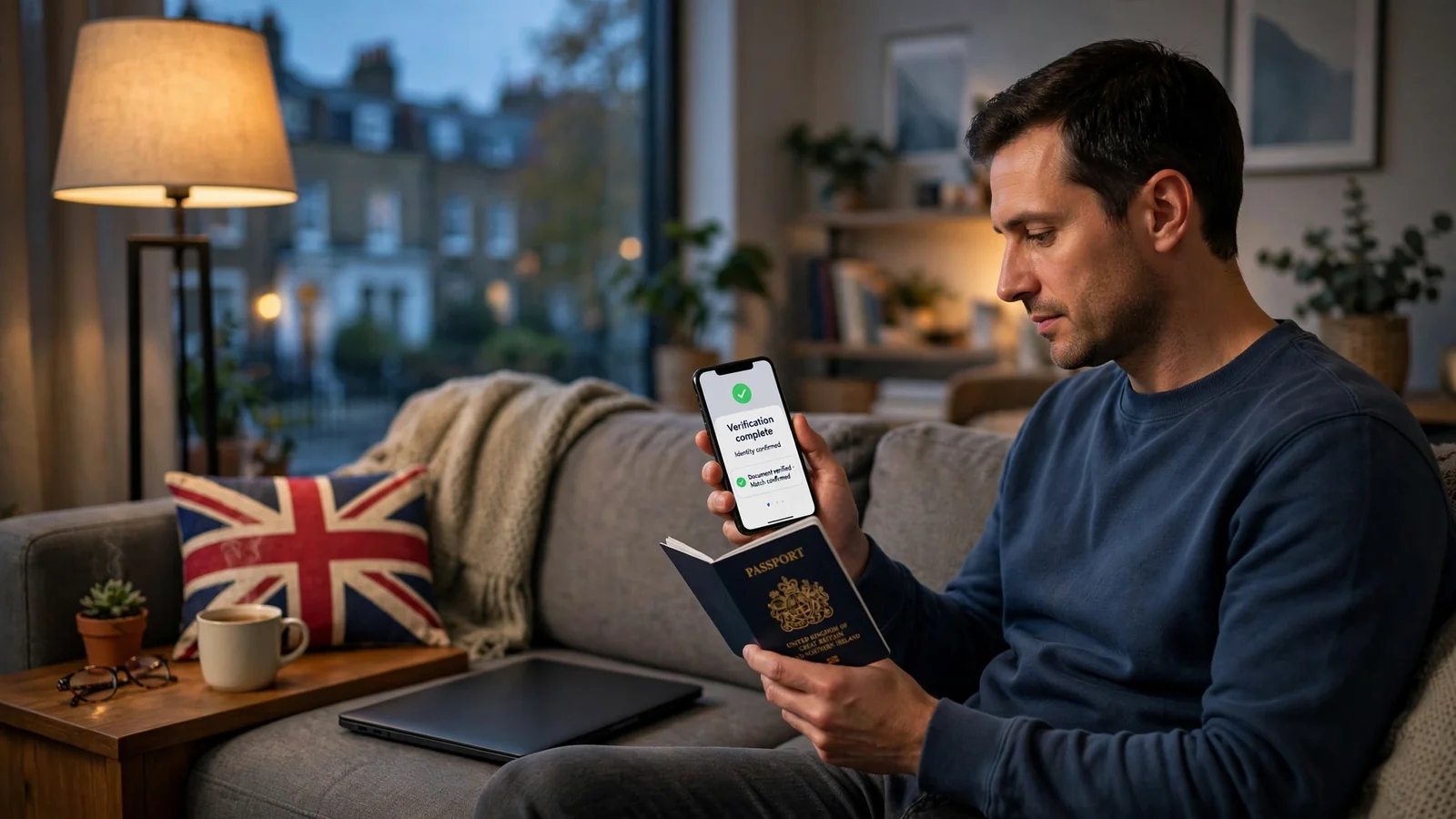
Real-Money Play: Withdrawal Times and What Can Hold Them Up
The cashier’s estimate is only part of the story. A withdrawal can move at the speed of the payment method, then sit while the casino processes it. I used to read “fast payouts” as meaning money would arrive quickly. It may describe only one stage.
Skrill and Neteller are among the quicker options: reports on foreign casinos say most clear these e-wallet withdrawals within 24 hours, with many processed in under 12. That does not mean every payment lands on the same schedule. The operator still has to approve and send it, and its own processing time can affect when the funds reach you.
Bank transfers are slower. A specialist review reports that they often take five to seven business days, with some foreign casinos adding their own processing delay before the bank timeline even begins. So a displayed estimate may not include every step. Check whether the cashier distinguishes between the casino’s review and the transfer itself.
Before depositing, look at the withdrawal terms, not just the list of ways to pay in. Check which methods are available for cashing out, whether the method must match your deposit route, and what verification the operator may request. UKGC-licensed operators verify identity before processing withdrawals; an offshore casino is not regulated by the UK Gambling Commission and does not provide that UKGC framework. It also does not have to apply UKGC-mandated affordability checks.
If a payment is delayed, keep the confirmation and note when the request was made. Ask support whether it is pending with the casino or already sent to the payment provider. That distinction matters: one stage may be waiting on the operator, another on the bank or e-wallet.
No drama, just timing. The quickest route on paper can still leave you waiting if the casino’s own queue comes first. Read the cashier and withdrawal terms before you commit real money.
What should players check to assess whether an international casino is safe?
Check which regulator issued the casino’s licence and whether it holds a UK Gambling Commission licence. An overseas licence does not place the operator under UKGC oversight.
Is playing at an international casino legal for UK residents?
Yes, placing a bet with an overseas casino is not illegal for a UK resident. However, an operator without a UK Gambling Commission licence is not authorised to offer gambling to customers in the UK.
What happens if I have a dispute with a foreign casino?
If an unlicensed casino refuses to pay your winnings, you may have no legal recourse. An offshore licence does not bring the operator under UK Gambling Commission oversight.
Are foreign casinos safe for UK players to use?
You do not get the protection of UK Gambling Commission oversight at a casino operating outside its remit. Some unlicensed sites have refused to pay winnings, leaving customers with no legal recourse.
Can I play at a casino licensed outside the UK?
Yes, UK law does not prohibit you from placing bets with an overseas operator. But a casino without a UK Gambling Commission licence is not authorised to offer gambling to customers in Britain.
What is the fastest way to withdraw from an online casino in the UK?
Crypto withdrawals at foreign casinos often clear in under an hour, though the value can fluctuate. E-wallets are also fast, with most operators processing them within 24 hours.
Prepared by the Candyland Casino 1 editorial staff.