Online casino with no sister sites in the UK: ownership
 Available in GB
A sister-site link can reflect shared ownership or technology, while related casino, betting and bingo brands may still have distinct details.

Table of Contents
- What “Sister Site” Actually Means
- How to Compare Sister Sites Without Chasing a Ranking
- New Sister Sites: Why “New” Can Be Hard to Find
- Looking for a Casino With No Sister Sites? Check the Ownership
- When Casino Brands Sit Alongside Betting and Bingo
- What UK Players Should Expect When Joining a Sister Brand
- Welcome Offers Across Sister Sites: Read the Current Terms
- Licensing and Ownership: Two Different Setups
- What a UKGC Account Record Can—and Cannot—Tell You
- Safety and Self-Exclusion Across Casino Brands
What “Sister Site” Actually Means
A sister site is a casino brand with a connection to another casino brand. That connection may be corporate: both are operated by the same parent company. Or it may involve the core technology behind the sites. The phrase describes a relationship, not a promise that the two casinos work in exactly the same way.
I used to treat “sister site” as a polite way of saying “same casino, different logo”. That shortcut caused confusion. Two brands can be connected and still have separate identities, layouts and customer-facing details. A shared parent company does not make every part of the experience interchangeable.
The technology connection needs a little care, too. Casinos can use the same core technology without necessarily being sister brands under common ownership. A familiar-looking page, or a similar selection of games, is not enough on its own to prove a corporate link. In other words, resemblance is a clue at most—not a verdict.
What may be shared
Sister casinos may have features in common. Their websites can have comparable interfaces, and they may offer similar games. Promotions, payment methods and loyalty programmes can also overlap. Across a network, the games may be very similar, while loyalty arrangements are often uniform.
That can make the second site feel familiar if you have used the first. You might recognise the menus or find the same kinds of games. But “familiar” is not the same as “identical”. The brands may present those shared elements differently, and the details can vary from one casino to another.
I learned that distinction the unglamorous way: I saw a matching look and assumed the practical details would match too. They didn’t necessarily. A shared feature tells you there is something in common; it does not tell you that every condition, account rule or service process is the same. Those need to be considered on their own, rather than inferred from a logo or layout.
What the label does not mean
“Sister site” is not a guarantee of a single account, a shared balance or identical promotions. Nor does it mean one brand is simply a copy of another. Even where the parent company or core technology is shared, the sites remain distinct brands and can have their own presentation and arrangements.

It is also not a formal rating. Calling a casino a sister site does not say whether it is better, worse, newer or more suitable for you. It only points to a relationship between brands or to shared underlying technology. The label by itself tells you little about how a specific offer works or what you can do with an account.
The same goes for customer support and other practical details. A connection between casinos is not enough to conclude that their processes are identical. I now try not to fill in those blanks from familiarity. It saves a bit of wishful thinking.
A useful mental picture
Think of sister sites as separate shopfronts that may belong to the same wider business, or may be built around the same core system. Some of what you see can overlap: the games, the general interface, payment options or loyalty structure. Other details may not. The relationship explains why two brands can feel related; it does not erase the differences between them.
That is why the phrase can be useful without being a shortcut. It gives you a reason to look for similarities, but not a reason to assume them. A casino can share a parent company with another and still have brand-specific terms. Two sites can share technology and still not be sister brands in the ownership sense. And a similar design alone does not settle either point.
When I see “sister casino” now, I read it as a starting description, not a conclusion. It suggests a connection worth understanding, while leaving the actual details to be checked separately. Not the same thing.
How to Compare Sister Sites Without Chasing a Ranking
A ranking can make sister sites look like a tidy set of near-identical options, with one brand supposedly ahead of the rest. I’ve found that framing more distracting than useful. A shared network can explain why some parts of two casinos feel familiar, but it does not tell you whether their terms, loyalty schemes or day-to-day rules match. Compare the details you will actually use.
- Open the terms for each brand individually
- Compare specific loyalty reward rules
- Check current payment methods for each site
- Assume terms are interchangeable based on layout
- Rely on memory from another sister site
- Treat familiar branding as a substitute for reading
Start with the terms that apply to ordinary play, not the branding. Wagering requirements and other key conditions often remain consistent across a network, so reading one site’s terms may give you a clue about its relatives. A clue, not a substitute. Open the terms for each brand you are considering and check that the wording still matches. Similar names and layouts are no reason to assume the documents are interchangeable.
Loyalty schemes are another useful point of comparison. Sister sites may run similar programmes, or use the same structure across the network, but check what each brand says about earning and using rewards. Look at the rules as well as the labels: a familiar-looking tier name does not prove that the benefits or eligibility conditions are the same. If the programme matters to you, compare the current details rather than relying on what you remember from another site.
Payments can also feel more joined up across a network. Sister casinos often use shared payment infrastructure, which can make transactions smoother for customers who have accounts with more than one brand. Still, a common setup does not establish that every payment option, account rule or transaction condition is identical. Check the information shown by each casino before you rely on a method being available in the same way.

I’d keep a small comparison note rather than trying to crown a “best” sister site. Put the brands across the top and the points you care about down the side: terms, loyalty rules, payment information, and how clear the site is when it explains those things. That makes gaps visible. If one casino is vague where another is precise, that is worth noticing; it is not proof that the clearer site is automatically better for every player.
The practical question is not whether two brands share a parent or a familiar feel. It is whether the details that affect your own use line up. You might find the terms are nearly the same and the loyalty programmes closely aligned, while another part of the experience differs. The comparison is only useful when it leaves room for those differences instead of smoothing them away.
I’ve made the mistake of treating a familiar layout as a shortcut: I assumed I knew how everything worked and skipped the small print. That is an easy way to miss a condition that matters to you. Take the name recognition as a prompt to compare, not as evidence that you can carry expectations from one casino to another.
There is no universal winner just because several casinos belong to one network. One may suit you better because its rules are easier to follow; another may have a loyalty setup you prefer. Keep the comparison grounded in current, brand-specific information. Familiarity helps. It does not do the checking for you.
Comparing Sister Sites
- Base comparisons on current, brand-specific information
- Use a comparison note to make gaps in terms or rules visible
- Treat name recognition as a prompt to check details, not as evidence of identity
- Recognise that a familiar layout does not guarantee identical conditions
New Sister Sites: Why “New” Can Be Hard to Find
“New” can mean a casino brand that has just appeared, or a genuinely new platform entering the market. Those are not the same thing. A familiar operator can launch another name without creating a new underlying platform, while a new-looking site may be part of an established operation. I’d keep those meanings separate before treating a casino as a recent arrival.
There is no single universal cutoff for calling a casino new. Some specialist reviews use a window of 12 to 24 months after launch when describing recent platforms. That is a useful editorial convention, not an official UK definition. It also matters what the review means by “launch”: a new brand name, a redesigned site and a new platform are different kinds of change.
That distinction is easy to miss. A fresh logo or updated homepage can make a site feel newly launched, but appearance alone does not establish when its platform began operating. Nor does a new brand automatically mean the business behind it is new. The label can describe the storefront, not the age of the operation.

Why genuinely new platforms are uncommon
Launching a real-money casino in the UK is not just a matter of building a website and adding games. Operators serving customers in Great Britain must hold the relevant Gambling Commission licence, and they have to meet regulatory and compliance requirements. Licensing overheads and the work involved in meeting those standards make entry demanding.
That creates a high bar for a new platform. A company has to be prepared to operate within the UK regulatory system, not merely present a polished site to customers. The compliance burden is one reason genuinely new casino platforms have become increasingly rare in the UK market. A new name may still appear, but that is not proof that a new platform has entered the market.
I’ve learned not to confuse “new” with “unknown to me”. A brand can be unfamiliar while the platform or business behind it is already established. And a site can change its presentation without becoming a new operation. The label needs checking.
It is also worth being precise about what you want to find. If you want a recently launched brand, look for evidence of when that brand began operating. If you mean a recent platform, look for information about the platform itself, rather than relying on a launch announcement or a new design. Those are not interchangeable claims.
In the UK, the term “new” is often an editorial convention (e.g., 12 to 24 months after launch) rather than an official regulatory definition.
There is a practical limit to how much a casual visitor can infer from a homepage. A launch date may refer to a brand becoming visible, while the underlying operation has a longer history. If a date is important to your decision, look for a clear explanation of what launched and when. If the wording is vague, treat “new” as a description, not proof.
I would also be wary of turning a recent-launch label into a quality judgement. Newness does not, by itself, tell you whether a site is well run or suitable for you. The demanding entry conditions explain why genuinely new platforms are scarce; they do not make every new brand automatically better, safer or more interesting.
So when looking for new sister sites, first decide whether you mean a recently introduced brand or a genuinely recent casino platform. That small distinction stops a rebrand or unfamiliar name from being mistaken for a completely new arrival. Less exciting, perhaps. More accurate.
Looking for a Casino With No Sister Sites? Check the Ownership
When looking for a UK online casino with no sister sites, check the details you can verify rather than relying on a label alone. The payout speed listed here gives you one concrete point to consider for each operator.
Payout speed: 1-3 business days Britsino lists a payout speed of 1–3 business days. You can use this as one practical detail when assessing the operator.
Payout speed: 1-3 business days x3bet lists a payout speed of 1–3 business days. You can factor that stated timeframe into your assessment.
Payout speed: 1-3 business days Revery Play lists a payout speed of 1–3 business days. This gives you a stated timeframe to consider for payouts.
Payout speed: 1-3 business days NightWin lists a payout speed of 1–3 business days. You can consider this stated timeframe when reviewing the operator.
Payout speed: 1-3 business days SpinFormula lists a payout speed of 1–3 business days. This is the available payout detail for you to weigh.
Payout speed: 1-3 business days EvoSpin lists a payout speed of 1–3 business days. You can use the stated timeframe as one part of your evaluation.
Payout speed: 1-3 business days Zombillion lists a payout speed of 1–3 business days. This gives you a specific payout detail to consider.
Payout speed: 1-3 business days Dieselwin lists a payout speed of 1–3 business days. You can take this stated timeframe into account when assessing it.
Payout speed: 1-3 business days SlotoSport lists a payout speed of 1–3 business days. This is a concrete payout detail for you to consider.
Payout speed: 1-3 business days BeOnBet lists a payout speed of 1–3 business days. You can factor this stated timeframe into your review.
A casino can look like a one-off brand and still sit within a wider company group. The name, colours and front page tell you how the site presents itself; they do not settle who operates it. If you want an online casino with no sister sites in the UK, start with the operator details rather than the branding.
The first place I check is the footer. That is where a casino may identify the company behind the site. Read the operator’s name carefully, not just the casino’s trading name. If you think another brand might be run by the same parent company, compare the ownership information shown on both sites. A matching parent can point to sister brands even when the casinos look quite different.
It is a small check, but it saves me from treating a polished new name as proof of independence. “Standalone” can describe the design, not the ownership.
There is another wrinkle: casinos may use the same core technology without being owned by the same parent. A familiar layout or similar-looking games are not enough to establish a sister-site relationship. I would treat resemblance as a reason to look closer, not as proof. The useful question is whether the operator details connect the brands, rather than whether their pages feel alike.

That distinction matters if you are searching for a casino that has no related brands at all. You may find a site whose branding seems unique, but the footer could reveal a shared parent. Or you may notice a similar platform and assume the casinos are connected when the visible similarity alone does not show that. Either way, the operator information is a better starting point than guesswork.
People sometimes look for sister sites because they are hoping to find another welcome offer, free spins or a no-deposit bonus. But finding a connection between brands does not tell you whether an offer exists or whether you qualify for it. That is a separate question, and the brand relationship by itself cannot answer it. I would not use a list of supposedly connected casinos as a shortcut to promotional eligibility.
For a practical check, note the operator named in the footer of the casino you are considering. Then look at the footer of any brand you suspect may be related and compare the ownership details. If the information is unclear, do not fill in the gaps based on matching logos, page layouts or game menus. Similar presentation is not a reliable ownership record.
This will not prove that a casino has no sister sites anywhere. It gives you a grounded way to check for a visible connection instead of relying on a brand’s appearance. I used to read a fresh name as a fresh operation. That was too easy. The footer is less exciting, but it is where I would look first.
Checking Ownership
Look at the bottom of the casino page to find the name of the company that operates the site.
Note the operator’s name and compare it with the footer of any other suspected sister brands.
Confirm if the operators share a matching parent company to establish a corporate link.
When Casino Brands Sit Alongside Betting and Bingo
A casino brand can sit in a group that also runs bingo rooms, poker sites and bookmakers. That matters when you are trying to understand who is behind a familiar name, but it does not mean the different brands work as one big account. I used to see a cluster of names and assume I could move between them without much friction. That is not a safe assumption.
One specialist review’s account of the Entain group places Foxy Bingo alongside a broad set of sister brands: Gala Bingo, Gala Spins and Gala Casino, as well as Coral and Ladbrokes. The same review also includes bwin, PartyCasino, PartyPoker, Gamebookers and Sportingbet. That spread crosses bingo, casino, poker and sports betting; the names are not all different doors into the same kind of gambling.
It is a useful example of why a search for casino and bingo brands under one owner can turn up a much wider family. A bingo site may have casino sister brands, while the same group also has betting brands. The corporate link can be real even when the products, names and customer journeys look quite different.
But “same group” is not a universal pass between brands. Foxy Bingo, Gala Bingo and Ladbrokes do not treat an account as shared: Gala Bingo and Ladbrokes each require their own account, separate from a Foxy account. Their terms also restrict customers to one account for each brand. So finding the relationship tells you who sits behind the names, not that one set of login details will work everywhere.

That distinction is easy to miss when a group’s branding makes its sites feel familiar. You might recognise a design or see a similar menu and think the account rules must match. I would not infer that. A sister-brand connection does not, on its own, establish that accounts, balances or customer records carry across. The specific terms for the brand you are using are what matter.
The same caution applies when the group spans betting and bingo as well as casino. A bookmaker and a casino under the same parent company can still be separate services with their own registration requirements and account rules. A shared corporate owner is not the same thing as a shared customer account. Different doors, different rules.
For me, the practical value of mapping the group is simply knowing that the brands are connected. It can help explain why a bingo name appears beside a casino or betting name, and it stops the assumption that a familiar brand must be independent. It does not tell you what you can do with an account at another site. Check the terms for the exact brand before registering or trying to use an existing account.
What UK Players Should Expect When Joining a Sister Brand
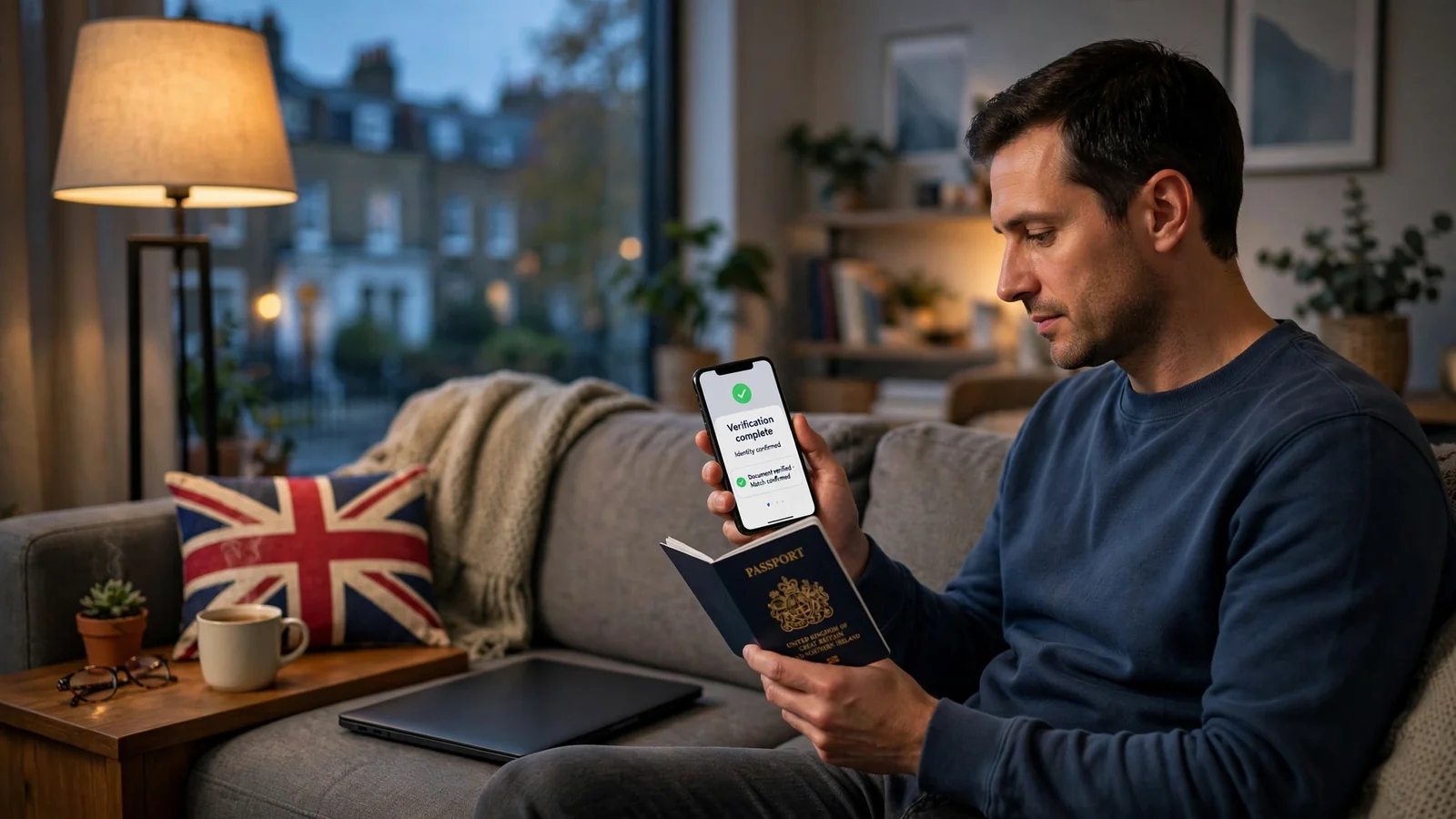
A familiar brand name can make registration feel like a formality. It isn’t. In the UK, a casino must complete Know Your Customer checks before you make your first deposit. Those checks are part of the anti-money-laundering rules, so a new registration can involve confirming who you are before you can start playing.
Registration at a related brand does not remove the legal requirement to complete Know Your Customer (KYC) checks before depositing.
At Foxy Bingo, for instance, identity, address and date of birth must be verified before deposits and play are unlocked. Treat that as part of joining, not as an optional extra to sort out later. If details need checking, the process may take longer; having registered at a related brand does not remove the requirement.
There is one possible shortcut, but it is not something I’d bank on. A specialist review has reported that KYC can be faster at a sister site when a player already has a verified account and their information is on file. That describes a possibility, not a promise for every operator or every registration. The casino still has to carry out the required checks, and it may need to verify information again.
I used to read “same network” as meaning I could breeze through the next sign-up. That was too neat an assumption. A connection between brands may help explain why some information is already available, but it does not guarantee a particular check will be skipped or completed sooner. Give the details requested accurately, and expect the casino to tell you what it needs before you deposit.
Also keep the account distinction clear. Even where brands sit under the same UKGC account, that record identifies the same licensee; it does not mean you can use one password, wallet or promotion across the brands. Registering with a sister brand may still mean going through that brand’s own account process.
So, if you’re considering casino sister sites as a UK player, judge the sign-up on its own terms: expect identity checks before depositing, and don’t count on an existing account to settle everything automatically. Familiar branding is not a shortcut. Check first.

Welcome Offers Across Sister Sites: Read the Current Terms
A casino brand in the same network may advertise its own welcome offer, including a deposit bonus. That does not tell you whether you qualify, what you must do to claim it, or whether the promotion matches one shown by another brand. The terms attached to the offer are what matter.
I used to see the same company name and assume the deal would work the same way across its casinos. That is an easy assumption to make; it is also a poor substitute for reading the rules. Promotional eligibility can differ between brands, even when the sites look related. A promotion at one casino does not establish that you can claim another at a sister site, or that you can take up several offers across the network. Check the operator’s policy before registering or depositing.
A specialist review has described players registering with a sister brand as entitled to that casino’s sign-up offer. Treat that as a description from one review, not a standing promise from every operator. Offers change, and eligibility is governed by the current terms for the particular brand and promotion. The software may look familiar, too, but a familiar layout does not make the bonus rules familiar.
Before acting, read the offer page and the linked terms together. Check who can take part, what action activates the offer, which conditions apply to any bonus funds, and what steps are required before a resulting balance can be withdrawn. If a detail is unclear, ask the operator before you deposit rather than relying on an old review, a saved screenshot or a friend’s experience.
Promotional Eligibility
Do not assume you qualify for multiple welcome offers across a network; eligibility is governed by the current terms of each specific brand.
That last point matters because older terms do not govern a current promotion. A welcome offer can be changed or withdrawn, and a headline can leave out conditions that affect whether it suits you. I now treat the banner as an invitation to inspect the small print, not as the full deal.
Keep the offer for each brand separate in your notes if you are comparing sister sites. Write down the current eligibility wording and the relevant terms, then check them again at the casino before taking up the promotion. Do not assume that a shared name, similar games or a matching-looking bonus means the same rules apply.
The boring part is the useful part. Read first. Decide after.
Licensing and Ownership: Two Different Setups
When I’m trying to understand who sits behind a casino, I separate two things that are easy to blur: who owns or runs the brand, and who holds the UK gambling licence. The setup can affect who controls the site, but the branding alone won’t tell you which arrangement is in place.
Direct ownership
In a direct-ownership arrangement, the parent company creates and designs the casino and operates it under its own UK Gambling Commission licence. That gives the company control over the site’s presentation and how the casino is run. The licence identifies the regulated operator; it is not a stamp saying every site under that company is identical.
That distinction matters. I used to see familiar branding and assume I already knew how a casino worked. It was a lazy shortcut. A parent company can control the site without making its brands interchangeable, and the ownership model itself does not tell you what a particular casino’s terms or features are.
White Label
A White Label arrangement works differently. A software provider typically holds the licence and manages the back-end mechanics, while the operator can personalise the branding and promotions. So the name and look a customer sees may come from one business, while the regulated infrastructure is handled by another.
“Turnkey” sounds simple; the division of responsibility is the useful part. The operator’s branding does not, by itself, establish who holds the licence. Nor does a shared software provider prove that two casinos are sister sites: similar technology can sit behind brands with different ownership.

I find it helps to check the licence details and the operator information rather than treating a polished logo as an answer. In a direct model, the parent company operates under its own UKGC licence. In a White Label setup, the software provider typically holds the licence and runs the back end. Those are different structures, even if both produce a casino that looks neatly branded to the customer.
Neither setup is a shortcut to deciding whether a casino is trustworthy. A licence tells you which company is responsible within the UK regulatory system; ownership tells you who controls the brand or business. Keep those questions separate, and you are less likely to mistake a familiar name, shared design or common technology for proof of the whole arrangement. Check the operator and licence information for the specific casino in front of you. That is less exciting than the branding. More useful, though.
What a UKGC Account Record Can—and Cannot—Tell You
A UK Gambling Commission account record is useful for checking which domains are listed under a particular licensee. It is a paper trail, not a map of how every brand works behind the scenes. If two casino domains appear under the same account, that points to the same licensed operator; it does not tell you that the sites share a password, balance or offer.
A specialist review of the Commission’s account record for LC International Limited reported a snapshot dated 24 September 2026. It showed 15 domain rows: 13 marked active, two inactive and none marked as White Label. Treat that as a dated record, not a promise that every listed domain is available now. Statuses and listings can change, so check the Commission’s current record when the detail matters.
The labels need reading carefully. An inactive row is not evidence that a site is currently operating, and an active row does not mean its customers can log in through another brand’s website. Likewise, a shared account number is about the licensee named on the record. It is not proof of a shared wallet, common account credentials or transferable promotions.
I used to treat a regulator’s list as if it answered every question about a group. It doesn’t. It can help establish which domains sit on a licence account, but it cannot settle the practical details you encounter as a customer. For those, the individual casino’s own terms and account information are what count.
So, when checking possible UKGC casino sister sites, use the record to confirm the licensed operator and the domains associated with that account. Then keep the conclusion narrow: same account, same licensee. Anything about logins, money or promotions needs separate confirmation. A small distinction, but an important one.
Safety and Self-Exclusion Across Casino Brands
If you’re judging whether sister sites are safe to use, don’t treat a shared name or company as proof that one self-exclusion request will cover every brand. The practical reach depends on the arrangement the operator sets out in its terms.
GAMSTOP is broader: it applies to every online operator holding a Great Britain licence. A specialist review describes its exclusion choices as six months, one year or five years. The block remains in place until you request its removal; if you do not, it can continue for no more than a further seven years. Check GAMSTOP’s current information before registering, so you understand the choice you are making.
That still does not mean every operator’s own exclusion process works across all its brands. Entain is a useful warning: self-exclusion from one Entain brand does not automatically cover its other brands. If you exclude yourself directly with a casino, read that operator’s terms to see which brands are included. Don’t assume a sister site is covered just because it shares an owner, and don’t use another brand to get around an exclusion.
I used to read “same group” as if it meant “same protections everywhere”. It doesn’t. The detail matters.
If you want to stop gambling across Great Britain’s licensed online operators, GAMSTOP is the relevant scheme to check. If you’re relying on an operator’s own self-exclusion, confirm its scope with that operator rather than guessing from branding. And if you are already excluded, treat the exclusion as a boundary, not a reason to look for a related site that may fall outside it.

A safe decision here is not about finding a casino with reassuring wording. It is about knowing which exclusion applies, how long it lasts, and which brands it actually covers. When that is unclear, pause before opening another account.
Does self-exclusion apply across sister sites?
It applies to all casinos under the same UKGC licence, but a licence alone does not establish whether brands are covered together. Check the operator’s self-exclusion terms for the brands you use.
What are casino sister sites?
They are casino brands connected through common ownership or shared core technology. They may have similar games, payments or loyalty schemes, but remain distinct brands.
Who is the operator?
Foxy Bingo is run by LC International Limited, part of Entain.
Are bonuses shared across sister sites?
Not necessarily: each sister site can have its own sign-up offer, and promotional eligibility rules may vary between brands. Check the offer terms on the specific site.
What are the risks and benefits of joining sister sites?
You may find familiar games, payment arrangements and loyalty features, and KYC may be faster if your details are already verified with a sister site. But terms and promotional eligibility can differ, so check each brand’s rules rather than assuming your account or offers carry over.
Does a Foxy self-exclusion cover its Entain sisters?
Yes, if the sister casinos are covered by the same UKGC licence: self-exclusion then applies across those casinos. Check the operator’s terms to confirm which brands are included.
Which brands share Foxy Bingo’s licence?
Foxy Bingo’s listed sister brands are Gala Bingo, Gala Spins, Gala Casino, Coral, Ladbrokes, bwin, PartyCasino, PartyPoker, Gamebookers and Sportingbet.
Prepared by the Candyland Casino 1 editorial staff.