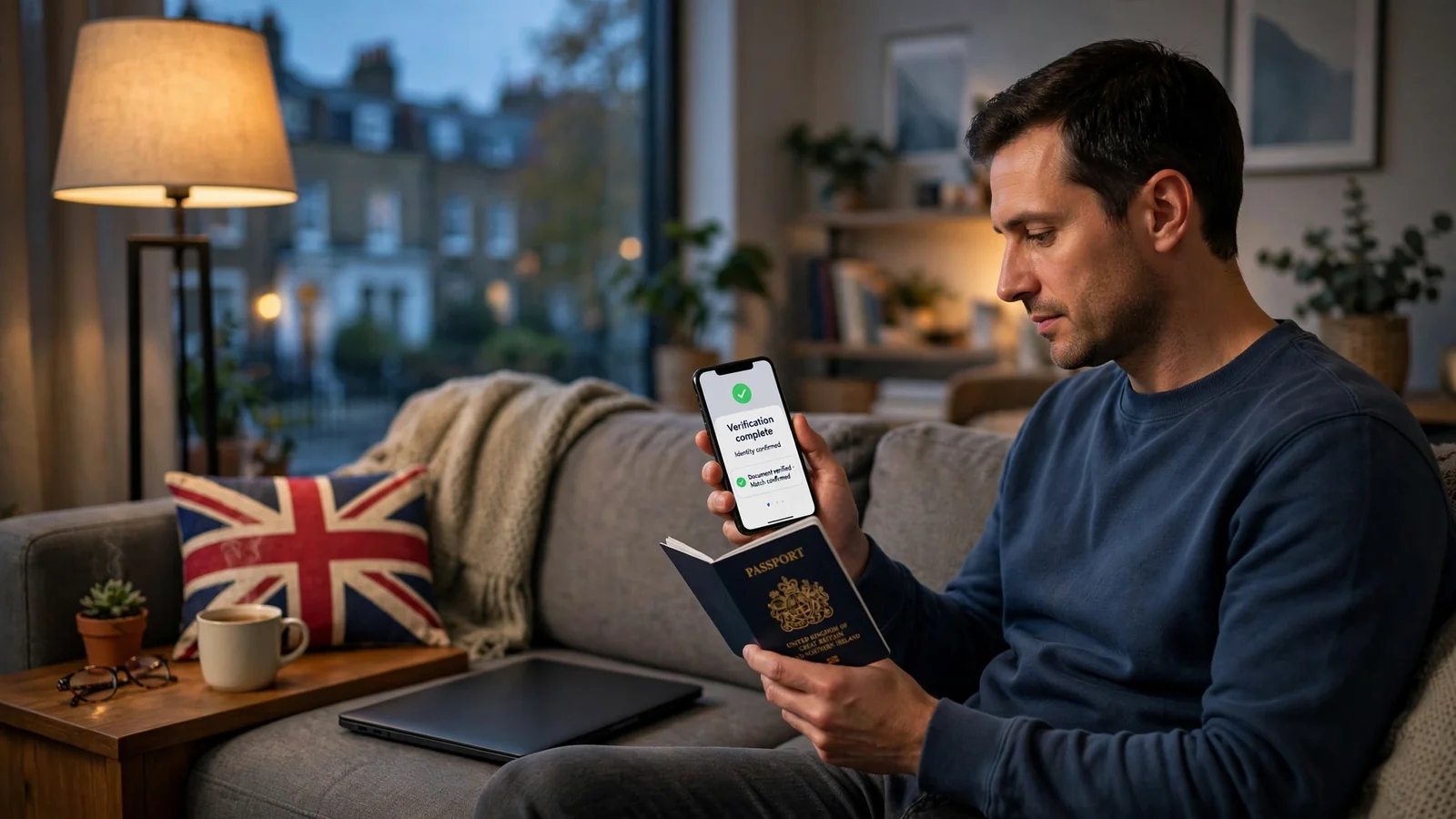
Offshore casino sites for UK players: what to check
 Available in GB
A guide to how offshore status differs from UKGC authorisation, and what licensing, payments and account checks can mean.

Table of Contents
- What “Offshore” Means for UK Players
- What to Check Before You Trust a Casino Site
- Why a Verified Offshore Casino List Is Hard to Give
- The Business Ties Behind an Offshore Casino
- Licences, Deposits and the Wait to Get Paid
- Games and Promotions: Read the Terms, Not the Hype
- No-Deposit Offers, Deposits and Bitcoin
- Crypto Withdrawals: Speed Has a Trade-Off
- KYC and How Offshore Accounts Work
- Offshore Sites, GamStop and Other Routes
What “Offshore” Means for UK Players
“Offshore” sounds like a description of where a casino is based. For a British player, the more useful question is whether the operator holds a licence from the UK Gambling Commission. In this context, a foreign casino is an online gambling operator that accepts customers in Britain without that UK licence. Its registered address or the country named on its own licence does not change that definition.
That distinction matters because a foreign licence and a UKGC licence are not interchangeable. An operator may be licensed elsewhere and still be outside the UK regulatory system. Calling a site “licensed” without saying which regulator issued the licence can leave you with the wrong impression. The label alone tells you neither that the operator is authorised to serve British customers nor that it is overseen by the UK Gambling Commission.
The operator’s position
The legal obligation falls on the business offering gambling, not on the place where its servers or offices happen to be. Remote operators that offer gambling to customers in England, Scotland and Wales must hold the relevant UKGC licence. Without one, an online gambling site cannot lawfully offer its services there. Providing gambling facilities to British customers or advertising those services in the UK without a UKGC licence is illegal for the operator.
When you consider offshore casino sites for the UK, payout timing is one practical detail to check. Use the information below as a starting point, and review each site’s terms before deciding.
Payout speed: 1-3 business days Britsino lists a payout speed of 1–3 business days, giving you a stated timeframe to consider.
Payout speed: 1-3 business days x3bet lists payouts as taking 1–3 business days. You can use that stated timeframe when reviewing its payment terms.
Payout speed: 1-3 business days Revery Play gives a payout speed of 1–3 business days, a useful detail for you to check alongside its terms.
Payout speed: 1-3 business days NightWin lists a payout timeframe of 1–3 business days. That gives you one concrete payment detail to consider.
Payout speed: 1-3 business days SpinFormula states that payouts take 1–3 business days. You can factor this timeframe into your review of the site.
Payout speed: 1-3 business days EvoSpin lists payouts at 1–3 business days, giving you a stated timing estimate to bear in mind.
Payout speed: 1-3 business days Zombillion gives a payout speed of 1–3 business days. You can check this stated timeframe against the site’s full payment terms.
Payout speed: 1-3 business days Dieselwin lists a payout timeframe of 1–3 business days, providing you with a clear timing detail to consider.
Payout speed: 1-3 business days SlotoSport states a payout speed of 1–3 business days. This gives you a stated timeframe to keep in mind when reviewing its terms.
Payout speed: 1-3 business days BeOnBet lists payouts as taking 1–3 business days, giving you a specific payment detail to consider.
So a casino does not become authorised to serve Britain simply because it has permission to operate in another jurisdiction. That foreign permission relates to the operator’s status under that jurisdiction’s rules; it does not substitute for the licence required to offer gambling in the British market.
I used to read a licence badge as if it settled the whole question. It doesn’t. The regulator named on it is the important detail, and a foreign regulator is not the UKGC. That is a legal distinction, not a judgement about how polished a website looks or how confidently it describes itself.
The player’s position
The operator’s breach does not mean that an individual player commits a crime by placing a bet with an overseas casino. UK law does not prohibit a British resident from betting with a foreign operator, and there is no criminal penalty for the player simply for doing so. The law draws a line between the business providing the gambling and the person using the site.
That can feel counterintuitive. If a site is not permitted to offer gambling to customers in Britain, you might assume that using it puts you in the same legal position as the operator. It does not. The fact that the operator may be acting unlawfully by serving the market does not make the player’s act of placing a bet a criminal offence.

But “not illegal for the player” is a narrow statement. It does not mean that the site is approved by the UKGC, that the operator has permission to serve Britain, or that the protections attached to UK-licensed gambling apply. Those are separate issues. I would not treat the absence of player criminal liability as a stamp of safety or endorsement. It isn’t one.
Why the wording can confuse
Terms such as “offshore casino”, “foreign casino” and “non-GamStop casino” are often used loosely in conversation. For this UK context, focus on the licence and the service being offered: does the operator accept British customers without holding a UK Gambling Commission licence? If so, it falls within the meaning of a foreign casino used here, regardless of the marketing language on its homepage.
Likewise, “best” or “top” in a site’s own description does not alter its regulatory position. Those words are claims, not licensing categories. A site may present itself as international, global or available to players worldwide; none of that answers whether it has the UK authorisation required to offer gambling to customers in Great Britain.
The basic picture is plain, even if the wording around it often isn’t: the operator must have the right UK licence to lawfully offer gambling in England, Scotland and Wales, while an individual player is not criminally liable merely for betting with an overseas operator. Those two points can both be true at once. Keep them separate, and “offshore” becomes a more precise description rather than a shortcut for “illegal for me to use” or “safe because it has a licence.”
Legal Risk
Providing gambling facilities to British customers or advertising those services in the UK without a UKGC licence is illegal for the operator.
What to Check Before You Trust a Casino Site
A polished homepage can make an offshore casino look much like a familiar UK brand. I’ve learned not to treat a smart design, reassuring wording or a row of payment logos as proof that a site will handle a problem fairly. The key question is not how convincing the welcome page looks. It is what protections actually apply if something goes wrong.
An offshore casino is not regulated by the UK Gambling Commission. It may hold a licence from another jurisdiction, but that is not a UKGC licence, and it does not bring the operator under UKGC oversight. So when a site says it is “licensed” or “secure”, pause over what that means. The word alone does not tell you which regulator is involved, what rules apply, or how a British customer could challenge a decision.
Treat claims as claims
I look for details behind broad promises. If a site says it is independently monitored, for instance, does it identify the organisation and explain what it checks? If it describes a complaint process, does it say how to raise a dispute and who, if anyone, can review it outside the casino? A badge or a sentence about fairness is not the same thing as a clear route to resolution.
The same goes for security language. A claim about encryption may concern the handling of information, but it does not establish that withdrawals will be approved or that a disagreement will be settled in your favour. Those are separate issues. “Protected” can sound comprehensive while describing only one part of the service.
I’m wary of vague assurances. Read the detail.

Ask what happens if a withdrawal is refused
The hardest risk to judge before depositing is whether the operator will pay out when you ask. Reports cited by gambling.com describe cases where unlicensed sites refused winnings, leaving customers without legal recourse. That is not a prediction about every offshore casino; it is a reason to take the possibility seriously before trusting a site with money.
Check the terms for the circumstances in which a withdrawal can be delayed, rejected or cancelled. Pay attention to clauses that give the operator wide discretion, and to wording that is difficult to understand. If the rules are unclear before you sign up, it may be harder to argue about them later. Save copies of the terms and any relevant account messages if you decide to proceed.
A listed complaints channel should not be mistaken for a guaranteed remedy. A casino may have an internal process, but the existence of a form or support inbox does not itself show that an independent body can enforce a decision. If the operator is outside UKGC regulation, you cannot rely on the UKGC to supervise its conduct or apply its enforcement powers to that operator.
Look past the word “protection”
Some offshore sites describe themselves as responsible, safe or player-focused. Those phrases are not a substitute for UKGC rules. In particular, offshore operators do not provide the UKGC-mandated affordability checks. That matters: do not assume that a site’s general safety language means it offers the same safeguards as a UK-licensed operator.
Nor should you assume that a foreign licence gives you the same practical protections you would have under UK regulation. A licence statement may tell you that an operator is licensed offshore, but it does not make that operator UKGC-regulated. Read the claim narrowly, rather than letting it stand in for protections it does not establish.
- Identify the organisation monitoring the site
- Check for a clear route to resolution
- Save copies of terms and account messages
- Treat a smart design as proof of fairness
- Mistake a support inbox for independent enforcement
- Assume general safety language means UKGC-level safeguards
I also separate account access from accountability. Being able to create an account or contact customer support does not show that a dispute will be resolved independently. A quick reply is useful, but it is not the same as a binding decision or a route to enforce one.
A cautious check before you commit
Before putting money into an offshore casino, I would want the operator’s identity, licence details, terms and complaint procedure to be easy to find and consistent with one another. If the site hides who runs it, uses broad promises without explaining them, or leaves important terms hard to locate, that is a reason to stop and reconsider—not a puzzle you have to solve after a dispute.
This is not a way to certify a site as trustworthy. A neat set of disclosures cannot remove the central risk: offshore casinos are outside UKGC regulation, and a customer may have fewer practical ways to challenge an adverse decision. The sensible test is whether you understand those limits before you deposit, not after a withdrawal has been refused.
Why a Verified Offshore Casino List Is Hard to Give
A list looks simple: put casino names in a column, add a note about licensing, and call the result a guide. But a name beside the words “offshore licensed” is not proof that the operator behind it has a valid licence or that the licence covers the service being offered. I’ve learned to treat tidy tables with a bit of suspicion. They can make an untested claim look settled.
A specialist affiliate review has described many such platforms as licensed and regulated by reputable authorities. That broad description is not the same as confirming the status of any particular casino. It doesn’t tell you which legal company runs the site, whether the licence details match that company, or whether the claim is still current. A general statement cannot carry the weight of an endorsement.
That distinction matters when you’re looking for legit offshore casinos. “Legit” can mean several different things: that a site exists, that it accepts British customers, that a regulator has issued a licence to its operator, or that a player can rely on the site to honour its terms. Those are not interchangeable claims. A badge or a licence label answers only a narrow question, and only if it can be tied to the actual operator.

I’m not going to turn a handful of unconfirmed names into a supposedly verified offshore casino list. That would give you the appearance of due diligence without the substance. A recommendation needs to be specific: it should identify the operator, show what supports the licensing claim, and make clear what that claim does and does not establish. Without that, a list is just a collection of names dressed up as research.
There’s another trap in the word “offshore”. It describes a relationship to the UK market, not a quality mark. Two sites can both be called offshore while having very different ownership, licensing arrangements and terms. So a list of offshore casinos can’t be judged by the heading alone. The useful question is not whether a site appears on a page with a confident title; it is whether the evidence relates to that exact operator and its current offering.
The same caution applies to offshore casino licences. A foreign regulator’s name, by itself, doesn’t tell you that the operator is authorised to serve customers in Britain. Nor does a general claim that a casino is “regulated” settle what protections apply to you. Offshore operators are not regulated by the UK Gambling Commission, and they do not provide UKGC-mandated affordability checks. That is a meaningful difference, not a small-print detail.
I know the temptation: you want a shortlist, not a lecture about labels. I’ve clicked through enough polished pages to understand why a ranked list feels useful. But if the names cannot be presented as checked recommendations, a shortlist risks doing the opposite of helping. It lends confidence where none has been earned.
So treat any collection of names as a starting point for scrutiny, not proof that the sites have been vetted. An “offshore slots” label or a prominent licence graphic doesn’t verify the operator behind the screen. If a page offers certainty without showing what its claims apply to, keep your confidence in check. A shorter answer is better than a confident fiction.

The Business Ties Behind an Offshore Casino
A casino’s public face is only part of the picture. The name on the homepage, the licence badge and the terms tell you something about the operator, but they do not necessarily show who else has a commercial stake in the business. I’ve learned to look past the polished pitch. “Independent” can sound reassuring; the useful question is what the company’s contracts actually connect it to.
Santeda and SIS offer a concrete example. Under their contract, SIS received a share of revenue generated by losing bets placed through Santeda’s brands. That is a specific financial relationship, not just two companies appearing in the same industry. It matters because a business link can shape incentives, even when it does not tell you everything about how a casino is run.
That detail should be handled carefully. It does not, by itself, prove that a particular bet was treated unfairly, or that a particular player was harmed. Nor does the existence of a commercial agreement automatically establish misconduct. But it is relevant context: when one party’s income is tied to losses made through another party’s brands, a reader has reason to ask how the arrangement works and what oversight applies.
Santeda’s licensing position is also distinct from the SIS relationship. The company holds a Curaçao licence, but that licence does not authorise it to operate in the UK or the United States. A foreign licence and a commercial partner do not add up to UK Gambling Commission approval. Offshore casinos sit outside UKGC regulation, and that distinction should not get lost among logos and corporate names.
When I see a casino described as “backed” or “connected” to another business, I try not to treat those words as a seal of approval. They can mean many things: a supplier arrangement, a marketing relationship, shared ownership, or a contract that gives another party a stake in revenue. Those are not interchangeable.
There is a practical reason to care. A player is dealing with a public-facing casino brand, but the business behind it may involve other companies and agreements that are not obvious from the sign-up page. Knowing about a revenue-sharing tie does not settle whether a site is trustworthy. It does give you a sharper question than “Who owns the logo?”: who benefits financially, and from what?
Business Ties
A commercial relationship, such as revenue-sharing between Santeda and SIS, is relevant context for how a casino is run, though it does not automatically establish misconduct.
I used to take a familiar-looking brand or a confident licensing claim as a shortcut. That was lazy. A licence, a partner and a marketing badge each need to be understood on their own terms; one cannot substitute for another. Commercial links deserve the same scrutiny as the claims aimed at customers, especially when the operator is outside the UKGC system.
No instant verdict. Just context.
Licences, Deposits and the Wait to Get Paid
An offshore licence and a UK Gambling Commission licence are not interchangeable. A casino licensed outside the UK is not regulated by the UKGC, even if it accepts British customers. That distinction matters once money is involved: the payment route may look familiar, but the operator is outside the UK regulatory system.
I used to treat the logo of a foreign regulator as if it answered every practical question. It doesn’t. For deposits, look at which methods the site actually accepts and whether the account currency and any conversion charges are clear before you send money. Don’t assume a method available at a UK-licensed casino will also be available there. The information to check is the operator’s own payment page and terms, not a general claim that its cashier is “easy”.
Withdrawals need a separate check. A deposit reaching your account quickly does not tell you how long a payout will take. Specialist reviews report that Skrill and Neteller withdrawals at many foreign casinos are cleared within 24 hours, with some reported as taking less than 12 hours. Those are reported processing times, not a promise for every casino or every withdrawal.
Bank transfers are described as the slowest route in specialist reviews, with a reported wait of five to seven business days. Some operators may add their own processing delay before the transfer reaches the bank. So the time shown for the banking leg may not include the time the casino takes to approve and release a withdrawal. That gap can catch you out.
Read the withdrawal terms before depositing. Check whether the site states a pending period, withdrawal limits, and what verification it may require before releasing funds. Specialist reviews note that these details vary considerably between operators. A payment method advertised in the cashier is not, by itself, evidence that a withdrawal will be approved promptly.
I’ve learned not to confuse “instant” with “paid”. It may describe a deposit, or only one stage of a withdrawal. The useful question is what happens after you request your money: whether the casino has a stated processing window, whether it can hold the request, and what conditions it says must be met first. If those details are hard to find, that uncertainty is part of the cost of using the site.
For anyone comparing casinos with an offshore licence, keep the licence and the payout process in separate columns in your head. The licence tells you the operator is licensed offshore; it does not make the site UKGC-regulated or guarantee a particular withdrawal time. Skrill, Neteller and bank transfer timelines are reported patterns, not protections. And if the operator’s own terms allow additional checks or delays, a fast estimate elsewhere won’t override them.
There is no neat shortcut here. Check the route in and the route out independently, and don’t deposit money you need back by a particular date. A quick cashier can still lead to a slow wait.

Games and Promotions: Read the Terms, Not the Hype
When I look at an offshore casino’s games page, I treat the catalogue as a description of what the site says it offers, not proof that every title is available to every player or that the operator is dependable. The names and range can make a site look established. They tell you little about who is responsible if a game or promotion becomes part of a dispute.
The same caution applies to labels such as “safe” or “regulated”. A casino can hold a licence from an authority outside the UK and still be outside the UK Gambling Commission’s regulatory system. That foreign licence is not a UKGC licence, and it does not bring the operator under UKGC oversight. So when you see a foreign licence highlighted beside a large games catalogue, keep those claims separate. A licence claim is not the same thing as a UK guarantee.
The bonus headline is only the start
Promotions can look generous because they are presented as a headline amount or a match. A specialist affiliate review describes foreign casinos as offering larger welcome packages in part because they are not bound by UKGC restrictions on bonus terms, wagering requirements and promotional language. That is a reported explanation, not a reason to assume every offer is valuable or that every site uses the same terms.
I’ve made the mistake of reading the big number and barely noticing the conditions underneath. The phrase “100% match” sounds simple; the wagering rule can change what it takes to turn bonus funds into cash you can withdraw. For instance, a specialist review gives the example of a £100 match bonus with a 35x wagering requirement: the player would need to place £3,500 in qualifying bets before the bonus funds become withdrawable. That is a worked example, not a promise that a particular casino’s offer works that way.
Read the full terms before opting in. Look for which bets count, whether some games contribute differently or are excluded, when the offer expires, and what happens if you cancel it. If the rules are hard to locate or unclear, treat that as a reason to pause rather than filling in the gaps with optimism. “Free” can come with a long condition attached.
A catalogue is not a safeguard
People looking at offshore games may be drawn to familiar categories, a large selection or a polished lobby. None of that tells you how a complaint would be handled, whether a promotion’s rules will be applied fairly, or whether the operator is subject to UKGC enforcement. Offshore casinos are not. A foreign licence, encryption claim or glossy page should not be mistaken for the player protections required of a UK-licensed operator.
It is also worth separating the legality of the operator’s offer from the player’s position. In Great Britain, a remote operator offering gambling to customers must hold a UK Gambling Commission licence; an offshore licence does not authorise it to serve the UK market. That does not mean a player faces a criminal penalty for placing a bet. The distinction matters, but it does not make the site equivalent to a UK-licensed casino.
I would not treat a chargeback as a backup plan for a disputed bonus or a lost balance. The terms, operator and circumstances matter, and a payment dispute is not a substitute for clear rules or reliable oversight. Read first. Decide second.
Bonus Wagering
A player receives a £100 match bonus.
The bonus carries a 35x wagering requirement.
The player must place £3,500 in qualifying bets before the bonus funds become withdrawable.
No-Deposit Offers, Deposits and Bitcoin
A no-deposit offer sounds like a way to try a casino without putting your own money in. But “free” describes how the bonus starts, not whether you can withdraw anything it produces. The terms decide what counts as eligible play and when bonus funds, or winnings linked to them, can become cash you may withdraw. Read those conditions before registering, not after a balance appears on screen.
A deposit offer works differently: you put money into the account, and the promotion may add bonus funds or another incentive. Specialist reviews of foreign casinos describe deposit matches, free spins, no-deposit offers and cashback among the promotion types people encounter. That is a description, not a promise that any particular offer is available or worthwhile. The headline can look generous while the conditions make the bonus hard to turn into withdrawable funds.
One specialist review illustrates the effect with a £20 bonus carrying a 35x wagering requirement: the player would need to place £700 in qualifying bets before cashing out. That is an example of how a stated condition works, not a standard you should expect every casino to use. Check the actual offer’s terms and whether the qualifying play applies to bonus funds, winnings, or both. “Big bonus” is just the label. The terms do the talking.
Bitcoin may appear among the deposit choices at offshore casinos, but paying in crypto does not make a bonus simpler or safer. You still need to understand the promotion’s conditions, and the value of crypto can change. Do not deposit money you would not be comfortable losing just because a site presents a bonus alongside a Bitcoin option.
More importantly, offshore casinos are not regulated by the UK Gambling Commission. They do not provide UKGC-mandated affordability checks, so you cannot rely on that safeguard. A bonus is not a reason to deposit more, and a no-deposit offer is not proof that an operator is trustworthy. If the conditions are unclear, walking away is a sensible choice.
Crypto Withdrawals: Speed Has a Trade-Off
Crypto can look like the neat answer when you are waiting to get money out of an offshore casino. A specialist review of foreign casinos reports that crypto withdrawals can clear in under an hour, quicker than fiat routes. Treat that as a reported possibility, not a promise from every operator. A fast transfer does not settle the more awkward question: what will the money be worth when it arrives?
The value of a cryptocurrency can move while a withdrawal is being processed or before you exchange it. That means the amount you eventually turn into pounds may differ from what you expected when you asked to cash out. The transfer can be quick and the value can still shift against you. Speed, by itself, is not the same as certainty.
I would not judge a withdrawal method only by the time shown on a site. Check which crypto asset the operator supports, what it says about the withdrawal process, and whether you understand how you would convert the funds back into pounds. If the explanation is vague, pause before treating the method as straightforward. A quick-moving payment can still leave you with a value you did not plan for.
There is another distinction worth keeping clear: using crypto does not change who regulates the casino. Offshore operators are outside the UK Gambling Commission’s system, and they do not provide UKGC-mandated affordability checks. A crypto option is a payment route, not extra protection or a shortcut around the risks of playing with an offshore operator.

I have learned not to let a bold speed claim do all the thinking for me. With crypto, weigh the possible time saved against the chance that the value changes before you can use it. If you cannot accept that uncertainty, the headline speed may not be worth much. Fast, but not fixed.
KYC and How Offshore Accounts Work
An account can look simple at the start: register, enter your details, confirm your age and follow the site’s instructions. But the phrase “no KYC” can make the process sound more predictable than it is. A claim that an offshore casino will ask for no checks should not be treated as a promise that it will never ask you to verify who you are.
KYC means checks used to establish a customer’s identity. A site may ask you to provide identification to meet its own rules or the requirements of its licence. The exact process is not uniform. A specialist review notes that verification procedures can differ between operators, so the account steps you meet on one site do not tell you what to expect elsewhere.
That uncertainty matters when you want to access your balance. UKGC-licensed casinos must verify a player’s identity before processing a withdrawal. Offshore casinos sit outside the UK Gambling Commission’s oversight, so you do not have that UKGC requirement governing their account process or the same regulator overseeing how they handle it. A check requested late can be frustrating. A check that never appears at registration is no guarantee it will not appear later.
There is another difference worth keeping in view: offshore operators do not provide UKGC-mandated affordability checks. Those checks are part of the UK regulatory framework, not a feature you should assume comes with an overseas account. And UK rules require operators to verify a customer’s age before allowing deposits; do not confuse an account opening screen with proof that every safeguard is in place.
I used to read “quick sign-up” as “no complications”. That was wishful thinking. Read the operator’s account and verification terms before registering, and do not send identification through a channel you cannot verify as belonging to the site. If the instructions are unclear, stop rather than guessing. A smooth registration is only the first step.
Offshore Sites, GamStop and Other Routes
When you have self-excluded, an offshore site can look like an easy alternative: it sits outside the system that is meant to keep you away from gambling. That is precisely the problem, not a benefit. GamStop covers every operator licensed by the UK Gambling Commission, so registering blocks access to all UK-licensed gambling sites. Casinos operating beyond the Commission’s remit are not part of GamStop.
A report by gambling.com says some non-UK-licensed casinos are expected to block British visitors, but that some do not enforce the restriction; it also notes that users may get around access blocks with a basic VPN. That is a description of reported access, not a dependable route or a safeguard. A site letting you through does not mean it is suitable for you, and it does not restore the protections you chose when you self-excluded.
I understand the temptation to look for “other options” when the usual doors are closed. I have learned that treating a barrier as a puzzle to solve can turn one bad decision into a string of them. Step back instead. If you signed up to GamStop because gambling was causing harm, bypassing it removes an important pause you put in place.
Offshore operators are not regulated by the UKGC, and they do not provide UKGC-mandated affordability checks. So the alternative is not simply another way to play: it is access outside those safeguards. If you need help maintaining a self-exclusion, contact a gambling support service or use a blocking tool rather than searching for a site that will admit you.
That distinction matters. A closed door is protection.
Are foreign casinos safe for UK players to use?
A foreign licence does not provide UKGC oversight or the protections that come with it. Some unlicensed sites have refused to pay winnings, leaving customers with no legal recourse.
What happens if I have a dispute with a foreign casino?
You may have limited ways to challenge the casino: foreign operators are outside UKGC oversight, and customers of some unlicensed sites have been left without legal recourse after winnings were withheld.
What should players check to assess whether an international casino is safe?
Check which regulator issued the licence, and look for a clearly explained complaints process and an identified independent organisation that reviews disputes or fairness. Security claims such as encryption do not guarantee that withdrawals or complaints will be handled fairly.
Can I play at a casino licensed outside the UK?
Yes. A British player is not committing a crime simply by betting with an overseas operator, although that operator may be acting unlawfully if it offers gambling to customers in Great Britain without a UKGC licence.
Is it legal for UK residents to use casino sites that operate outside the UK’s licensing framework?
Yes, UK residents are not criminally liable simply for using a foreign casino. However, an operator without a UKGC licence cannot lawfully offer gambling to customers in England, Scotland and Wales.
Are winnings from foreign casinos taxable in the UK?
No. Gambling winnings are not subject to UK income tax, whether the casino is UKGC-licensed or not.
Can I use cryptocurrency at foreign casinos from the UK?
Yes, some foreign casinos offer crypto payments. Crypto withdrawals can be faster than fiat methods, but the value of the cryptocurrency can fluctuate.
Created by the ”Candyland Casino 1” editorial team.