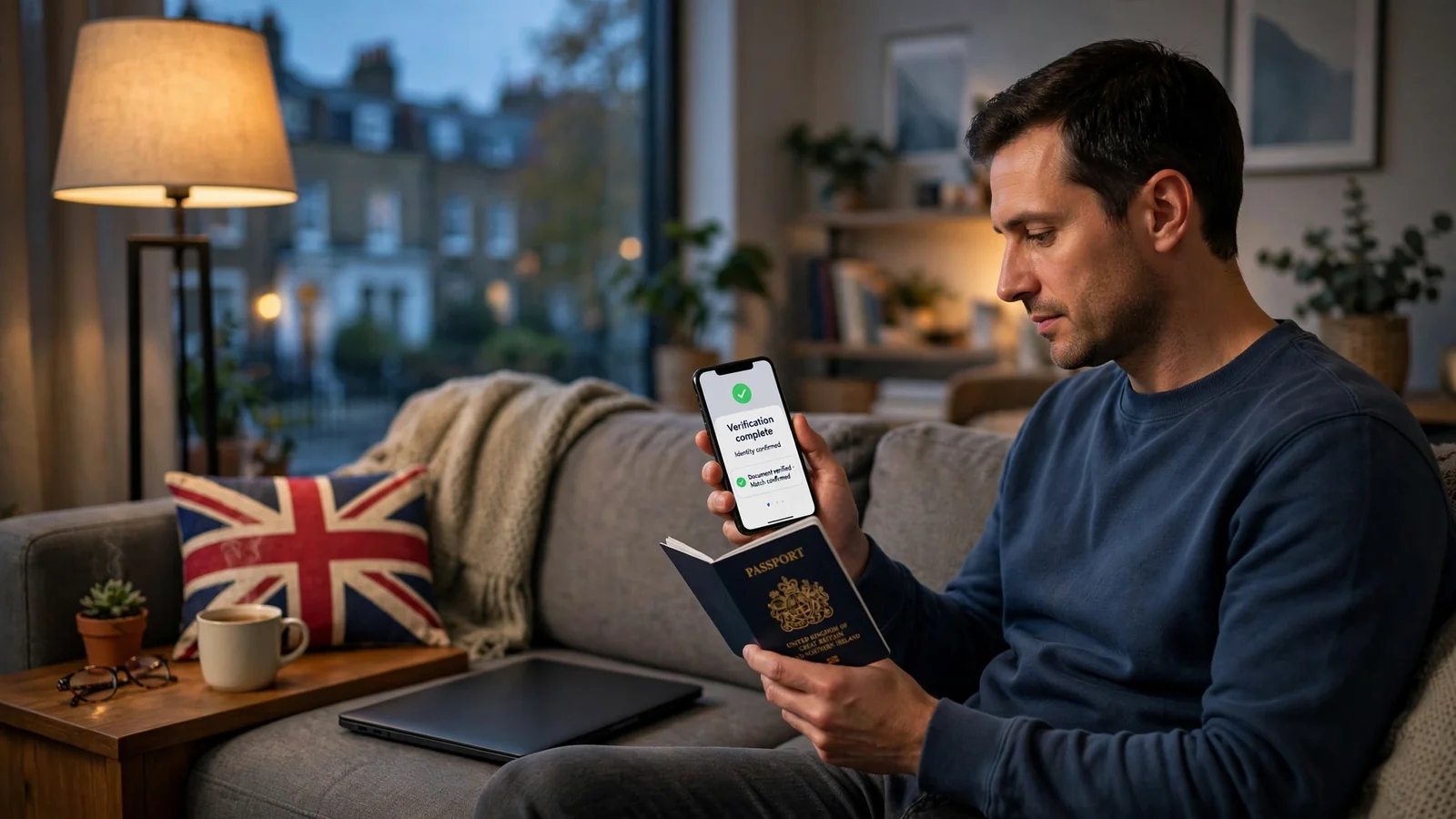
Online Casino No Registration UK: What It Means
 Available in GB
Browser-based play can avoid an app download, but opening a games area is not the same as being verified and allowed to bet.

Table of Contents
- No Download Doesn’t Mean No Checks
- What “No Registration” Really Means in the UK
- What to Look For When Comparing No-Registration Casinos
- Bonuses, Deposits and the Point Where Checks Matter
- Playing Casino Games Before You Upload Documents
- Instant Play Still Has a Verification Step
- Free Spins and No-Deposit Offers Don’t Skip Verification
- Crypto or No Account: The Same Identity Question
- Free Slots for Fun: Know When It Becomes a Bet
- “No Registration Required” Doesn’t Mean No Identity Checks
No Download Doesn’t Mean No Checks
“No download” sounds like a shortcut. It may mean you can open a casino page in your browser instead of installing an app, but it says nothing about whether you can place a real-money bet without being checked. I used to blur those two things together: fewer steps getting to a site seemed like fewer steps overall. They are not the same.
A browser is simply another way to access an online service. You visit a page on your phone, tablet or computer and use what is available there. An app is installed on your device. Neither route changes what a remote gambling operator has to do before allowing you to gamble. If you are looking for online casino games without downloading software, the key distinction is between opening the games area and being permitted to bet.
That matters because phrases such as “instant access” and “play straight away” can make the whole process sound like one click. In practice, access to a page is not approval to gamble. A remote operator must obtain and verify your identity before permitting you to gamble, and you cannot place a bet until the operator has verified you. A browser-based casino does not get an exemption from that requirement.
If you’re looking for an online casino without registration in the UK in 2026, use this list as a starting point and check each operator’s current terms before you sign up. The only confirmed detail provided here is payout speed.
Payout speed: 1-3 business days Britsino is listed with a stated payout speed of 1–3 business days.
Payout speed: 1-3 business days x3bet is listed with a stated payout speed of 1–3 business days.
Payout speed: 1-3 business days Revery Play is listed with a stated payout speed of 1–3 business days.
Payout speed: 1-3 business days NightWin is listed with a stated payout speed of 1–3 business days.
Payout speed: 1-3 business days SpinFormula is listed with a stated payout speed of 1–3 business days.
Payout speed: 1-3 business days EvoSpin is listed with a stated payout speed of 1–3 business days.
Payout speed: 1-3 business days Zombillion is listed with a stated payout speed of 1–3 business days.
Payout speed: 1-3 business days Dieselwin is listed with a stated payout speed of 1–3 business days.
Payout speed: 1-3 business days SlotoSport is listed with a stated payout speed of 1–3 business days.
Payout speed: 1-3 business days BeOnBet is listed with a stated payout speed of 1–3 business days.
The same point applies whether you are interested in a simple three-reel slot, a five-reel game or a video slot. The number of reels and the way a game looks have nothing to do with the operator’s identity checks. Nor does the fact that the game loads in a browser. Those details describe the playing experience, not whether the operator is allowed to accept a real-money bet from you.
I find it helps to separate the small practical question from the important one. “Can I open this without installing an app?” is about software and access. “Can I gamble here?” depends on the operator having verified you. The first can be straightforward while the second still involves checks. No magic door. Just two different things being bundled into the same sales phrase.
That is why “no download” is a more limited promise than it first appears. It may tell you that you do not need to install an app to reach the service. It does not tell you that you can skip the operator’s process, that you will be approved immediately, or that you can place a bet before verification. Those are separate claims, and the wording about downloads does not establish them.
If you are browsing from a phone, the distinction can be easy to miss. A site may look much like an app once it is open, with game menus and account controls arranged for a small screen. But the appearance of the page does not change the checks behind it. Whether you opened a browser tab or an installed application, the operator still has to verify your identity before allowing you to gamble.

There is also a difference between a game being visible and a bet being accepted. A page can present games and describe its services, while the operator’s verification requirement remains in place. Don’t treat a game tile, a quick-loading screen or a button labelled “play” as proof that identity checks have been removed. The useful question is not how quickly the page appears; it is whether you have been verified before a real-money bet is allowed.
I know the appeal of cutting out friction. Downloading another app can feel like an unnecessary chore, especially when you only want to see what a casino offers. But removing that software step does not remove the separate identity step. I would read “no download” literally and keep it there: no app installation is needed for access. Anything beyond that needs to be judged on its own terms.
So, if you want casino games in a browser, focus on the browser part as a matter of convenience, not as evidence of account-free gambling. The route onto the site and the permission to place a bet are not interchangeable. One is about how you reach the service. The other depends on verification. Keep those apart, and the headline becomes less impressive—and much clearer.
Attention: Accessing a casino page via a browser without downloading an app does not mean you can skip identity verification before placing a real-money bet.
What “No Registration” Really Means in the UK
“No registration” sounds like a promise that you can arrive, choose a game and get going without the usual account formalities. I understand the appeal. Forms can feel like a needless hurdle, especially when a site presents itself as a quicker alternative. But the phrase is not permission to gamble anonymously. In the UK, an online casino still has to establish who you are and confirm that you are old enough before it lets you gamble.
That is the important distinction: a site may use “no registration” to describe how it presents access or sign-up, but the wording cannot cancel the operator’s responsibilities. Whatever the label on the page, a real-money casino cannot treat an unknown visitor as ready to place bets. If the pitch seems to promise that nobody will check your identity, it is promising something that does not fit the rules for gambling businesses serving customers here.
The checks are not a new bit of marketing language. Since 7 May 2019, operators have been required to confirm a customer’s name, home address and date of birth before permitting gambling. They must also verify age and identity. Those details need to identify the same person; an account label or a casual description of the service does not replace that process.
I used to read “instant” and “no account” as signs that the boring part had somehow disappeared. It had not. The wording made the first step sound effortless, while leaving out the more important question: whether the operator has verified the person who wants to gamble. That is where the claim needs to be read carefully. It may describe a particular route into a site, but it cannot mean that the operator can skip identity checks.

The UK rules behind the wording
The Gambling Commission regulates gambling activity in the UK, including online casinos. In Great Britain, it is the sole regulator for commercial gambling, and it oversees remote gambling offered to consumers there even when the operator’s key equipment is located elsewhere. The location of a server does not, by itself, make the UK rules disappear for a remote operator serving people in Great Britain.
The Commission issues operating licences to businesses and personal licences to individuals working in the regulated industry. These are different things: a business licence concerns the operator’s permission to provide gambling, while personal licences apply to people in certain roles. For a player trying to make sense of a “no registration casino” claim, the practical point is that regulated gambling is not outside oversight simply because the site describes access as account-free.
The language can blur three separate ideas: reaching a website, creating or using an account, and being allowed to gamble. A short route through the first stages may sound like none of those distinctions matter. They do. Even if a service makes its initial steps appear minimal, the operator must still verify the customer before gambling is permitted. The label is not a loophole.
I would not take “new no-registration casinos” to mean a new category of UK gambling business with different identity rules. A newly launched site does not get a different standard merely because it is new, and a familiar operator does not get to waive the checks by changing the words on a banner. The rules concern the gambling activity and the operator’s obligations, not how boldly the service markets its entry process.
Since 7 May 2019, UK operators have been required to confirm a customer’s name, home address, and date of birth, and verify their age and identity before permitting gambling.
That also means “no account” and “no registration” should not be read as proof that a site has no way of identifying its customers. The wording alone tells you little about what happens behind the screen. It cannot establish that the operator is permitted to let you bet without confirming your identity, and it should not be mistaken for an assurance that there will be no checks.
The distinction matters more than the sales phrase. If a casino lets people gamble, it has to meet the requirements that apply to remote gambling in the market it serves. For Great Britain, the Gambling Commission’s remit covers remote operators serving consumers there regardless of where their equipment sits. So a site cannot make its UK-facing obligations vanish by calling itself account-free, or by placing its technology somewhere else.
When I see “no registration” now, I treat it as a description to question, not a rule to rely on. It may be intended to suggest less friction at the outset, but it does not tell you that age and identity verification have been removed. They have not. Before real-money gambling, the operator must know who the customer is and verify that customer’s age and identity. The wording can be catchy; the requirement stays put.
What to Look For When Comparing No-Registration Casinos
When I compare a casino that advertises a “no-registration” start, I look past the label and try to work out what actually happens before play. The useful question isn’t whether a site has removed every step; it’s whether its explanation makes the identity-check process clear and credible.

A polished button or a short opening form tells you very little by itself. I’d look for a plain account of what information is checked, how the check is carried out, and what the operator means by “verified”. If that part is hidden behind vague phrases such as “quick access” or “start instantly”, the marketing is doing more work than the explanation.
Does it explain what is being matched?
A sound identity check has to connect the details to one real person. The name, home address and date of birth need to belong together, rather than simply appearing as separate entries on a screen. That gives you a practical way to judge the wording: does the casino explain that it is checking a coherent identity, or does it make verification sound like a box-ticking formality?
I used to read “minimal details” as a sign that the hard part had somehow disappeared. It hadn’t. A short form may reduce typing at the start, but it doesn’t tell you whether the operator can establish whose details they are dealing with. Those are different things.
When comparing casinos with a no-registration claim, notice whether the site distinguishes between supplying information and having that information verified. Entering a name and address is not the same as confirming that they match the same customer. That distinction is easy to miss when the copy is written to make the first screen feel like the whole process.
Is the electronic check described clearly?
UKGC-licensed casinos can use electronic checks against national databases, including the Electoral Roll and credit reference agencies. That gives a reader a concrete question to ask: does the explanation say that identity may be checked electronically, or does it rely on a broad promise of “instant verification” without saying what that involves?
Electronic verification methods
UKGC-licensed casinos can use electronic checks against national databases, including credit reference agencies and the Electoral Roll, to verify customer identity.
I wouldn’t treat a reference to an electronic check as proof that a particular casino will verify every customer in the same way. It describes a method, not a guarantee about an individual result or the speed of a decision. A casino’s own wording should be specific enough to help you understand the process, without pretending every check is identical.
For me, that’s a better comparison point than whether a site calls itself an online casino with no registration. One operator might describe what its identity check is designed to establish; another might lean entirely on friction-free language. The first gives you something to assess. The second leaves the important part vague.
Read the whole explanation, not just the headline
I check the registration and verification information alongside the promotional wording. Does the page explain what the operator checks? Does it make clear that “no registration” is a description of the sign-up experience, rather than evidence that identity is irrelevant? Does the wording stay consistent across the casino’s main pages?
This doesn’t mean hunting for a perfect phrase. It means looking for a coherent account. If a headline suggests there is no process at all, but another page describes identity checks, the detail matters more than the headline. I’d trust the practical explanation over the neatest slogan.
A checklist helps me avoid being pulled along by the first impression:
- What does the operator say it verifies? Look for an explanation that links the customer’s identity details, rather than treating them as unrelated form fields.
- Does it mention electronic checks? A clear reference to checks against sources such as the Electoral Roll or credit reference agencies is more informative than an unsupported claim of instant access.
- Is “no registration” explained? The wording should help you understand what the label means in practice, not invite you to assume that verification has vanished.
- Do different pages tell the same story? If the headline and the verification information appear to describe different processes, pause and read the more detailed wording.
That won’t tell you which casino is “best”, and I wouldn’t pretend it can. It gives you a more useful standard: judge the clarity of the explanation, not the confidence of the advertising. A claim that sounds effortless can still leave you with unanswered questions.
The phrase “best no-registration casino” is tempting because it sounds like there must be a simple winner. But without a clear account of how identity is checked, a quick-looking start is a poor basis for comparison. I’d rather understand what the operator is actually checking than mistake a short sign-up screen for a shortcut around the process.
Less gloss. More detail.
Bonuses, Deposits and the Point Where Checks Matter
A welcome offer can make a casino look as though the important decision is whether to deposit. I used to read the headline first and the conditions later, as if the bonus were the main event and everything else could wait. With a site claiming to need no registration, that habit can make the offer sound even more immediate: arrive, claim, play. But promotional wording does not change the point at which a real-money bet is allowed.
A remote gambling business must verify a customer before letting them gamble. The practical boundary is not whether an offer is labelled “no registration”, “instant” or “for new players”. It is whether the operator has completed the checks required for that customer. Until then, a bet is off the table. The offer may be visible, but visibility is not permission to use it.
No Anonymous Gambling
In the UK, no promotional offer or “no registration” label allows a customer to place a real-money bet before the operator has verified their identity.
Deposits are part of this too. UK operators must verify a customer’s age before allowing them to deposit or gamble. So a page should not be read as promising that you can put money in first and sort out identity checks later. If a promotion is presented beside a deposit button, that placement does not tell you that verification has been waived. It tells you there is an offer; the operator still has to establish that you can use the service.
That distinction matters because “no registration” can be used loosely in marketing. It may describe a short sign-up route or a page that presents an offer before you have completed every step. It cannot mean that a customer can bet anonymously or that the operator can ignore the checks. I now treat the wording as a description of the route into the site, not as a promise about when I can gamble.
The same goes for a bonus described as available without an account. A bonus is not a separate permission slip. If it can be used only by placing a wager, the ordinary verification boundary still applies. A promotional banner cannot make an unverified bet acceptable, and a deposit offer cannot remove the operator’s obligation to check the customer first. The wording may be punchy. The underlying process is less glamorous.
Some specialist reviews describe players registering and beginning to play before they upload identity documents, with documents requested if automatic checks are unsuccessful or in particular circumstances. That is a report about a possible sequence, not a guarantee that every casino works that way or that you can wager before verification. “No document upload yet” and “not verified” are not necessarily the same thing: an operator may have checked details electronically. What matters is whether it has actually verified you, not whether you have personally sent a scan.

I learned not to assume that a bonus page tells the whole story. Look for the point at which the offer can be claimed, what action it requires, and whether the operator explains what identity information may be needed and how to provide it. Those details help you understand the process; they do not replace the check itself. If a page makes the promotion sound available before any checks, read that as marketing language until the operator confirms what you can do.
There is also a difference between being shown an offer and being eligible to use it. A site may display the same promotion to visitors before it knows enough about them to approve an account or permit gambling. The display alone does not establish that you qualify, that a deposit can be made, or that a wager can be placed. I used to let the bright headline answer questions it had not actually addressed. Bad habit.
For anyone comparing no-registration casino sites in the UK, the useful question is not simply whether a bonus appears before a form. It is whether the operator makes the verification step clear and prevents betting until it has verified the customer. If the offer’s wording leaves you unsure, do not treat the uncertainty as evidence that checks are optional. A straightforward explanation is more useful than a promise that sounds effortless.
- Judge the clarity of the operator’s identity check explanation
- Verify that the casino prevents betting until verification is complete
- Mistake a short sign-up screen for a shortcut around the process
- Treat the confidence of advertising as proof of fewer checks
Deposits and bonuses can make the process feel like a sequence of promotional choices: pick an offer, add funds, start playing. In reality, the order has a firm boundary. The casino must verify you before you can deposit or gamble, and a customer cannot place a bet before that verification is complete. The bonus does not move the boundary. The headline does not move it either.
Playing Casino Games Before You Upload Documents
A sign-up screen can make it look as though the paperwork comes later. You enter your details, reach the games lobby and may even be able to try a game. But getting that far is not the same as being cleared to place a real-money bet.
The distinction matters when a site says you can play before uploading documents. A specialist review has described players being able to register and begin playing before providing identity documents, with documents requested if automatic checks fail or in particular circumstances. That description should not be read as a general rule for UK casinos, or as permission to gamble first and prove who you are later.

There are two separate steps here. You may be able to begin setting up an account, or access a preliminary form of play, before you send in document images. The operator still has to verify your age and identity before allowing you to gamble. If that verification has not happened, real-money betting is not available, however much of the site you can see.
That is the bit I used to blur together. A page would open, a game would load, and I’d take that as a sign the account was ready. It wasn’t. Seeing casino games on screen does not tell you whether the operator has completed its checks, nor does it turn an unverified account into permission to wager.
The practical question is not simply whether you can open a game. It is what kind of play the site is allowing at that stage. A game may be available in a non-wagering or preliminary mode, while the real-money function remains unavailable until the required checks are complete. If the wording does not make that boundary clear, don’t assume that “start playing” means you can place a bet.

For a UK customer, the operator must check age and identity before gambling is allowed. So a claim about playing without uploading documents needs to be read narrowly: it may refer to the point at which documents are requested, not to a way around verification. The timing of an upload and the timing of permission to bet are different things.
An electronic check may be enough for the operator to verify you without asking you to upload documents at the outset. If it cannot establish the required details, or a particular circumstance calls for further checks, the operator may ask for documents. In that case, a request to provide identification is part of completing verification; it does not mean you can continue placing real-money bets while the issue remains unresolved.
When you’re checking the wording, look for a clear explanation of what happens before verification is complete. Does “play” mean trying a game without staking money, or does the page suggest real-money play? Is it clear that betting remains blocked until the operator has verified you? Promotional language can blur those steps. The distinction should not.
Verification Boundary
Seeing casino games on screen is not permission to wager; real-money betting is only possible once identity verification is complete.
You do not have to upload documents just because a game appears in a lobby, and a page that lets you begin registration is not proof that checks have been skipped. Conversely, being asked for documents later does not mean the operator has permission to let you gamble first. The key point is the moment a real-money bet becomes possible: verification must already be complete.
A lobby is not clearance.
Instant Play Still Has a Verification Step
“Instant play” sounds like the casino is ready the moment the page opens. I used to read it that way: skip the app, skip the wait, get straight to the game. But opening a browser game and being cleared to place a real-money bet are different things.
A remote casino may run an electronic identity check using information already held in databases, including credit-reference records or the Electoral Roll. That can make the process feel less like filling in a long form, but it does not mean there is no check. Nor does the label tell you how quickly the check will finish. It depends on whether the operator can verify you from the information available.
The practical line is simple: you cannot bet until the gambling business has verified you. So an instant-play casino may let you reach its site quickly, while the real-money part still waits for the verification result. “Instant” describes the route into the browser, not a promise that every step has disappeared.
I’d treat “Pay N Play” the same way. It is a label for a registration or payment experience, not proof that the operator can skip identity checks. If a service makes the first steps feel unusually light, that still does not establish that you are cleared to gamble.

This distinction matters if you are looking for instant-play slots without registration. You might avoid downloading an app, and the electronic check might require little visible input, but neither point guarantees immediate betting access. The operator still has to verify you first.
No magic shortcut.
Free Spins and No-Deposit Offers Don’t Skip Verification
A free-spins offer can make sign-up sound like a formality: claim the spins, start playing, sort out details later. I used to read the headline and assume the offer meant I could get straight to the action. It doesn’t change the point at which a UK casino must check who you are.
A remote gambling business must verify your age and identity before allowing you to gamble. Until it has done so, you cannot place a bet. Calling spins “free” or describing an offer as no-deposit does not create an exception to that requirement.
That distinction matters when the wording blurs access to an offer with permission to play. A promotion may be advertised around registration, but the label alone tells you neither that it is currently available nor that you can use it before verification. Read the operator’s terms and look for what it says about identity checks and when they must be completed.
The same applies to searches for a large number of free slots with no deposit or registration. A phrase on a promotional page is not proof that real-money gambling can begin without the casino confirming your age and identity. I learned not to treat “no deposit” as “no checks”. Different things.
If you are considering an offer, keep the practical boundary in mind: no bet before verification. If the wording suggests otherwise, do not assume it overrides the operator’s duty. Spins may attract attention; they do not erase the identity step.
Verifying the Offer
- Check if the operator explains what identity information is verified
- Confirm if electronic checks (e.g., Electoral Roll) are mentioned
- Ensure the “no registration” label is explained in practice
- Verify that verification information is consistent across all pages
Crypto or No Account: The Same Identity Question
“ No account” can sound like a way to skip the usual formalities. Add crypto to the wording and it may seem even further removed from the familiar casino sign-up. I used to read labels like these as clues that the operator would ask less of me. That was the wrong thing to focus on.
The payment method, or the promise of account-free access, does not settle whether a remote operator must identify its customer. Before allowing you to gamble, the operator has to obtain and verify your identity. The check needs to establish that you are a real person and that your name, address and date of birth all belong to the same individual.
So a “no registration” claim may describe how access is presented, but it cannot make identity verification irrelevant. If the site is offering remote gambling, the central question remains who is trying to play, not whether the site uses the word “account” or mentions crypto.
That distinction matters before you treat a smooth entry screen as permission to bet. A service might make the first steps feel minimal; that does not change the point at which verification is required. Nor does an account-free label tell you what identity details the operator has checked.
I now take those phrases literally only as descriptions of the interface, not as evidence that checks disappear. No account is not no identity.
Free Slots for Fun: Know When It Becomes a Bet
Free slots can sound like a way to try a game without opening an account. But “for fun” describes how a session is presented; it does not tell you what happens when you stake money. I’ve learned to look at that distinction, not the button label.
A game played without a wager is different from real-money gambling. The line is crossed when you place a bet, not simply when a slot appears on screen or starts spinning. At that point, the operator must already have verified you. You cannot place a bet first and leave the checks for later.

That matters when a page advertises play without signing in. The wording may refer to access to a game, but it cannot make an unverified real-money bet permissible. Nor should you assume that a no-sign-in option is available just because the phrase appears in a headline. Check what the game is actually offering before treating it as a route to gambling.
I used to focus on whether I could get into a game quickly. The better question is whether the play involves a stake. If it does, verification has to come first. If it does not, it is not the same as placing a real-money bet.
The label is easy. The distinction matters.
“No Registration Required” Doesn’t Mean No Identity Checks
“Free slots” and “no registration required” can sound like a promise that you can simply open a game and play. I’ve learned to treat that wording more carefully: it may describe how someone gets to a game, but it doesn’t tell you what happens if you want to place a real-money bet.
The important line is not whether a page lets you look around or try a game for free. It is whether you are gambling with money. A label about access cannot override the checks a UK operator has to make before allowing that.
Since 7 May 2019, operators have had to verify a customer’s name, address and date of birth before letting them gamble. So “no registration required” cannot mean that a real-money player can remain unidentified. The wording may be brief; the requirement isn’t.
I used to read “no registration” as “no formalities”. That was too generous. Read it as a description of a sign-up or access route, not proof that identity checks disappear. If a site’s wording leaves that distinction unclear, don’t assume the easiest interpretation is the right one.
Free play is one thing. A real-money bet is another. That’s the boundary.
How fast can I get verified at UK casinos?
Electronic checks may verify you without document uploads. If a manual document review is needed, it typically takes between one and 24 hours.
What if the automatic check fails?
You may be asked to provide photo ID and proof of your current address, such as a passport or driving licence and a recent utility bill or bank statement. Checks can fail if your details do not match, for example after a recent move or because of incorrect information.
Why do I need to verify my account?
UK gambling businesses must verify your identity and age before allowing you to gamble. They must confirm that your name, address and date of birth match the same person.
What type of documents can I be asked to provide?
You may be asked for government-issued photo ID, such as a passport or driving licence, and proof of address, such as a recent household bill or bank statement.
What information do I need to provide to sign up?
You need to provide your name, home address and date of birth so the operator can verify your identity and age.
Written by the editors at Candyland Casino 1.