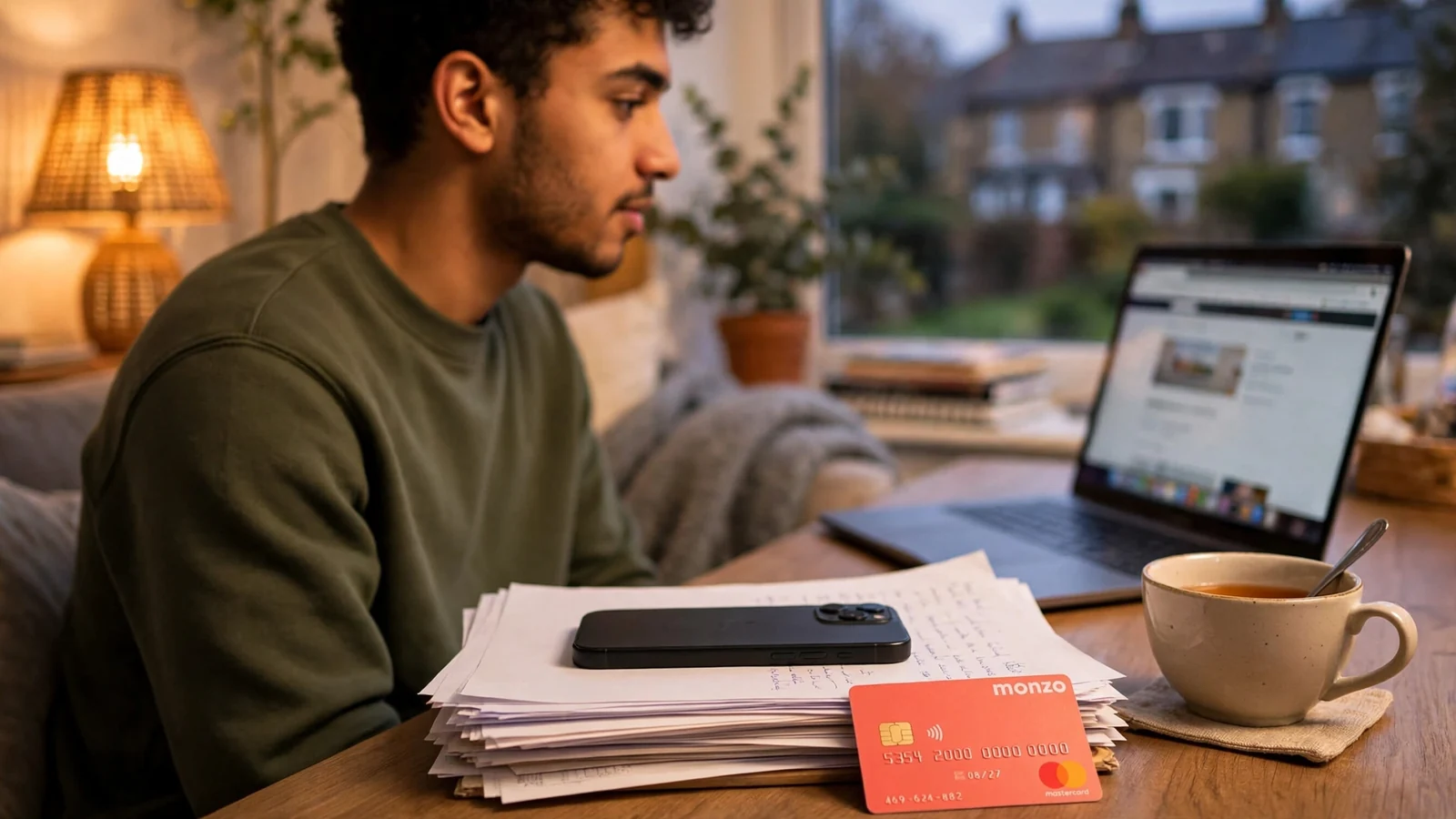
£4 Minimum Deposit Casinos in the UK: Key Checks
 Available in GB
The cashier minimum, promotion threshold and withdrawal rules are separate, so a low entry amount may not unlock every feature.

Table of Contents
- What a £4 Deposit Can—and Can’t—Do
- How to Judge a £4 Casino Without Falling for the Pitch
- The Deposit Tiers Behind the £4 Figure
- Playing for Real Money on Your Phone
- Bonuses, Free Spins and the Small-Deposit Catch
- Slots on a Small Balance: Stakes, Spins and Limits
- PayPal and Other Payment Checks Before You Deposit
- What the “4046” Search Label Does—and Doesn’t—Tell You
- Paying by SMS: Check the Cost and the Cashier Minimum
What a £4 Deposit Can—and Can’t—Do
A £4 deposit is money you can put into a gambling account, provided the cashier accepts that amount for the payment method you choose. It is not a promise that every part of the site will treat £4 as enough. The cashier minimum, the amount needed to qualify for a promotion and the amount you can withdraw are separate rules. I used to read “minimum deposit” as if it answered all three. It doesn’t.
First, there is the practical question of getting started. A site may let you create an account before you deposit, but you should not assume that a £4 payment will be accepted just because the headline says “low minimum”. The amount shown in the cashier is what matters at the point you pay. If £4 is accepted, it puts real money into your balance; it does not automatically add bonus funds or make you eligible for a welcome offer.
Before a first deposit, a UK-licensed operator must verify your age, and you must be at least 18 to gamble online. You should also be prompted to set a financial limit before depositing. I’d set that while the money is still in my bank account, rather than after a game has got my attention. A small starting amount is still money at risk. Keep the limit at a level you can afford to lose, and don’t treat a later win as a reason to raise it.
If you’re looking for a UK casino with a £4 minimum deposit in 2026, check the payment terms before you choose. This list gives you one confirmed detail for each option: its stated payout speed.
Payout speed: 1-3 business days Britsino lists a payout speed of 1–3 business days. Check its terms to see whether it suits your payment needs.
Payout speed: 1-3 business days x3bet lists a payout speed of 1–3 business days. You can use this as a reference when considering how quickly you may receive a payout.
Payout speed: 1-3 business days Revery Play lists a payout speed of 1–3 business days. Review the payment terms before deciding whether it fits your preferences.
Payout speed: 1-3 business days NightWin lists a payout speed of 1–3 business days. This is the confirmed payout detail available for your consideration.
Payout speed: 1-3 business days SpinFormula lists a payout speed of 1–3 business days. Check the operator’s terms for further payment details.
Payout speed: 1-3 business days EvoSpin lists a payout speed of 1–3 business days. Consider this stated timeframe as you review its payment information.
Payout speed: 1-3 business days Zombillion lists a payout speed of 1–3 business days. You can check its terms for any additional information about payments.
Payout speed: 1-3 business days Dieselwin lists a payout speed of 1–3 business days. This stated timeframe is the available detail to consider when reviewing its payment terms.
Payout speed: 1-3 business days SlotoSport lists a payout speed of 1–3 business days. Check its terms to learn whether other payment details affect your decision.
Payout speed: 1-3 business days BeOnBet lists a payout speed of 1–3 business days. You may want to review its payment terms for more information.
The promotion is a separate calculation. A welcome offer can have its own qualifying deposit, and some UK casinos exclude the lowest deposit bracket altogether. A specialist review describes welcome offers with qualifying deposits in the £5 to £10 range, while some offers set a £10 threshold even where the cashier accepts £5. That does not establish the rule at every operator; it shows why the deposit button and the promotion’s terms need to be read separately. With £4, you may be able to play with your own funds and still receive nothing from the advertised deal.
That distinction matters because “welcome” sounds like it applies as soon as you arrive. In practice, the offer may depend on selecting it, meeting its deposit condition and following its rules. If the promotion requires more than you plan to deposit, don’t top up just to make the banner look worthwhile. Decide whether you want to play with £4 on its own. If you do, the bonus is irrelevant. If you don’t, check the terms before paying.
Cash-out is another checkpoint. A successful game does not mean you can immediately withdraw any balance, however small. Some operators set a minimum withdrawal above the amount you deposited. A specialist review reports thresholds of £10 to £20 at many UK casinos, but that figure is not a guarantee about a particular account or a permanent market rule. Check the cashier and withdrawal terms for the operator you are using. If its minimum is higher than your balance, you may have to keep playing or add money before a withdrawal request is possible. Neither is a good surprise to discover after a win.

I’ve made the mistake of treating a deposit as the whole deal: put the money in, play, take anything left out. The missing step was reading what happened between those points. The rules can affect whether an offer is added and whether a balance is ready to withdraw. A £4 deposit can be enough to begin real-money play when that cashier allows it. It cannot override the promotion’s qualifying amount or the operator’s withdrawal threshold.
So judge the amount by what you want it to do. If your aim is simply to make a small deposit and play using your own money, £4 may suit, subject to the cashier minimum. If your plan depends on a welcome offer, check the qualifying deposit first rather than assuming the lowest accepted payment counts. If your plan depends on withdrawing a small win, find the withdrawal minimum before you start. Three different checks. No magic shortcut.
The useful habit is to read the cashier and the relevant terms before confirming payment, then deposit only what fits your own limit. Don’t mistake an account balance for withdrawable money, or a promotion shown on screen for one you have qualified to receive. That small pause has saved me from paying in more than I intended just to make a headline offer work. Start with the rules, not the banner.
- Check the live cashier minimum for your chosen payment method
- Set a financial limit before depositing
- Read the promotion’s qualifying deposit separately
- Verify the operator’s UKGC licence status
- Assume a low minimum deposit guarantees a welcome bonus
- Top up your balance just to meet a bonus threshold
- Treat a deposit as a guarantee of easy withdrawals
- Rely on advertising badges instead of licence checks
How to Judge a £4 Casino Without Falling for the Pitch
A £4 cashier minimum tells you only that the cashier may accept a deposit of that size. It does not, by itself, tell you whether the site is legitimate, whether the figure applies to your chosen payment route, or whether the terms suit you. I used to treat a low entry figure as proof that I’d found a bargain. It isn’t. It’s one detail to verify.
Start with the operator’s status. Remote gambling operators serving customers in Great Britain must hold the relevant licence from the UK Gambling Commission. Check the operator’s current licence information rather than relying on a badge in an advert or a claim on a landing page. A site serving UK customers without the required licence is not a legitimate UK-licensed casino, however polished its design or generous its headline sounds.
That check matters more than the word “trusted”. It is an advertising claim, not evidence. A licence does not mean every term will suit you or that you cannot lose money; it means the operator is subject to the UK regulatory system. If a site makes it difficult to identify who runs it or to find its licensing details, I would stop before entering payment information. No clever offer makes that worthwhile.
Read the cashier figure as a condition, not a promise
Find the stated minimum in the cashier itself, then check whether the amount shown applies to the payment method you intend to use. At a given UK operator, the minimum is generally the same across methods, but some casinos set a higher threshold for direct banking than for cards or e-wallets. A page advertising a £4 minimum may therefore leave out a practical qualification.

Look for the precise wording: is £4 the minimum deposit, or does it apply only to a particular route or account condition? If the cashier presents a different minimum, treat the live cashier information as the figure to clarify before proceeding. Don’t keep clicking through on the assumption that the headline will eventually become true.
I also separate the minimum from the amount I actually want to risk. Before depositing, set a financial limit you can afford to lose and stick to it. UK-licensed remote operators must prompt new customers to set a financial limit before their first deposit and provide account-level controls. That prompt is worth taking seriously, not brushing aside to get to the games. A small starting amount is still real money.
Check the protections, not just the welcome screen
A properly licensed operator must verify a customer’s age before allowing a deposit. UK players must be at least 18. If you are under that age, do not open or fund an account. For adults, it is reasonable to expect identity and account checks as part of using a regulated service; a quick registration screen is not a reason to assume that every later step will be instant.
Find the operator’s complaints process and its route to an approved Alternative Dispute Resolution service. UKGC licensees must provide access to both. I would rather know where a complaint goes before a payment is involved than hunt for the information after something has gone wrong. Keep the relevant terms and any cashier confirmation so you can compare what was displayed with what happened.
Licensing Warning
A site serving UK customers without a licence from the UK Gambling Commission is not a legitimate UK-licensed casino, regardless of its design or offers.
“Easy withdrawals” is another phrase I don’t take on trust. Check the withdrawal rules before depositing, including what verification may be required and whether the operator states a minimum withdrawal. A £4 deposit does not establish that any winnings can be withdrawn at once or in the same amount. The key is to understand the rule that applies, not infer it from the deposit headline.
Be wary of “new” and “best” claims
A new-looking website is not automatically a new or safer operator, and a “best” label does not tell you who made the judgement or what was assessed. I look for clear licensing information, readable terms and working account controls. If the page leans heavily on urgency but makes those basics hard to find, that tells me more than its promotional language does.
For a £4 minimum deposit casino in the UK, the sensible test is simple: can you verify the operator’s UKGC status, confirm the cashier minimum for your chosen route, and understand the account protections and complaint options? If any answer is unclear, pause and get clarification before depositing. It is not a thrilling test. That’s the point.
The Deposit Tiers Behind the £4 Figure
A £4 cashier minimum sits between the tiny entry points and the more familiar thresholds. It is not the lowest amount a UK casino may accept, but it is below the figures often attached to common deposit routes. That makes it worth treating as a specific cashier setting, not as a promise that every payment option will let you put in exactly £4.

At the bottom end, some UK casinos accept deposits from £1. A specialist review describes that tier as rare and links it mainly to particular payment routes, including Boku or Payforit mobile billing. So the fact that a casino accepts a small deposit does not mean every route in its cashier will accept the same amount. The minimum can be shaped by both the operator and the method selected.
A £4 minimum is a different proposition: it is a low threshold, but not the floor. If the amount matters to you, check the cashier itself rather than relying on a headline. I have learned that a number can be accurate and still leave out the useful part: which route it applies to. Small print matters. It is the whole point.
Why the cashier minimum can move
An operator sets the amount it will accept, while payment routes may come with their own limits or be configured differently in the cashier. The minimum deposit is often the same across methods at a given casino, but some operators set a higher threshold for bank transfers than for cards or e-wallets. That means the amount shown beside one option may not settle what another option will accept.
You can think of the cashier minimum as a pair of settings: the operator’s general threshold and any method-specific threshold. A £4 figure may apply across the board, or it may apply only to certain ways of paying. If direct banking is listed, do not assume its minimum matches the card option simply because both sit under the same account. Check the amount shown after selecting the route you intend to use.
Cashier Thresholds
Minimum deposits can be shaped by both the operator and the payment method; for instance, direct banking may have higher thresholds than cards or e-wallets.
This is also why two casinos can use the same phrase—“minimum deposit”—while setting different amounts. One may accept a small payment through a particular route and require more through another. Another may apply one threshold to every method. The label alone does not tell you which arrangement you are looking at.
Where £4 sits beside direct banking
For casinos taking direct banking, a specialist review puts the typical minimum at £10, while noting that some operators set it at £5 or £20. That makes £4 lower than the figures described for those direct-banking thresholds. It does not prove that a £4 minimum is unavailable through direct banking at every operator; it does show why you should not carry a figure from one route over to another without checking.
The practical comparison is simple. A £1 entry point is rare and can depend on a specific route. £4 is above that lowest tier, but still below the direct-banking amounts described in that review. Other operators may show £5 or £20 instead. These are not fixed steps that every casino follows; they are different thresholds you may encounter, depending on the operator and payment method.

The distinction matters because “casino minimum” can sound like one universal number. In practice, the cashier is the place where the actual amount becomes clear. A site may accept your preferred deposit amount through one option but not another, or the threshold may be higher for direct banking. Read the amount displayed for the selected method before confirming anything.
Treat the number as a threshold, not a category
When you see a £4 minimum deposit advertised, read it as a claim about a particular cashier arrangement—not a guarantee about every route. The number tells you where the operator says a deposit can start, but the payment option may have a separate floor. That is why checking the selected route is more useful than comparing isolated headline figures.
I used to treat minimums as a simple ladder: lower number, easier deposit. That misses the route-specific detail. A low threshold can be real and still not apply to the method you plan to use. Conversely, seeing a higher amount beside one method does not necessarily mean every option has that same requirement.
So the useful comparison is not just £4 versus £1, £5, £10 or £20. It is the minimum attached to the payment route you are actually considering. Start with the cashier, select the method, and read its stated minimum before entering an amount. That gives you the threshold that counts, rather than the one that looks neat in a headline. A small check first. A better read.
Playing for Real Money on Your Phone
A £4 balance can feel different on a phone from how it looks in the cashier. On a small screen, the balance and stake controls may be close together, and it is easy to start a game without properly noticing what each round costs. I have done exactly that: tapped through, watched the balance move, then realised I had picked a stake that made the session much shorter than I intended.
Before playing, look at the amount shown for one spin or round. Many slots allow stakes from £0.10 to £0.20 per spin, but the available options depend on the game. That range is useful context, not a promise that every title offers those stakes. A £4 deposit gives you a fixed balance to play with; choosing a larger stake uses it up faster. Simple arithmetic, easily forgotten on a bright screen.
Attention: A £4 deposit is a fixed balance; choosing larger stakes on a mobile screen can use up your funds much faster than intended.
Take a moment to find the game’s stake control before you press spin. Check the selected amount again after changing games, because the interface and available settings can differ. If you cannot clearly see the cost of a round, pause rather than tapping through and hoping the balance works out. There is no prize for making the first spin quickly.
Set a financial limit before your first deposit, and make sure it is an amount you can afford to lose. That control matters on mobile because the phone is often already in your hand, and opening a game takes little effort. I find it helps to decide in advance what the deposit is for: a short bit of entertainment, not a balance that needs to be “won back”. Once that money is gone, stop. Chasing it with another deposit is how a small plan turns into a different one.
On a licensed UK casino, you must be at least 18 to gamble. The account should not let you deposit until your age has been verified. Use a site holding a UK Gambling Commission licence; a familiar-looking mobile page is not, by itself, proof of that. The rules matter just as much on a phone as they do on a desktop.
There are also restrictions on how online slots run in Britain. Autoplay is banned, and each slot spin must last at least 2.5 seconds. So mobile play is not meant to be a rapid stream of automatic spins. You make each spin yourself, and the minimum duration gives you a moment to notice what happened before deciding whether to continue.

That pause can be useful. After a few rounds, check the balance rather than relying on the feeling that you have only played briefly. A phone can make a session feel casual even when real money is involved. I now treat the displayed balance as the clearest measure, not the number of taps or the time I think has passed.
A real-money £4 deposit on mobile is still just money in an account, not a guarantee of a particular length of play. The stake you choose determines how quickly it changes, and the game’s own controls show what each spin costs. Check those first, keep to the limit you set, and close the game when your planned session is over. Small balance. Real money.
Bonuses, Free Spins and the Small-Deposit Catch
A £4 cashier minimum does not mean a £4 deposit will unlock a welcome offer. Those are separate conditions: one controls whether money can be added to your account, while the other sets the qualifying deposit for a promotion. A specialist review reports that welcome deals may require a qualifying deposit of £5 to £10, and that some casinos exclude their lowest deposit bracket from promotions. So a casino with a £4 minimum might let you play without awarding its advertised bonus.
I’ve made that mistake: I saw the deposit figure, assumed the offer came with it, then found the promotion had its own threshold. Read the bonus terms before opting in, and check whether the requirement applies to one deposit, a particular payment method or a selected promotion. “Welcome bonus” is marketing shorthand, not a promise that every deposit qualifies.
Recent UKGC Wagering Cap
Since 19 January 2026, the UK Gambling Commission has capped wagering requirements on gambling incentives at 10x. If you encounter older terms citing 30x to 65x, clarify the current rules with the operator.
A no-deposit bonus is a different offer: it is not activated by making a £4 deposit. Check whether registration or another condition is required, and whether the bonus is available to you under the operator’s terms. Don’t treat “no deposit” as “no strings”; the rules for using the bonus and withdrawing any winnings still matter.
Wagering rules have changed
The numbers in older bonus descriptions can be out of date. A specialist review reports wagering requirements of 30x to 65x the bonus value, but since 19 January 2026 the UK Gambling Commission has capped wagering requirements on gambling incentives at 10x. If you see a higher figure in terms or in an old offer description, don’t assume it is an applicable current condition: check the live terms and ask the operator to clarify before opting in.
Wagering means playing through a required amount before bonus funds or related winnings can be withdrawn. It is not the same as depositing that amount, and a small qualifying deposit does not make the wagering requirement small. The requirement applies to the bonus, not to whether you paid by card, e-wallet or direct banking.
Free spins need their own check. A specialist review reports that spins connected to a £1 deposit can range from 10 to 100, but that does not establish what a £4 deposit will earn. The offer may specify a different qualifying deposit, a particular game, or a deadline for using the spins. A specialist review also reports expiry periods ranging from 24 hours to 14 days. Check the live terms for the actual expiry, rather than assuming the spins will wait until you feel like playing.
The winnings are where the small-print catch often sits. A specialist review reports wagering conditions of 30x to 65x the total won from free spins. Since the 2026 cap, however, bonus wagering cannot exceed 10x; make sure the operator’s current terms reflect that limit. Also check whether the spins produce bonus funds or cash, which games count towards wagering, and whether a withdrawal cap applies. A win on screen is not necessarily money ready to withdraw. Annoying, but important.
Before depositing, set a financial limit you can stick to. If the offer only makes sense when you chase a bonus, skip it; the £4 balance should be a choice, not a reason to keep adding money. A promotion can be worth considering only when its qualifying deposit, expiry and withdrawal conditions are clear.
Slots on a Small Balance: Stakes, Spins and Limits
A £4 balance can feel more substantial when you choose a low stake, but it does not make a slot predictable. I used to look at the balance and start thinking in terms of how long it ought to last. That was the wrong measure: a run of losing spins can use it quickly, while a win can change the picture without promising anything about the next spin.
Many slots accept bets starting at £0.10 to £0.20 per spin. At those stakes, a £4 deposit gives you room to play without staking the whole balance on each turn. But treat that as room, not a forecast. The game may pay out, or it may not; no stake size guarantees a return or a particular number of spins.
Managing Small Balances
Decide on an amount you can afford to lose before making your first deposit.
Find the game’s stake control and verify the cost of a single spin or round.
Keep your bet size consistent rather than increasing it to recover losses.
Regularly check the displayed balance to track your spending, especially on mobile.
Before you start, check the stake shown in the game itself. Slots can offer several stake settings, and it is easy to tap a higher one than you meant to. I have done that, then spent the next few spins trying to undo the mistake. That is a poor way to manage a small balance.
Keep the bet steady if you want to see how the balance changes at one stake. Raising it after a losing run does not improve your chances; it just puts more of the remaining money at risk each time. If you notice yourself increasing bets to recover losses, stop instead. A small deposit is still money you can lose.
Set a financial limit before your first deposit and decide what you are comfortable losing. Once the balance reaches that limit, leave it there. Don’t treat a win as a reason to keep playing indefinitely, either. A slot’s results are uncertain, and a short session can end with less than you started with.
There are practical limits on how slots work in Britain, too. Autoplay is not permitted, so spins must be started individually. Each online slot spin must last at least 2.5 seconds. That does not make a session safe or profitable; it simply means the game cannot cycle through spins automatically or at an unlimited pace.
The maximum stake per game cycle is £5 for customers aged 25 and over, and £2 for those aged 18 to 24. Those are ceilings, not sensible targets for a £4 balance. A low stake is the more relevant choice when the aim is to keep each individual spin proportionate to the money you have set aside.
I now try to decide on the stake before the first spin, rather than letting the game’s buttons make the decision for me. If the lowest available bet still feels too large for the balance, I close the game. No slot owes you a longer session.
PayPal and Other Payment Checks Before You Deposit
PayPal can be a useful option, but seeing its logo on a casino’s payment page does not tell you whether it will accept a £4 deposit. The cashier minimum can depend on the operator and, in some cases, the payment route. Check the amount shown after selecting PayPal, rather than assuming the minimum listed for a debit card applies too.
At a particular operator, the cashier minimum is generally shared across payment methods. There are exceptions: some casinos set a higher minimum for direct banking than for cards or e-wallets. So if the cashier refuses a small payment, try checking the method-specific terms before concluding that the account itself requires a larger deposit.
I used to look only at the amount going into the account. That misses the other part: what leaves it. A specialist review has reported flat transaction fees of £1 to £3 from some payment providers. On a £4 deposit, that could make a noticeable difference, so check the provider’s own fee information and the casino cashier before confirming. Don’t assume a fee applies; verify whether it does for your route.
There is also a firm line on what can fund gambling. The UK’s credit-card gambling ban took effect in 2020. Deposits must come from a debit card, a bank account, or an e-wallet funded by debit; a wallet that lets you use credit-card funds for gambling is not suitable. If PayPal is your choice, check the funding source in your account as well as the casino’s payment conditions.
Deposit Final Checks
- Confirm the cashier accepts the specific amount you intend to send
- Check for transaction fees from the payment provider
- Verify the payment source is a debit card, bank account, or funded e-wallet
- Ensure your age has been verified by the operator
- Confirm a financial limit has been set on your account
Before depositing, I’d check three things: whether the cashier accepts the amount you intend to send, whether either side charges a fee, and whether the payment source complies with the rules. Set a financial limit before your first deposit, and remember that the operator must verify your age before allowing deposits. The payment button is the easy part. The details matter.
What the “4046” Search Label Does—and Doesn’t—Tell You
The number “4046” can appear alongside searches for casinos taking a £4 deposit, but it is not proof of a casino feature, offer or launch. I would treat it as a label attached to the wording, not as a promise about what a cashier will accept. The same goes for claims about newly opened sites: the label itself tells you nothing about when a casino launched or whether it takes £4.
The useful detail is the cashier minimum shown by the operator. Check that figure before you register or try to pay; a page describing a £4 minimum does not necessarily mean every payment route will accept that amount. At a given UK operator, the cashier minimum is generally the same across payment methods, although some casinos set a higher threshold for direct banking than for cards or e-wallets. Small difference, real consequence.
I’ve learned not to read a number in a page title as a cashier setting. Look for the amount stated beside the payment method you intend to use, then check the operator’s terms if the figures do not match. If the page uses “4046” but gives no clear cashier minimum, it has not answered the practical question.
A low deposit can still be a sensible way to keep your first payment limited, but the label cannot tell you whether that amount will meet any separate conditions. Read the current cashier information and terms, rather than assuming the number is an offer code or a special category of casino. No magic number.
Paying by SMS: Check the Cost and the Cashier Minimum
Paying by SMS can look like a neat fit when you want to make a small deposit, but the amount shown in an advert is not the whole cost. Mobile billing may be available through services such as Boku or Payforit; a specialist review describes this route as one of the limited ways to access a £1 deposit tier. That does not mean every casino accepts SMS, or that a £4 deposit will be available through it.

Check the cashier itself before sending a payment. Look for the minimum shown beside the SMS option, not just the general cashier minimum: an operator may set a different threshold for a particular route. Then check what your mobile provider will charge. A specialist review reports flat transaction fees of £1 to £3 for some providers. Against a £4 payment, that could make a noticeable difference to what remains in your casino balance. A small deposit can shrink quickly.
I’ve learned not to treat “pay by text” as a promise of a cheap deposit. Confirm the total debit, whether the charge is added to your phone bill, and whether the operator accepts that funding route under its payment rules. UK gambling deposits must not be made with credit cards, including credit-card funds routed through a money service. If you cannot tell what funds are being used or what the full charge will be, stop and ask the operator or provider before confirming.
Also check whether the cashier lets you choose the exact amount. A payment route can be available without supporting the amount you had in mind. Read the confirmation screen carefully; once you approve a phone-billed transaction, it may be harder to spot an unexpected fee than it was before tapping send.
Set a financial limit before your first deposit, and only continue if the cashier clearly states the minimum and the full cost. No guesswork.
What is the best £1 minimum deposit casino in the UK?
NetBet is the only UKGC-listed casino identified with a £1 minimum deposit. A low minimum does not by itself make it the best choice, so check its terms and cashier before depositing.
What is the minimum deposit at UK casinos accepting direct banking?
The typical minimum is £10, although some operators set it at £5 or £20. Check the cashier for the direct banking option, as some casinos set a higher minimum for bank transfers.
Can I take out winnings from a £1 deposit?
Yes, if your balance meets the casino’s minimum withdrawal and you satisfy any applicable terms. Many UK casinos set withdrawal minimums of £10 to £20, so a small win may not be immediately withdrawable.
Do direct banking deposits qualify for welcome bonuses at UK-licensed casinos?
Yes. Direct banking deposits qualify on the same basis as card or e-wallet deposits, but you still need to meet the offer’s qualifying deposit and other terms.
Are there no minimum deposit casinos?
No: the lowest deposit tier is £1, and it is uncommon. Some payment methods may also have their own minimums.
Written by the editors at Candyland Casino 1.