Casinos That Accept E-cheques in the UK: What to Check
 Available in GB
A listed payment method does not guarantee account access; availability and withdrawal terms need checking in the cashier.
Table of Contents
- Can You Actually Find an E-cheque Option Online?
- What to Check Before You Try an E-cheque Deposit
- Deposits Are Only Half the Payment Picture
- How to Judge a Casino Payment Claim Without a Shortlist
- The E-cheque Question: What the Available Evidence Can—and Can’t—Confirm
- When a Deposit Is Quick but a Withdrawal Isn’t
- Payment Routes for UK Players: Availability Comes First
- What “Accepting E-cheque” Needs to Mean in the Cashier
- Payment Security: Keep the Transaction Details Consistent
- New Casino Sites Still Need a Cashier Check
Can You Actually Find an E-cheque Option Online?
An e-cheque can sound like a straightforward way to pay: find a casino that lists it, open an account and select it at the cashier. The part that tends to get lost is that a payment method mentioned somewhere on a site is not necessarily an option you can use when you are ready to deposit. I would treat the cashier, not a headline or a broad payment-method page, as the place to confirm what is actually available.
That distinction matters because payment pages can be broad, brief or out of step with what a particular customer sees. A page might name a method without explaining whether it is available to UK customers, whether it appears for every account, or whether it is currently enabled. None of those details can be safely filled in by guesswork. “Listed” is not the same as “available to me”.
I have made the mistake of reading a payment logo as a promise. It is an easy assumption: the logo is there, so the route must work. But seeing a familiar payment brand does not establish that your account can use it. Even a specialist review that lists Visa and Mastercard is not a substitute for checking current UK availability and whether your particular card product is eligible. The same basic caution applies when you see an unfamiliar label such as e-cheque: look for the option in the actual cashier before treating it as usable.
If you’re looking for a UK casino that accepts e-cheques, check that the payment method is currently available before signing up. The listed payout speed can help you assess the withdrawal information provided for each option.
Payout speed: 1-3 business days Britsino has a listed payout speed of 1–3 business days. The available information does not confirm whether it accepts e-cheques.
Payout speed: 1-3 business days x3bet has a listed payout speed of 1–3 business days. The available information does not confirm whether it accepts e-cheques.
Payout speed: 1-3 business days Revery Play has a listed payout speed of 1–3 business days. The available information does not confirm whether it accepts e-cheques.
Payout speed: 1-3 business days NightWin has a listed payout speed of 1–3 business days. The available information does not confirm whether it accepts e-cheques.
Payout speed: 1-3 business days SpinFormula has a listed payout speed of 1–3 business days. The available information does not confirm whether it accepts e-cheques.
Payout speed: 1-3 business days EvoSpin has a listed payout speed of 1–3 business days. The available information does not confirm whether it accepts e-cheques.
Payout speed: 1-3 business days Zombillion has a listed payout speed of 1–3 business days. The available information does not confirm whether it accepts e-cheques.
Payout speed: 1-3 business days Dieselwin has a listed payout speed of 1–3 business days. The available information does not confirm whether it accepts e-cheques.
Payout speed: 1-3 business days SlotoSport has a listed payout speed of 1–3 business days. The available information does not confirm whether it accepts e-cheques.
Payout speed: 1-3 business days BeOnBet has a listed payout speed of 1–3 business days. The available information does not confirm whether it accepts e-cheques.
A search for an e-cheque casino in the UK can turn up pages that sound definite. The wording may say a site “accepts” a method, while the detail needed to confirm that claim is absent. It may be unclear whether the information refers to a UK customer, a specific account, or a current cashier. A confident sentence is still only a sentence until you can match it to what the operator presents to you.
That does not mean every general payment page is wrong. It means it has a different job from the cashier. A page can tell you what an operator says it supports in broad terms; the cashier shows which choices are presented for your account at that point. If the method is not visible there, I would not assume that a mention elsewhere guarantees access. And if it is visible, you have a concrete indication that the route is being offered to you, rather than relying on somebody else’s summary.
The same goes on a phone. A mobile casino may display its payment information differently from the desktop version, or put the cashier behind a different menu. That can make it harder to spot a method, but it does not change the test: check the cashier you would actually use. A mobile-friendly page or an app description is not proof that a particular payment choice will appear in your account.

There is also a difference between a method’s name and a clear offer. If a page uses “e-cheque” in a general list, that alone may not tell you what the operator means by it or whether the label corresponds to a live option. I would not try to decode an ambiguous phrase by matching it to a vaguely similar payment method. If the cashier does not make the choice clear, ask the operator what is meant before proceeding.
This is why “best” or “top” lists can be less helpful than they look when the key question is simply whether e-cheque is available. A ranking can create the impression that every entry has been checked in the same way, at the same time, for the same market. Unless the underlying claim is clear, the ranking does not resolve the practical uncertainty. I would rather have a plain, current cashier check than a confident label in a list.
Keep the check narrow at this stage. You are not trying to infer availability from a logo, a general description or a page written for a different audience. Open the casino’s cashier and see whether e-cheque is presented as an option for you. If you cannot find it, do not treat its appearance in promotional wording or an old review as confirmation.
That is a modest test, but it avoids a familiar trap: mistaking a payment-method mention for a working choice. Until the cashier shows otherwise, the sensible answer is not “yes, this casino takes e-cheques”. It is “I have not confirmed that option for my account”.
Attention: Do not mistake a payment method mention or a logo on a general page for a working choice; only the actual cashier can confirm availability for your account.
Small distinction. Big difference.
What to Check Before You Try an E-cheque Deposit
Before making an e-cheque deposit, check what is available to your own account—not just what a casino payment page says in general. A method can be mentioned in an overview and still be absent from the cashier you see. The practical question is whether you can select it, under your account details, for the transaction you intend to make.
I used to treat a payment logo or a broad list of methods as a promise. It isn’t. Sign in and open the cashier before you plan around a particular route. Look for the exact payment name, rather than assuming that a similar-sounding bank option is an e-cheque. If the label is unclear, ask customer support to identify the method and confirm whether it is currently available to your account. A guess is not a payment option.
Check your account, not just the casino’s general page
Availability can depend on the account and the details attached to it. Check that you are viewing the cashier while signed in, and that your account information is complete and accurate. A payment route registered to you, used with account details that belong to you, is less likely to create avoidable questions about basic ownership.
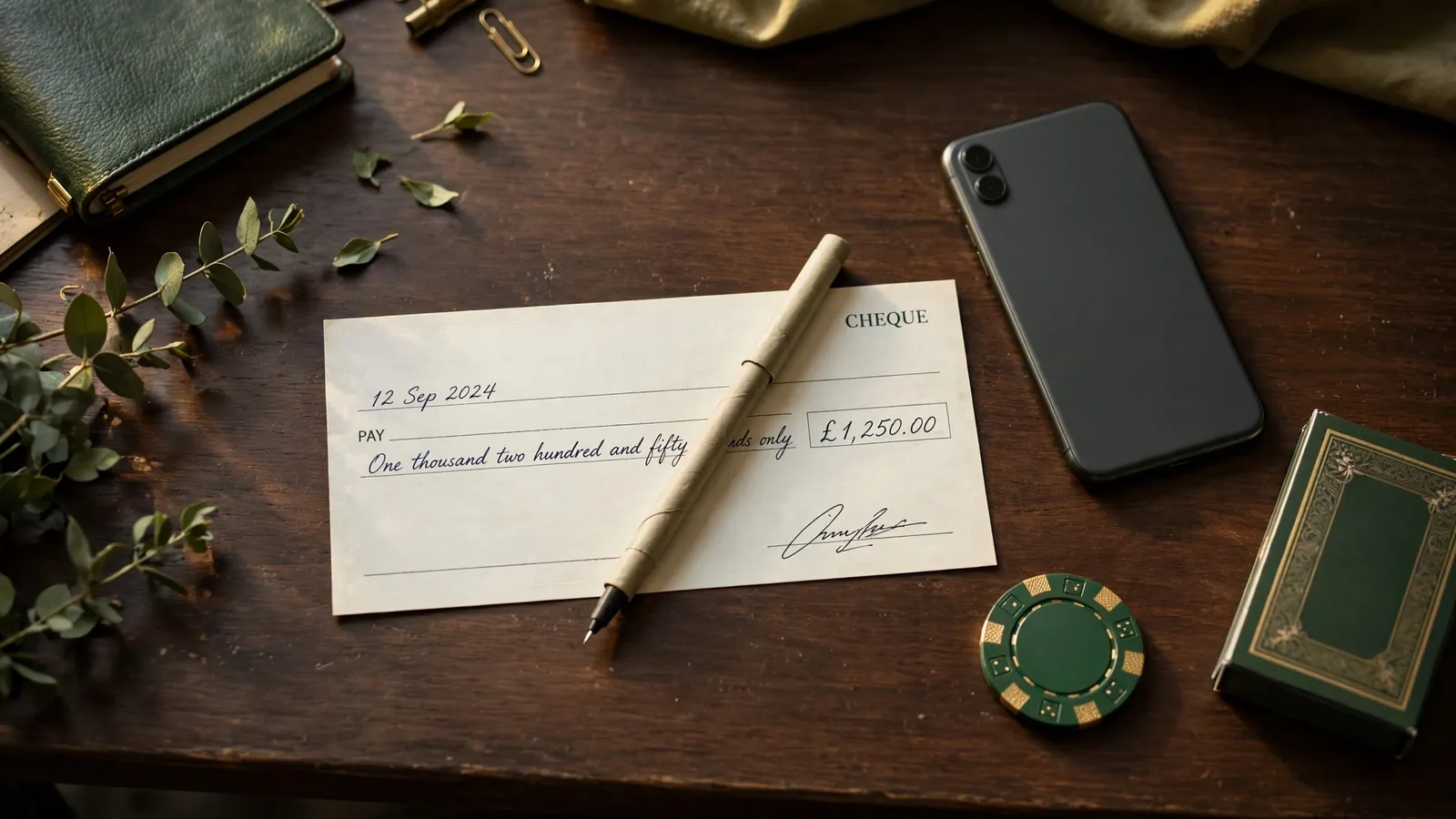
This is a compatibility check, not a reason to try a route belonging to somebody else. If the payment account is in another person’s name, do not assume the casino will accept it simply because the cashier displays the method. Ask the operator what it accepts before sending money. Getting that straight first is easier than trying to explain a mismatch after a transaction has been attempted.
Also check whether the method is actually offered to customers in the UK and in your account’s current setup. A general page may describe a casino’s payment range without showing which routes are enabled for every player. The cashier is the useful place to verify what you can select. If you cannot see the e-cheque option, do not infer that another bank-transfer button means the same thing.
Confirm both directions before depositing
For this check, do not stop at “Can I put money in?” Find out whether the same route is available for withdrawals too. A cashier may present a method for deposits without promising that it can also be used to receive a payout. Those are separate capabilities, so look for an explicit withdrawal option or ask support to confirm the position for your account.
- Sign in to open the cashier before planning a route
- Use account details that belong to you
- Confirm both deposit and withdrawal availability
- Ask support to identify unclear payment labels
- Rely on a payment logo as a promise of access
- Assume a similar-sounding bank option is an e-cheque
- Use a payment account in another person’s name
- Infer withdrawal options from the deposit screen
That matters particularly if you are choosing a payment route because you expect to use it throughout the account. UK anti-money laundering controls commonly require a casino to return funds to the original payment source. That does not mean every method will necessarily handle both sides of a transaction. If an alternative payout route is needed, it may involve additional verification. Check the operator’s instructions before depositing rather than relying on an assumption about what will happen later.
I once read “accepted” as “accepted for everything”. Different question. Make sure the wording or support reply tells you whether the method is deposit-only, whether it can receive withdrawals, and what happens if the original route cannot be used. Keep the answer specific to e-cheques and your account; a reply about bank payments generally may not settle the point.
Make the checks in a sensible order
Before you commit, work through these points:
- Is e-cheque named as a selectable method in your signed-in cashier?
- Does the option apply to your account and its registered details?
- Can it be used for deposits, withdrawals, or only one direction?
- If a withdrawal cannot return by that route, what alternative does the casino allow, and does it require extra verification?
- Does customer support confirm the same arrangement if the cashier wording is vague?
You do not need a long investigation. You do need an answer to each point that affects your own account. Save or note the relevant cashier wording and any support response, especially if the payment method’s name is not self-explanatory. A generic statement that a casino “accepts e-cheques” is not a substitute for knowing what your cashier lets you do.
If the method appears and the operator confirms that it suits both your intended deposit and withdrawal route, you can make an informed choice. If the answer is unclear, pause. There is no benefit in treating a deposit button as proof of wider compatibility. Check first, then decide.
Deposits Are Only Half the Payment Picture
A payment button in a casino cashier tells you that a route may be available for putting money in. It does not, by itself, tell you how money can come back out. I used to treat those as the same question: if the deposit went through, surely a withdrawal could follow the same path. That assumption is too simple. A deposit method and a payout method can be subject to different rules, even when they share a name.
For anyone looking at an e-cheque deposit casino in the UK, that distinction matters before the first transaction. Seeing “e-cheque” among deposit methods would not establish that e-cheque is also a withdrawal option. Nor would it tell you whether a payout would be sent through another route, or whether the casino would ask you to use a different account. Those are separate details to establish, not safe assumptions to make from a deposit screen.

The reason is not just a quirk of a cashier’s design. UK anti-money laundering rules commonly mean that payouts need to go back to the original payment source. This is often described as a closed-loop approach: money entering by one route is expected to return along that route where possible. The important point is that the casino may need to follow that process even if the deposit method looked like a straightforward one-way choice when you first selected it.
That can leave you with a mismatch. You might be able to make a deposit with a particular payment method but find that the same method is not available for withdrawal. The cashier may instead ask for another route, or the casino may explain that a payout has to be handled differently. The deposit having succeeded does not override the rules that apply when funds are paid out.
I would now separate the two checks in my head. First: can I deposit this way? Second: can a withdrawal be returned to this same source, and what happens if it cannot? They sound almost identical, but they are not. If you only ask the first, you have only checked half the journey.
UK anti-money laundering rules often require a closed-loop approach, meaning funds must return to the original payment source used for the deposit.
This is especially worth keeping in mind when a payment label sounds familiar or broad. A method name may cover a particular service, account type or payment arrangement, and the details that matter for withdrawals may not be obvious from the label. “Accepted” can be a vague word. Accepted for what? A deposit, a payout, or both? Until the cashier’s terms answer that, the word alone does not settle the question.
Before paying in, look for wording that distinguishes deposits from withdrawals. Check whether the method is described as deposit-only, whether payouts must return to the original source, and whether another route may be needed if that source cannot receive funds. If the information is not clear, ask the casino before you deposit rather than finding out after a win or a withdrawal request. Keep the answer with your account records so you can refer back to what you were told.
The cleanest arrangement is often one named account used consistently for both depositing and withdrawing. That gives the casino a clear route to follow and can avoid unnecessary complications caused by switching between accounts. It does not guarantee that every payment method will be available in both directions, though. The cashier and the casino’s payment terms still decide what can be used for your account.
There is also a practical difference between having a backup method and assuming one will automatically solve a mismatch. A casino may allow a different payout route only after it has checked the details or confirmed that the alternative is suitable. So it is better to know what the process requires before you commit money than to rely on an improvised fix later.

When I see a deposit option, I no longer read it as a promise about withdrawals. I read it as one part of the payment route, then check how the return leg works. That small change in approach saves a lot of guesswork. Deposit in, withdrawal out: two questions, not one.
How to Judge a Casino Payment Claim Without a Shortlist
“Best” sounds like a verdict, but it often hides the question that matters: best for what? A payment route could look attractive because a page says it is accepted, while offering no useful detail about charges, the terms attached to it, or what the claim actually covers. I’ve learned not to treat a confident label as evidence. “Recommended” is a label; the conditions are the substance.
For an e-cheque claim, first work out whether the page is describing a specific payment product or using “e-cheque” loosely as a broad category. Those are not interchangeable. A general mention does not tell you what service is involved, how a transaction is handled, or whether the claim applies to the casino account you would use. If the wording stays vague, there is no solid basis for comparing it with another option.
That is different from simply asking whether a method appears in a cashier. A comparison should help you judge the quality and practical value of the claim: what exactly is being offered, what the terms say, and what you would pay for the transaction you have in mind. No shortlist can answer those questions for every player.
Read the claim, not the ranking
A page calling something the best should show its reasoning. Does it explain what it compared, or does it just place a payment name beside promotional language? Are the stated advantages tied to specific terms, or are they broad claims such as “easy” and “low cost”? I give more weight to details that can be checked than to adjectives.
How to evaluate a payment claim
Check if the page describes a specific product or uses “e-cheque” as a broad category, and determine if stated advantages are tied to specific terms or are merely broad adjectives like “easy” or “low cost.
Also look at the date and scope of the information. Payment pages and casino terms can change, and a general statement about a site is not necessarily a statement about every account or transaction. A list may be tidy, but tidy formatting does not make its entries comparable. If one entry has a clear explanation and another is just a name, the ranking may be doing more work than the evidence.
I would also separate a casino’s own description from an independent comparison. Neither format answers everything by itself, but you should know whose claim you are reading and what it covers. If an outside page presents a payment option as a standout choice without explaining its basis, treat the praise as opinion rather than a demonstrated advantage.
Compare the full cost
Fees are one place where a simple “best” label can mislead. A specialist review notes that payment costs may come from several places: the casino, the payment provider, the card issuer or bank, currency conversion, or the payment network. The amount shown beside a deposit button may therefore not tell the whole story.

There is no universal lowest-fee route. Compare the charges that apply to the actual amount you plan to move, including any exchange-rate spread as well as visible fees. A conversion spread can matter even when there is no obvious flat charge. If an account is not in pounds, check how conversion is handled before treating a quoted fee as the total cost.
I once focused on the fee that was easiest to spot and ignored the rest of the calculation. That is a poor comparison. The useful question is not “Which method is cheapest in general?” but “What would this transaction cost me under these terms?” If the information does not let you answer that, the claim has not established a cost advantage.
Use a simple test
Before trusting a ranking or a “best” label, I would check whether it gives you enough to make a fair comparison:
- Is the payment product described precisely, rather than named loosely?
- Are the terms and any charges explained clearly?
- Does the comparison show how it judged one option against another?
- Is the claim current and specific about what it covers?
- Can you calculate the likely total cost for your own transaction?
If those answers are missing, there may still be information worth reading, but it is not a reliable basis for declaring a winner. A long list can create the impression that the hard work has been done for you. Often it has not.
I would rather see a modest claim with clear terms than a polished ranking built on unexplained praise. For e-cheques in particular, the label alone tells you very little about the service or its value. Judge the detail behind the claim, and leave “best” unearned until the comparison shows why.
The E-cheque Question: What the Available Evidence Can—and Can’t—Confirm
I can’t give you a dependable list of UK casinos that accept e-cheques, or name a particular e-cheque product as a confirmed option. That distinction matters. A payment method can sound plausible, appear in a general description of online payments, or be mentioned in an old discussion without proving that a UK player can use it at a specific casino today.
Avoid relying on outdated or imprecise payment lists, as they can lead you toward deposit routes that do not actually exist for your account.
“E-cheque” is also not always a precise label. It may be used loosely to describe an electronic bank-payment process, rather than the name of a distinct product offered by a casino. Those are not interchangeable claims. If a page says a casino accepts bank payments, that alone does not establish that it accepts e-cheques. I used to treat a familiar-sounding label as enough. It isn’t.
That leaves a narrower answer than the phrase “e-cheque casinos” might suggest: particular accepting casinos and specific e-cheque products cannot be confirmed with confidence. I’d rather say that plainly than turn uncertainty into a shortlist dressed up as research. A name in a list can look like an endorsement, and an outdated or imprecise payment claim can send you towards a deposit route that does not exist for your account.
This is not the same as saying no casino could ever offer such a route. It means the claim needs clear, current support before it can be treated as fact. The label on a general payment page is not enough to establish what the casino actually provides to UK customers. Nor does a broad reference to electronic payments prove that a named e-cheque service is involved.
That may be less satisfying than a neat list, but it is more useful than pretending the label settles the matter. I’ve learned the hard way that confident wording and a working payment option are different things.
The honest answer is limited: there is no particular UK casino or e-cheque product I can point to as confirmed. Treat claims carefully, and don’t mistake a general mention of electronic payments for proof of a specific e-cheque service. No invented shortlist.

When a Deposit Is Quick but a Withdrawal Isn’t
It is easy to treat a successful deposit as a preview of how quickly you will get money back. I used to make that assumption: the payment went through straight away, so I expected the reverse journey to be just as simple. It is not a safe comparison.
A specialist review describes a card deposit as potentially instant while a payout may take several business days. That is a useful reminder of the difference, not a promise about every casino or account. A deposit and a withdrawal have separate steps, and the payout clock can include time spent waiting for the casino to approve the request before the payment is sent.
That approval stage matters. A withdrawal is not necessarily dispatched the moment you press the button. The casino may need to review the request, and a first withdrawal can take longer while the account is verified. If KYC is still outstanding, the payment may be held up while the required checks are completed. Fast money in does not tell you how quickly those checks will be finished.
I now read a stated payout time as a process with moving parts, not a stopwatch promise. Check whether the casino’s published estimate refers to its own approval stage, the payment provider’s handling, or the full period until funds arrive. If the wording is unclear, ask support before you deposit; a neat “fast withdrawals” label does not explain which part is fast.
For an e-cheque deposit, the same caution applies. The method name alone cannot tell you how long a later payout will take. Do not infer a withdrawal speed from the time shown for a deposit, or assume that a quick deposit means a quick cash-out. Keep the two estimates separate in your head.
Caution: A fast deposit does not guarantee a fast withdrawal, as payout speeds depend on casino approval and KYC verification.
There is also a practical difference between a delay and a problem. A pending request may still be going through internal approval or verification; the displayed status and the casino’s explanation matter more than the speed of your original deposit. If a first payout is slower than you expected, check whether the casino needs anything from you before assuming the payment has failed.
I learned that one the annoying way. Speed in is not speed out.
Payment Routes for UK Players: Availability Comes First
I used to treat a payment logo on a casino page as if it meant I could use that method straight away. It doesn’t. A method can be listed in general information and still be absent from the cashier you see, or unavailable for your account. The options shown at the point of payment are the ones to check before you plan a deposit.
That matters if you are looking for an e-cheque route. Familiar methods such as debit cards, bank transfers and e-wallets are not a fixed menu shared by every casino. Availability can differ between sites and accounts, so don’t assume that a method you have used elsewhere will appear when you sign in. Check the cashier while logged into your own account, and read any conditions attached to the option before proceeding.
Currency is easy to overlook. A specialist review says that GBP is supported, but that does not tell you what currency your particular account is set to. Confirm it in your account or cashier before your first transaction. If the account uses a different currency from the one you intend to pay in, conversion may be involved. That can change what leaves your bank or payment account and what is credited to the casino balance.

I learned to pause before clicking through. I check that the method is visible, that the account currency is clear, and that the amount shown at the final confirmation matches what I mean to send. If anything is unclear, I stop and check the casino’s payment terms or ask its support team rather than guessing.
Minimum deposits can also depend on the selected method. A specialist review describes starting amounts in the £10–£20 range, but that is not a promise about the cashier you will see. Check the amount displayed for your chosen route, along with any currency conversion, before confirming. Small details, real money.
For UK players, the practical question is not whether a payment method sounds familiar, but whether it is available to your account on the terms shown there. An e-cheque mention elsewhere is not a substitute for seeing that option in the cashier. Check first; decide after.
What “Accepting E-cheque” Needs to Mean in the Cashier
A payment-method page can look reassuring while telling you very little about what your account can actually use. One specialist review I read listed Visa, Mastercard, bank transfer, e-wallets and several cryptocurrencies. That kind of broad catalogue is not the same as seeing a specific e-cheque option in a casino cashier.
I’ve made that mistake before: I treated a payment mention as if it were a working route. It may be a generic description, an old reference or a method that appears only for certain accounts. The practical test is more specific: does the cashier show an e-cheque option when you are signed in, and does the operator explain what that label means? If the wording is vague, ask support to identify the payment provider and confirm the route before you proceed.
Verify E-cheque Availability
- Sign in to your account and open the cashier
- Locate the specific e-cheque option in the list
- Read the terms attached to the method
- Confirm the option is available for both deposits and withdrawals
- Verify the provider via support if the label is vague
“Accepted” is doing a lot of work here. It might mean a method is listed somewhere, rather than available to you at that moment. It also does not, by itself, tell you whether the option is for deposits, withdrawals or both. Check the cashier’s separate deposit and withdrawal information; don’t infer one from the other.
If the option is absent, a general payment page is not a substitute for confirmation. If it appears, read the accompanying terms rather than relying on the label alone. Make sure the name refers to an e-cheque service, not simply a bank transfer or another electronic payment route.
That’s the distinction I now look for: a named method in the account’s cashier, with its purpose made clear. A mention elsewhere is only a mention.
Payment Security: Keep the Transaction Details Consistent
When you pay into a casino, the account name and payment details should belong to you. That sounds obvious, but it is easy to overlook when a payment service has a different account holder name or you are tempted to use someone else’s card or account. A mismatch can turn a straightforward transaction into one that needs extra checks.
There is a security reason for that. Remote gambling licensees have to take steps to prevent fraud and meet anti-money laundering requirements. Returning funds to the original payment source is a common control: it helps keep the money moving back to the person and route connected with the deposit. It is not just a cashier preference.
I used to think a different payout route was a harmless convenience. It can be less simple than it looks. If a casino cannot return funds to the original source, an alternative may involve additional verification. That can mean providing information to establish that the account and payment method are yours. Keep the details consistent. Less friction.
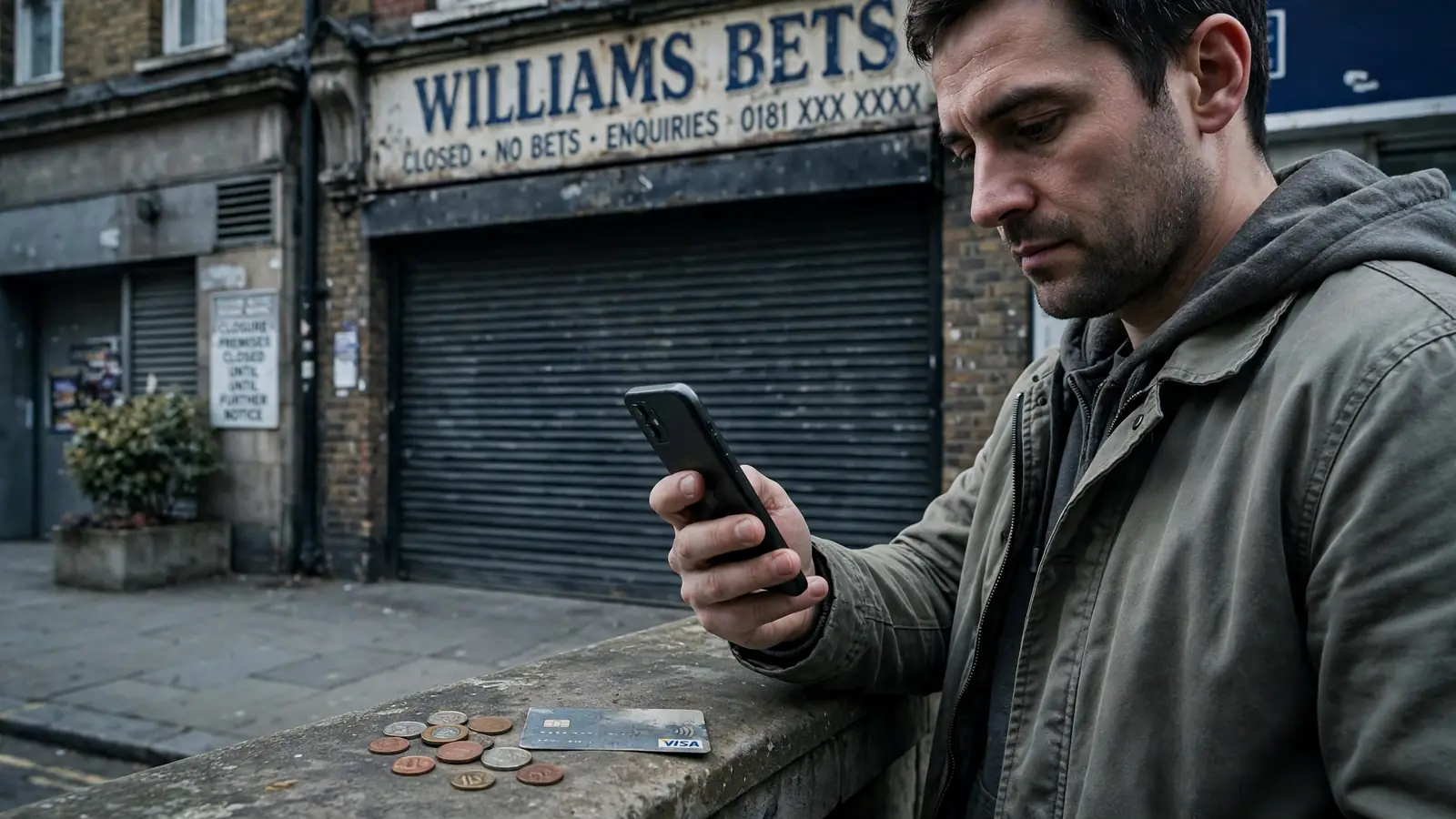
This matters when considering any payment option, including an e-cheque route. The label alone does not tell you how the casino handles a withdrawal or what checks it may request. Before depositing, read the payment terms and make sure the account and method are in your own name. Do not assume that a route you can use to pay will automatically be accepted for a payout.
A “secure” payment claim should mean more than a reassuring badge. Look for a clear explanation of how funds are returned and what happens if the original route is unavailable. If the process is vague, pause before sending money. Keeping ownership details aligned is a simple way to avoid avoidable complications.
New Casino Sites Still Need a Cashier Check
A newly launched casino can make an old payment claim look current. That does not tell you whether e-cheque is actually available to a UK account today. I’ve learned not to treat a payment-method logo, a launch announcement or a broad line on a promotions page as proof. The useful detail is in the cashier you can access after signing in.
Before depositing, check the live payment list and the terms attached to the method. Look for whether e-cheque is named specifically, rather than relying on a general reference to bank payments or electronic cheques. If the wording is unclear, ask customer support to confirm the exact route for your account. A vague answer is not confirmation.
Limits deserve the same attention. A specialist payment review notes that maximum deposits can differ by method and account status, and may be set per transaction, day or month. Those conditions can matter more than a headline minimum. Check the amount shown in the cashier and any account terms before you commit; do not assume that a limit quoted in an older page still applies.
I would also avoid depositing simply to see whether a method appears. Confirm the available options first, and make sure you understand the displayed conditions. A new site is not automatically an e-cheque site. Check first.
What is the fastest withdrawal method for UK casinos?
PayPal, open banking and debit cards linked to fast payout systems are generally among the quickest. Your casino’s approval process and whether your account is verified also affect the wait.
Do UK casino withdrawals require verification?
Your first withdrawal may take longer while the casino completes verification. Having a fully verified account can help avoid that delay.
Why must withdrawals return to the deposit method?
Returning funds to the original payment source is a common anti-fraud and anti-money-laundering control. Using another route may mean extra verification.
What is the current minimum deposit?
The minimum usually starts at £10–£20, depending on the payment method.
Are Visa and Mastercard deposits definitely debit cards?
No. Check that your specific card is eligible in the casino cashier; UK gambling deposits by credit card are prohibited.
Which method has the lowest fees?
There is no universally cheapest method. Compare casino and provider charges, currency-conversion spreads and any network costs for your payment.
Created by the ”Candyland Casino 1” editorial team.